


It may be late March but we can still get meaningful snow in Southwest Michigan through the month of April!
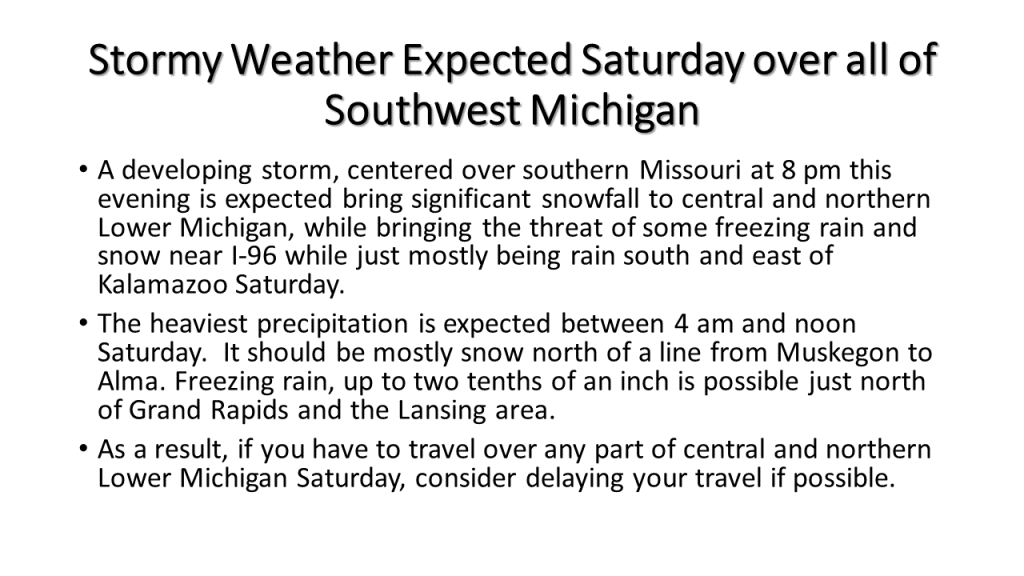

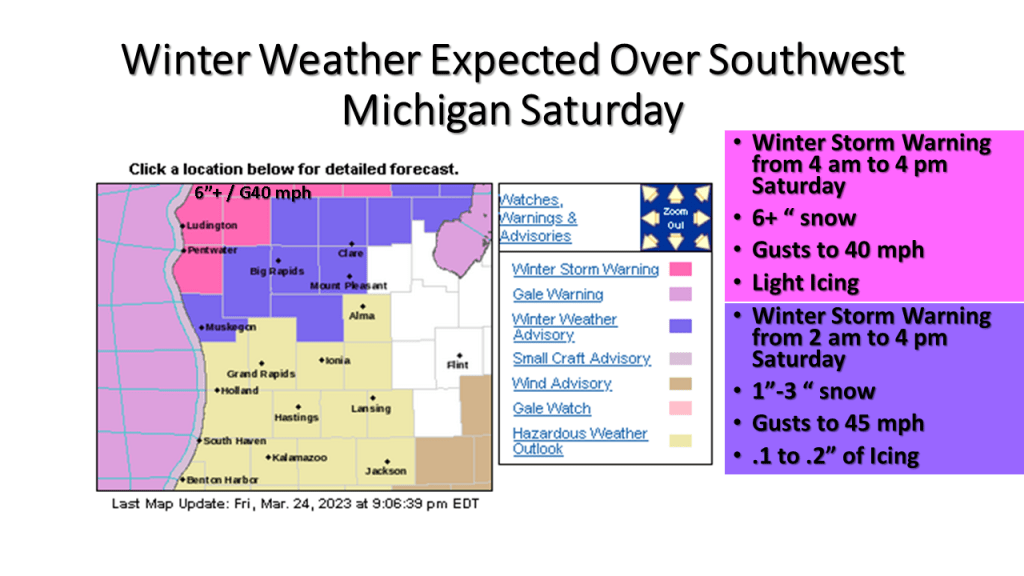

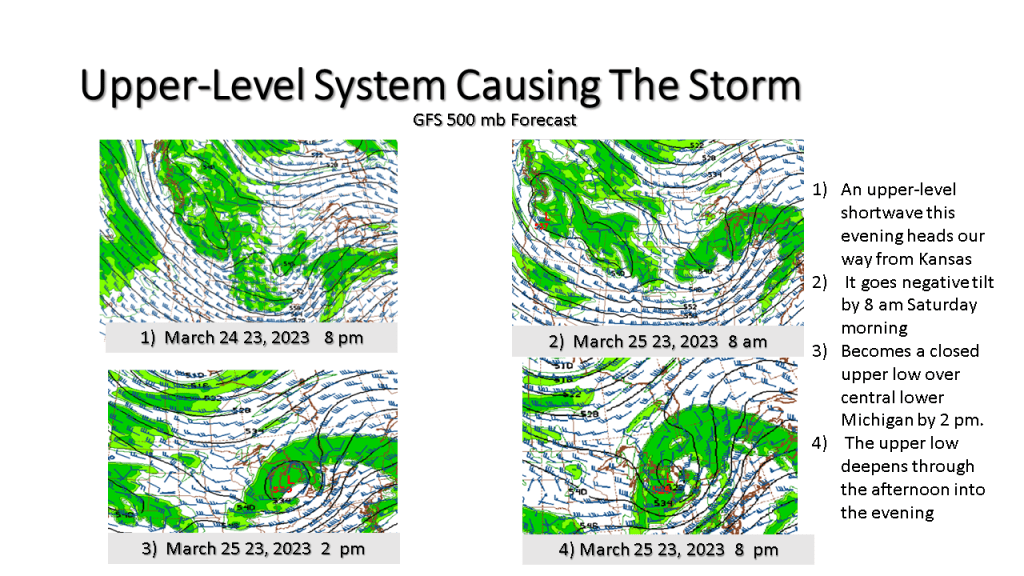
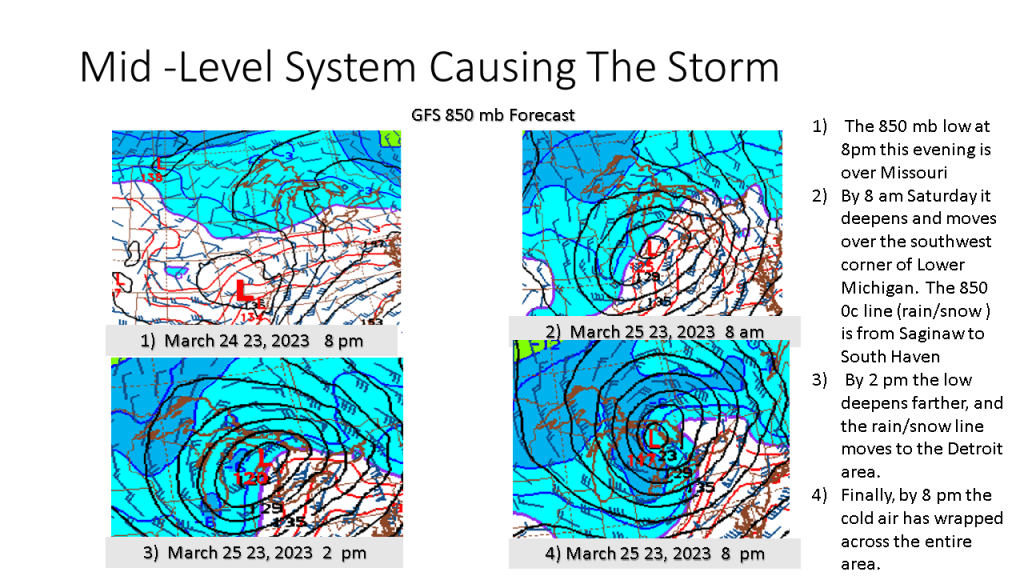
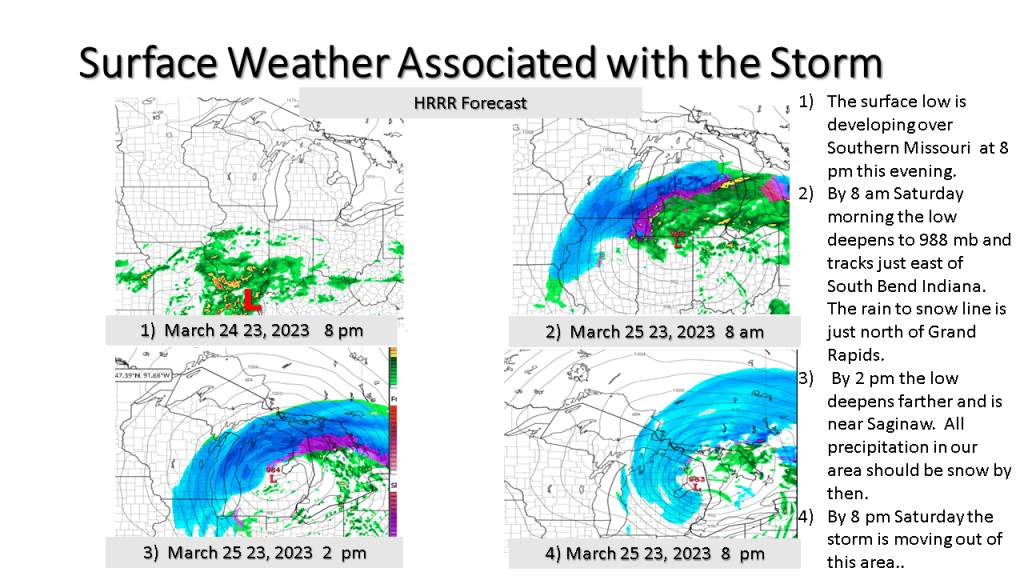
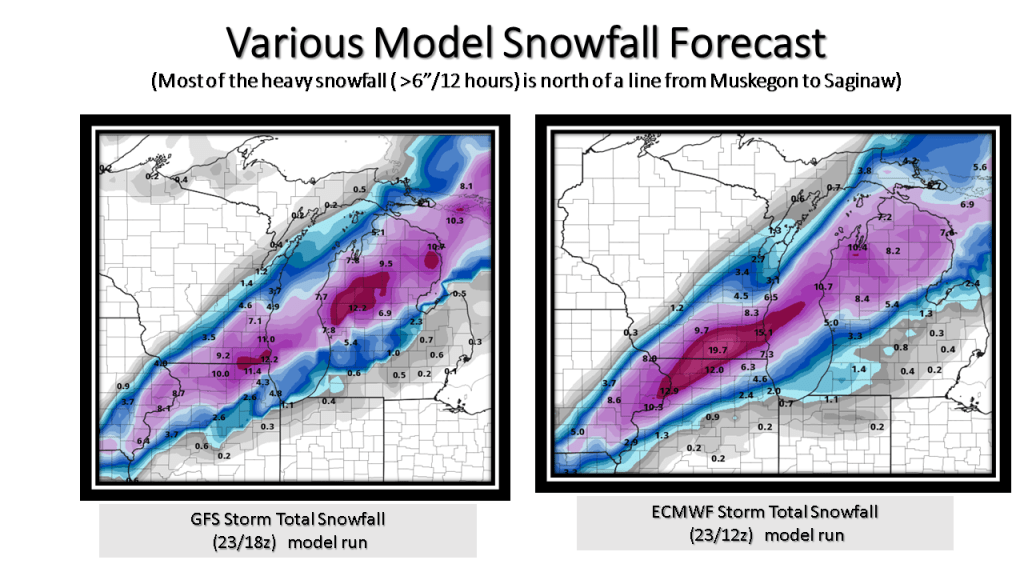

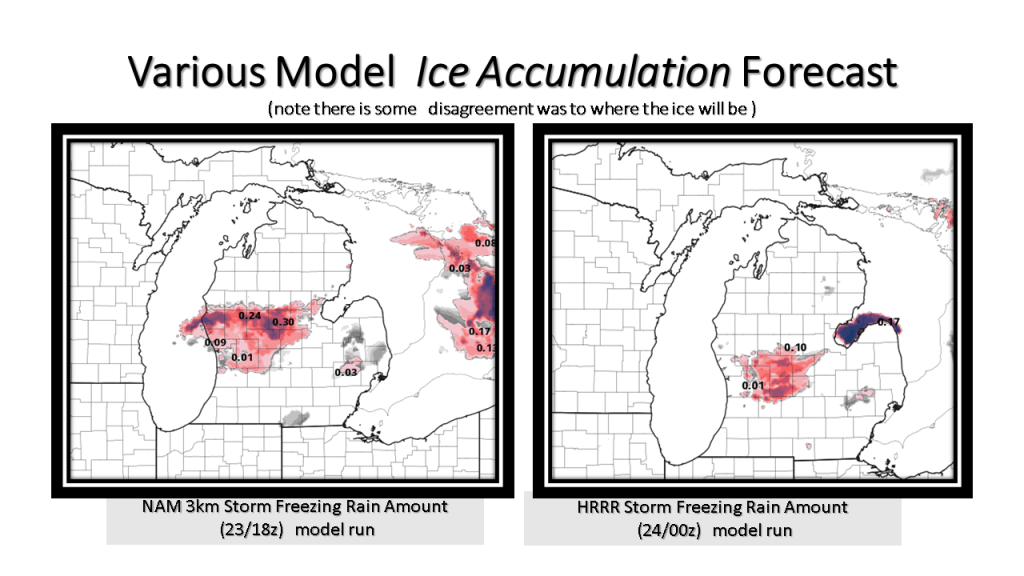


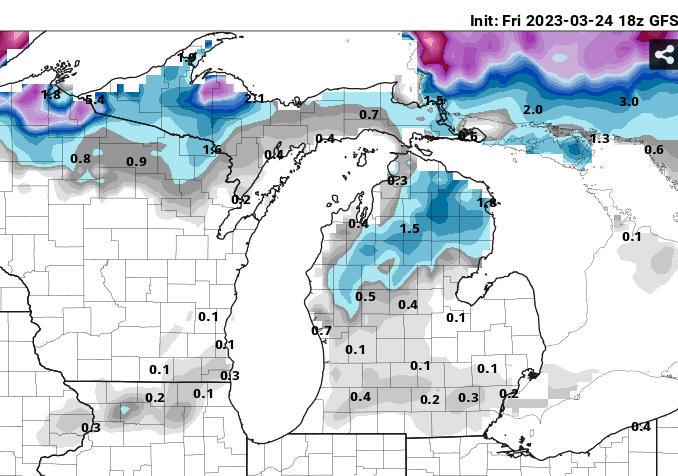
While we may well get a significant (shovel-able) amount of snow and enough ice accumulation in areas near or just north of I-96 Saturday, as typical of late March storms, most of the snow and ice will likely be gone by Sunday afternoon. Below is the model (GFS) forecast snow depth by Sunday evening at 8pm.

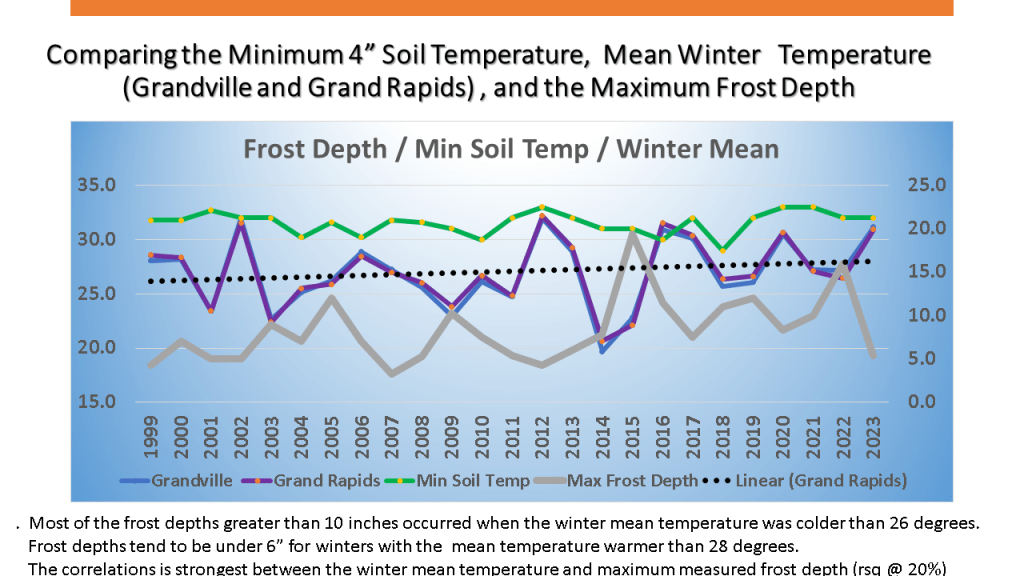

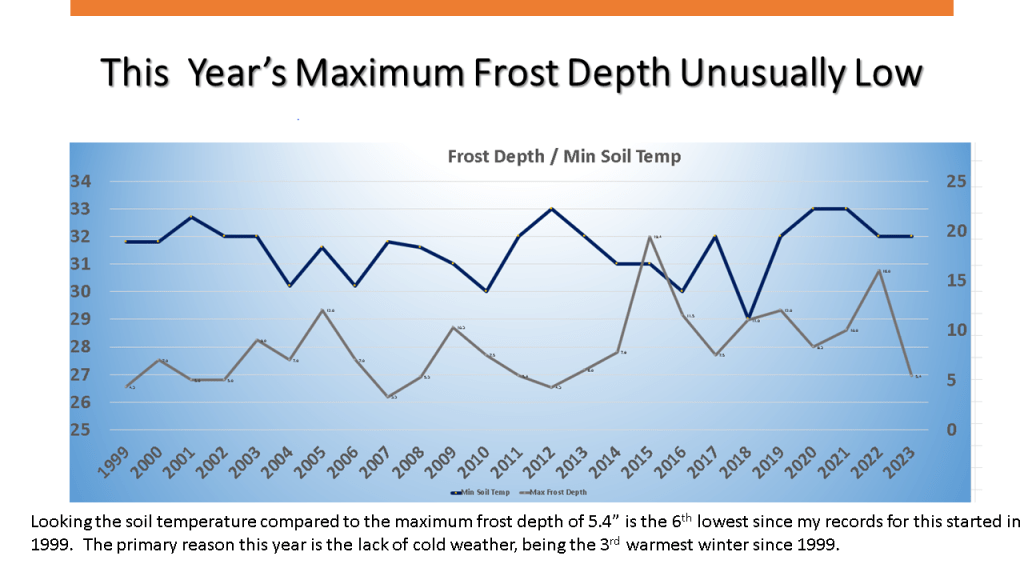
It is worth noting for my top 3 warmest winters, the frost depth stayed under 6″.
Below is a table that shows the top 10 warmest winters since 1999, and the maximum frost depth. Note that except for 2016 and 2020, the frost depth was no greater than 7.5″.
Top 10 Warmest Grandville Winters since 1999

So, why was the frost depth so deep in 2016, even through it was relatively warm winter? It’s a function how persistent the cold temperatures were, in combination with the snow depth.
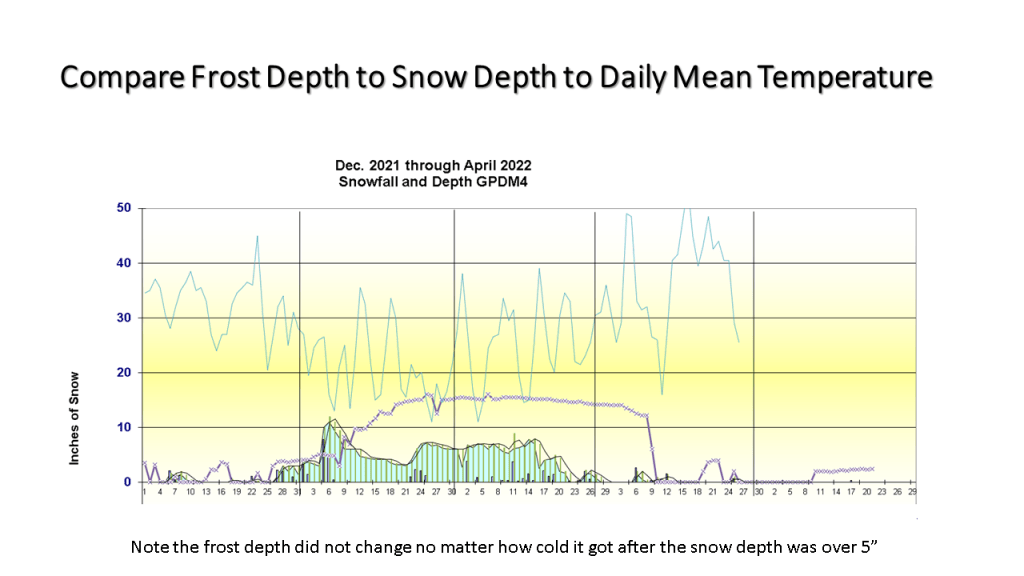
In 2016, through it was an overall warm winter, when the frost depth got to 11.5 inches in mid February the snow depth stayed under 3″. Meanwhile the 7 day running mean temperature fell to 16.5 degrees. This year our lowest 7 day running mean temperature was 17.8 degrees, not really all that much warmer than in 2016, however this year the snow depth during that time was between 12 and 16 inches. The point being, to get a deep frost depth you need less than 5″ of snow depth and a 7 day running mean temperature below 20 degrees.

I want to point out what the typical March high has been since 1991 at Grand Rapids. There has been a slight negative trend from 69f to 68F in the past 30 years. The median maximum temperature for March is 69F . Having a maximum March temperature below 60 is unusual as you can see from the chart above. There have been 6 years out of 30 (20%) when this has happened.
This will be short version of this idea, I will post something with more detail next week (CPC issues a new forecast on Thursday) and I want to look at more information. Still what I know now is worth sharing.

The last forecast from CPC (Feb 16th) suggests a warm summer is slightly higher odds than does a near normal or cool summer but the odds are not great, 35% for warm, 33% for near normal and 32% for colder than normal.
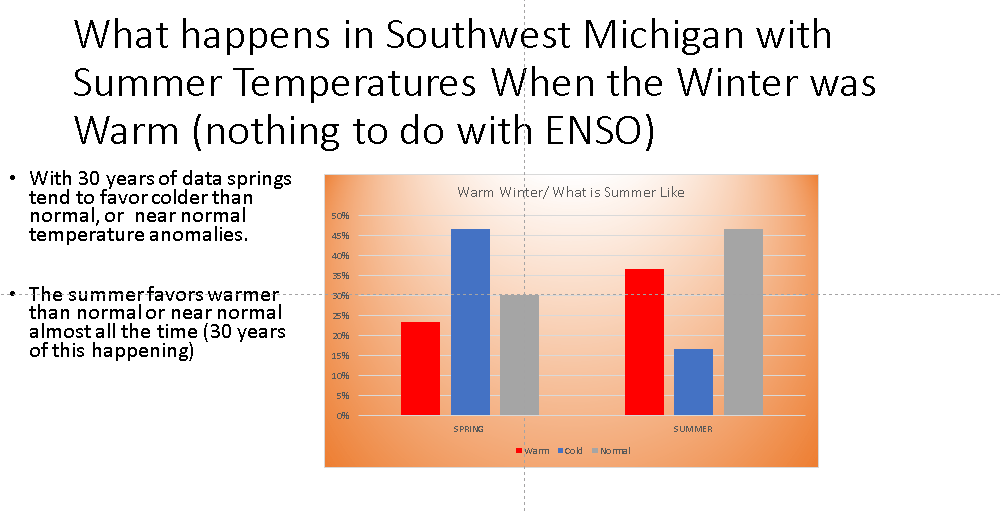
However, if we look at all years when there was a La Nina during the winter (there was this winter) when the winter in Southwest Michigan was warmer than normal, like it was this past winter, we see from the charts below the spring it typically warmer than normal with near normal precipitation.

As for the summer we see the warmer than normal trend continues and precipitation remains near normal south of I-96 but it’s wet north of I-96

Since southwest Michigan had a warm winter, let’s look at what happens when the winter is warm, not caring about the state of ENSO.
Now here is something that may change that story! So far, most of southern Lower Michigan has not had a daily the temperature above 60F. The extended ensembles of both the GFS and ECMWF, while not ruling out one or two days with highs that warm, odds are very low at this point. Neither model means show highs that warm, it is only 1 or 2 out of 50 of the ECMWF that are forecasting highs that warm by the end of March. So below is a joint study by Gary Rizzo and myself on what happens at both Grand Rapids and Detriot.


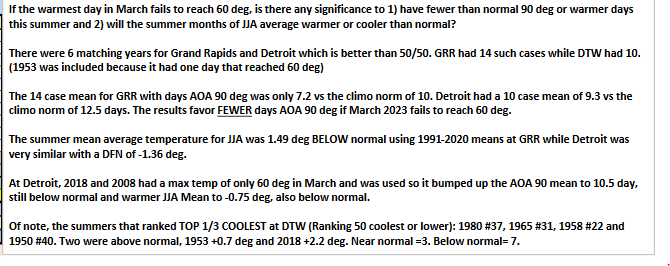
So, this will be fun to watch how this plays out! We already know that if at Grand Rapids the daily high reaches 90F in May there will be a much higher than normal number of 90F days but it now seems we have a filter for below normal numbers of highs in the 90s.
Once again next week I will put info out on our coming summer, but I through it’d be fun to post this this week.





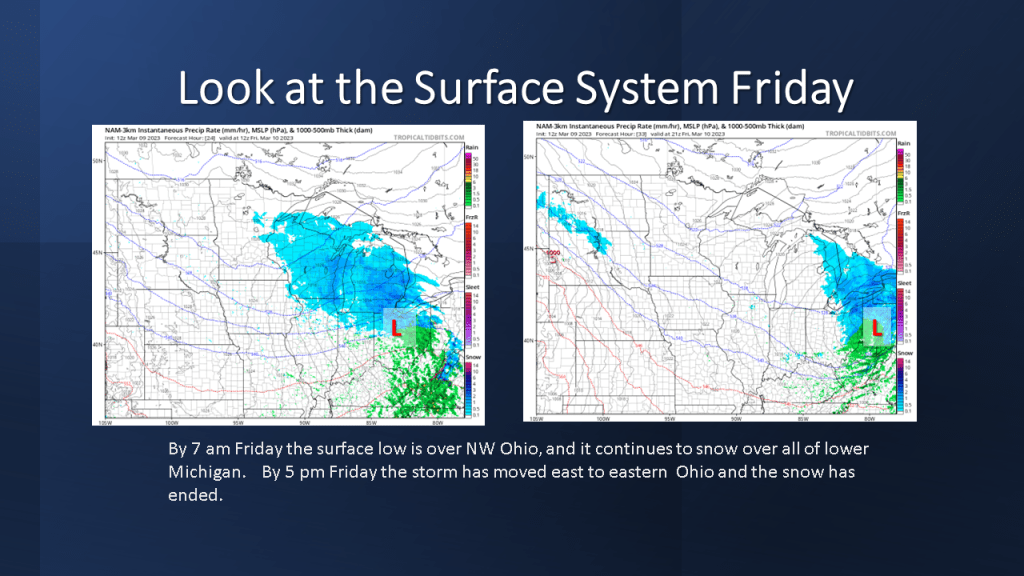
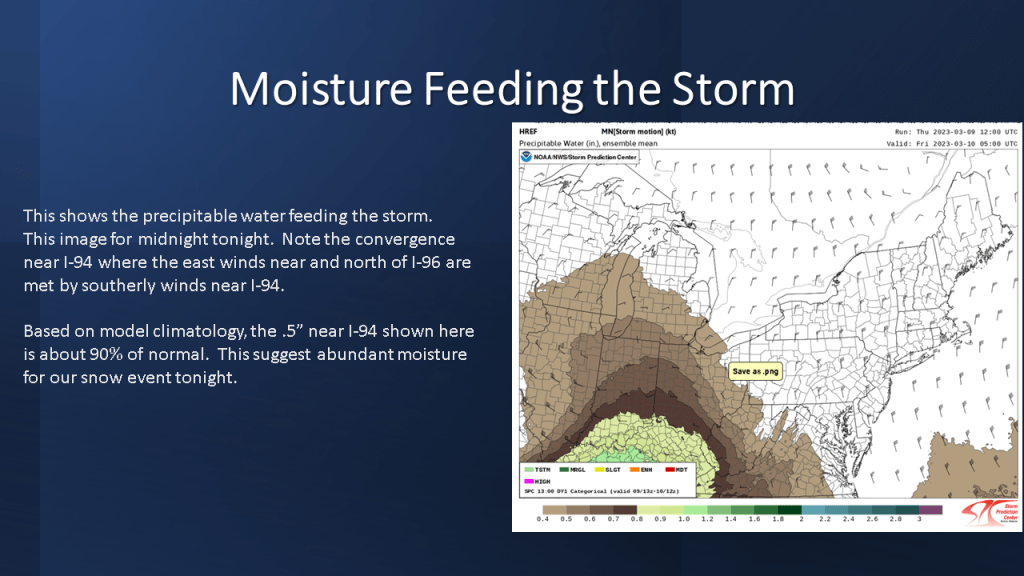


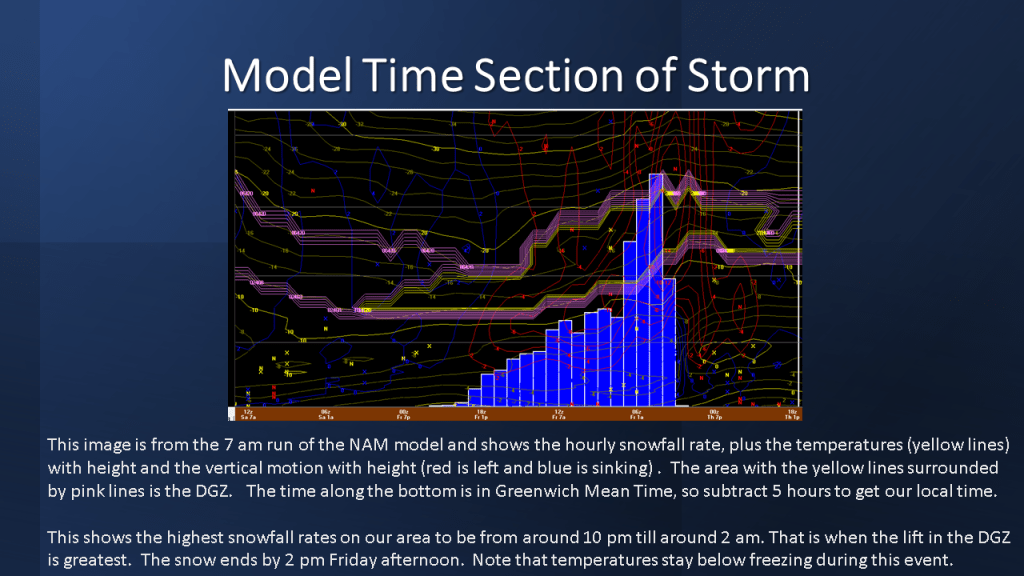
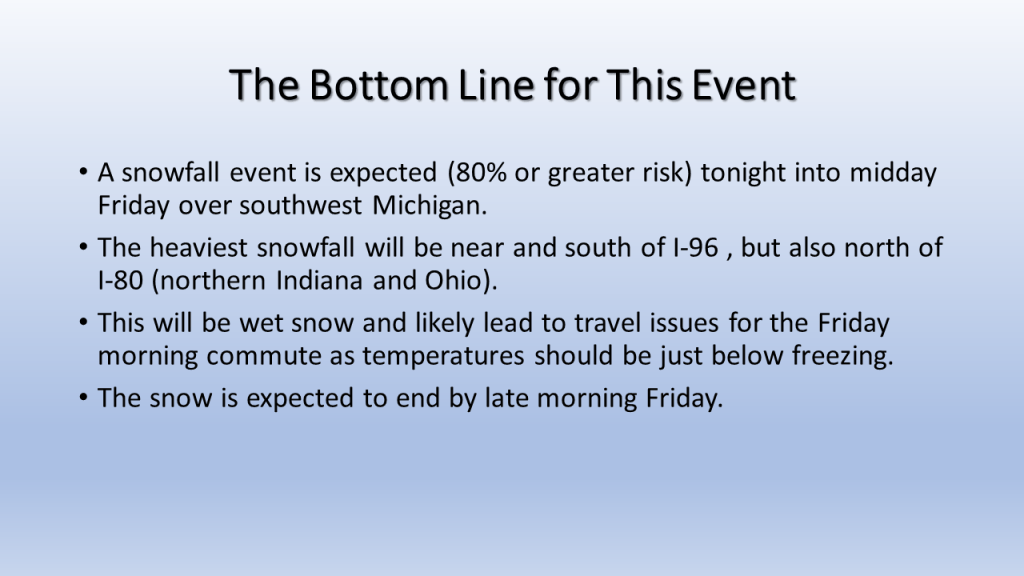

There are no clouds over Lower Michigan in this picture, this is just the snow on the ground.
Below is the snow depth map from National Operational Hydrologic Remote Sensing Center.

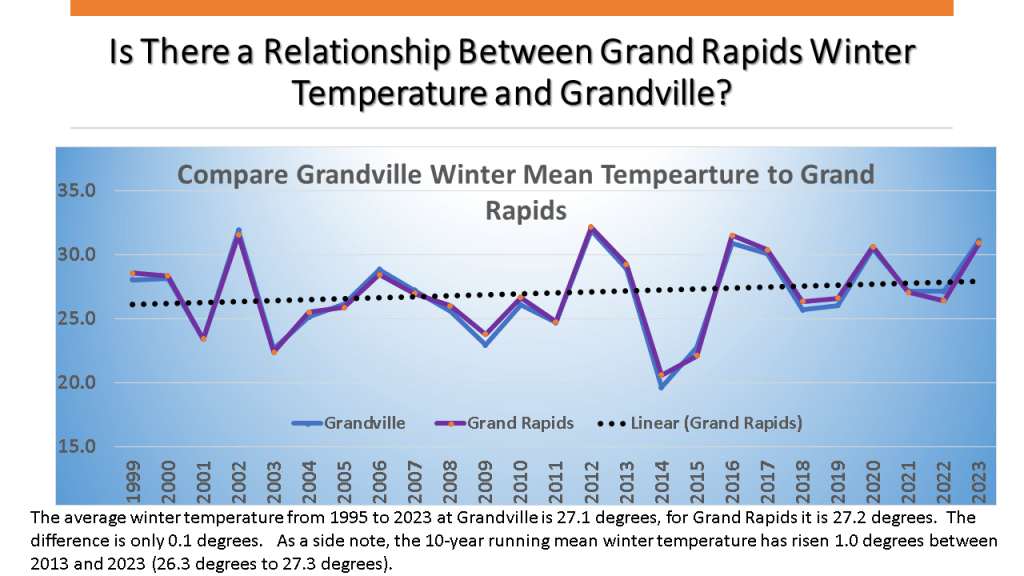
The Winter of 2022-2023 was the 4th warmer than normal winter in the past 10 years, only 2 winters in the past 10 have been colder than normal 2013/2014 and 2014/2015. The other 4 winters were near normal.



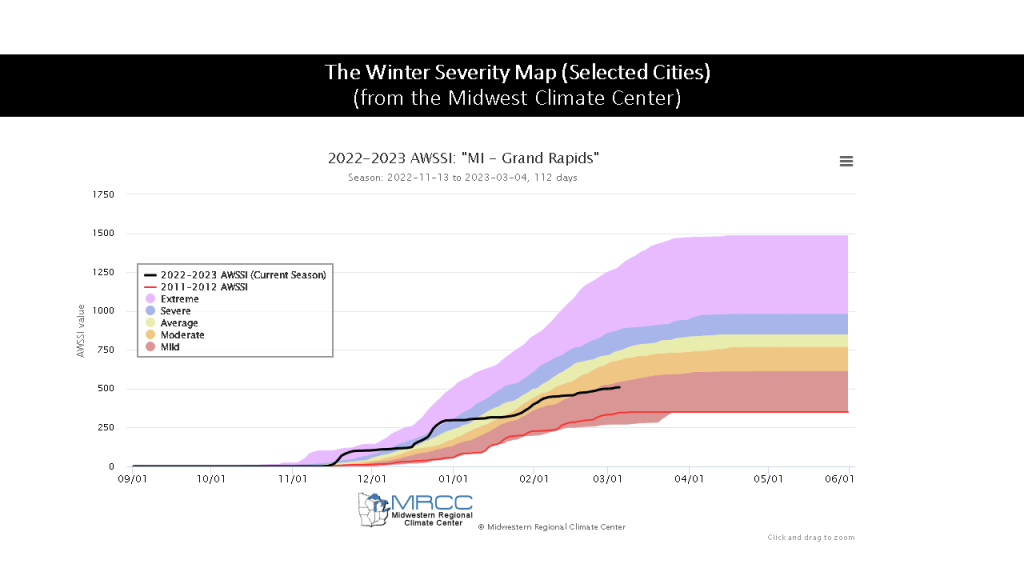
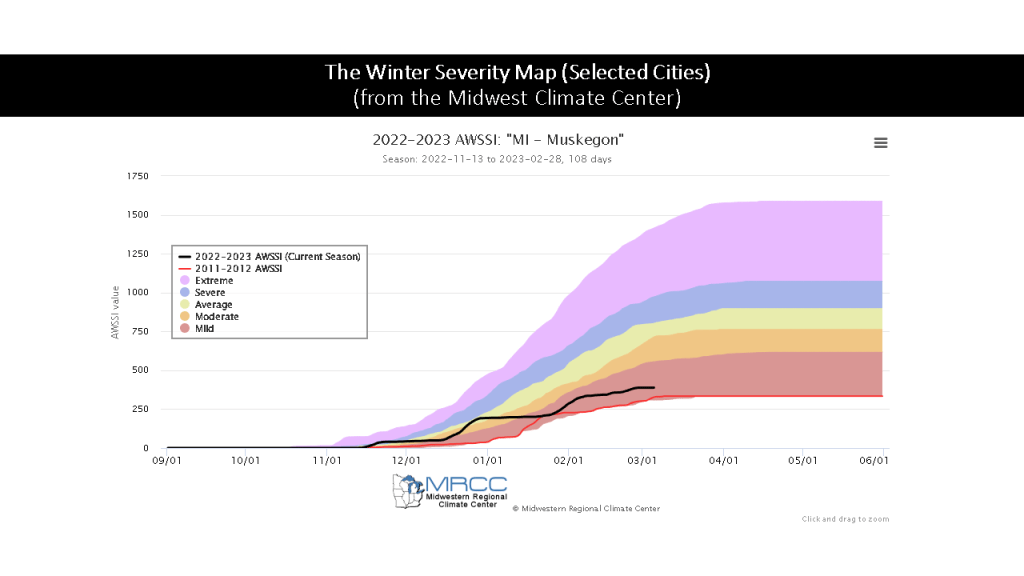
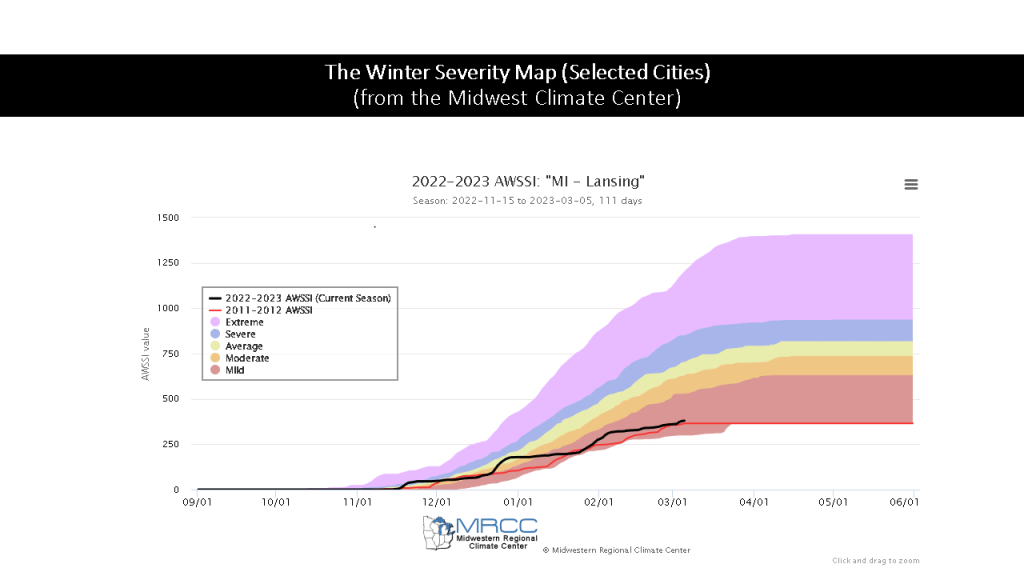
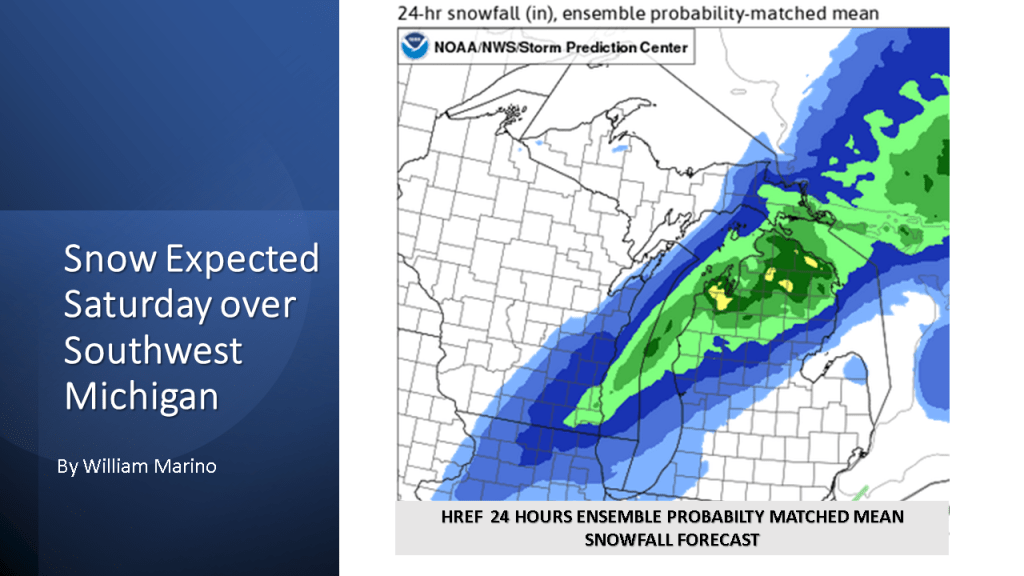
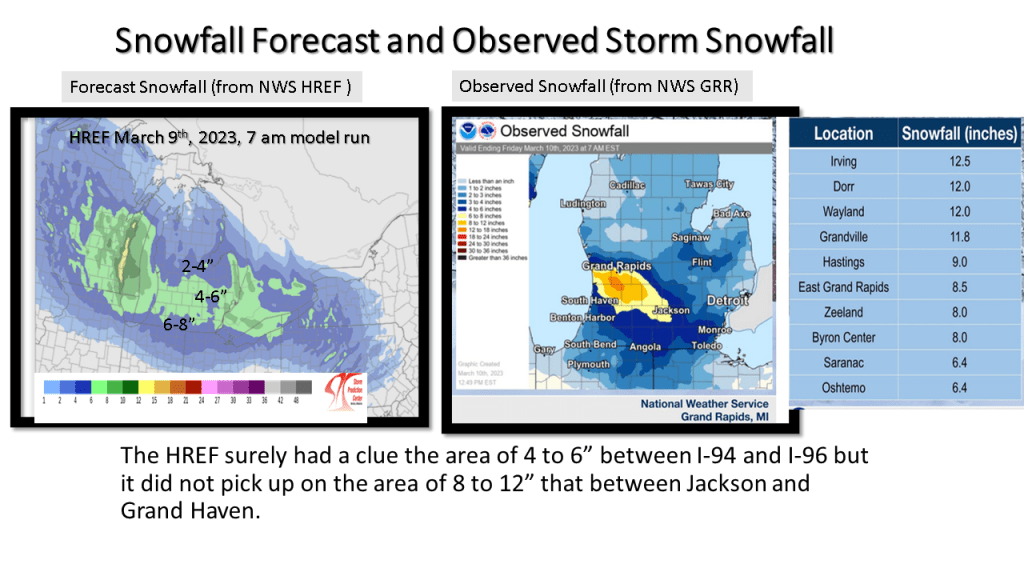
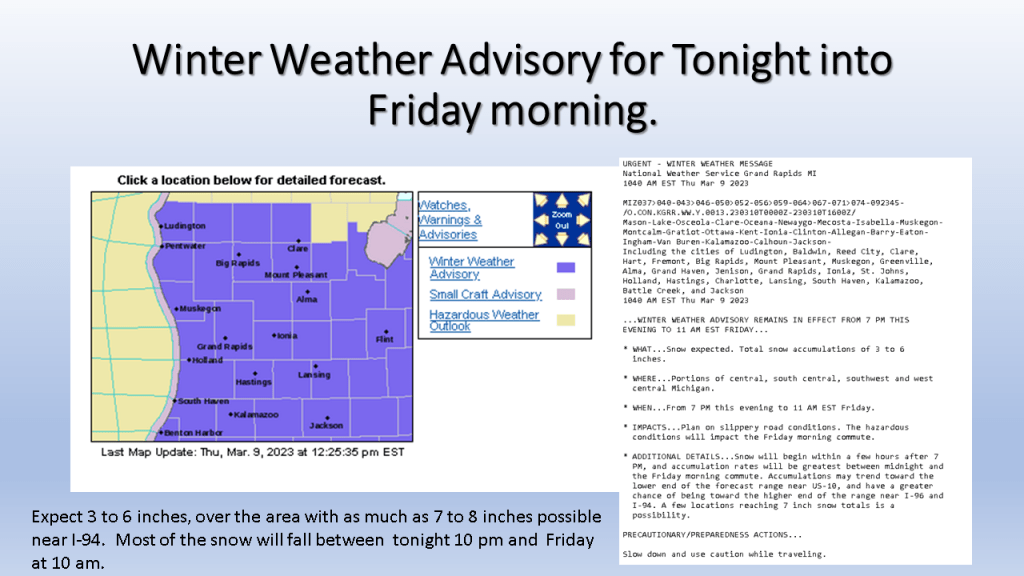
I will agree with a tweet by the Grand Rapids National Weather Service yesterday afternoon, that forecasting exactly where the heaviest snow will end up today has not been all that easy. Still there has been a clear shift to the southeast over time with the forecast heavy snow amounts.
Below shows the GFS forecast model (from Tropical Tidbits) total snowfall forecast from the 12z (7 am EST ) model run for the past 5 days. On the second slide, I have the NAM forecast for today also.
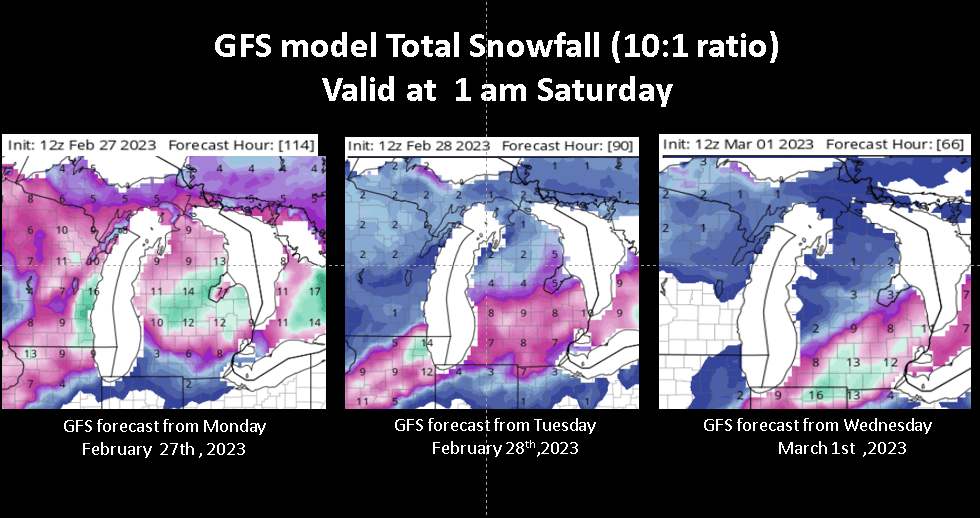
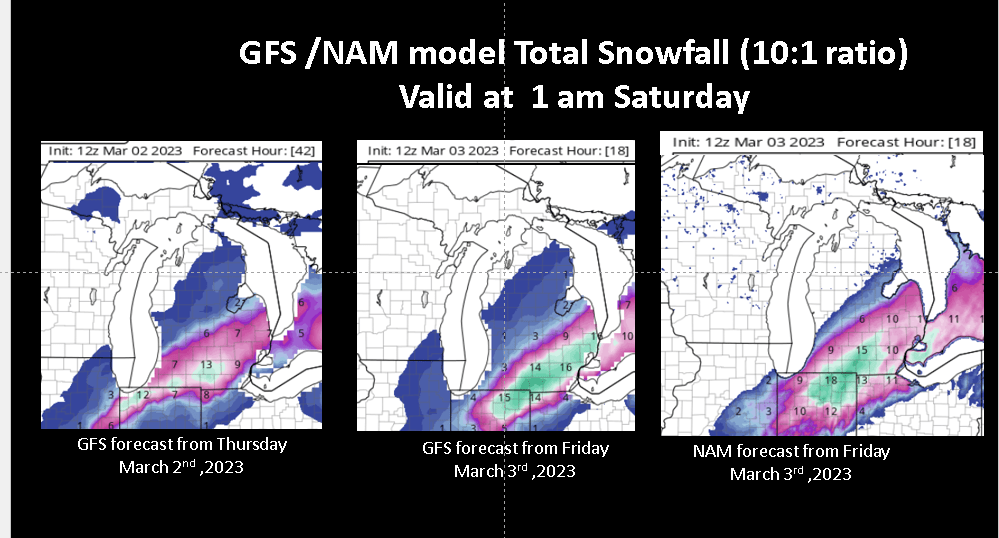
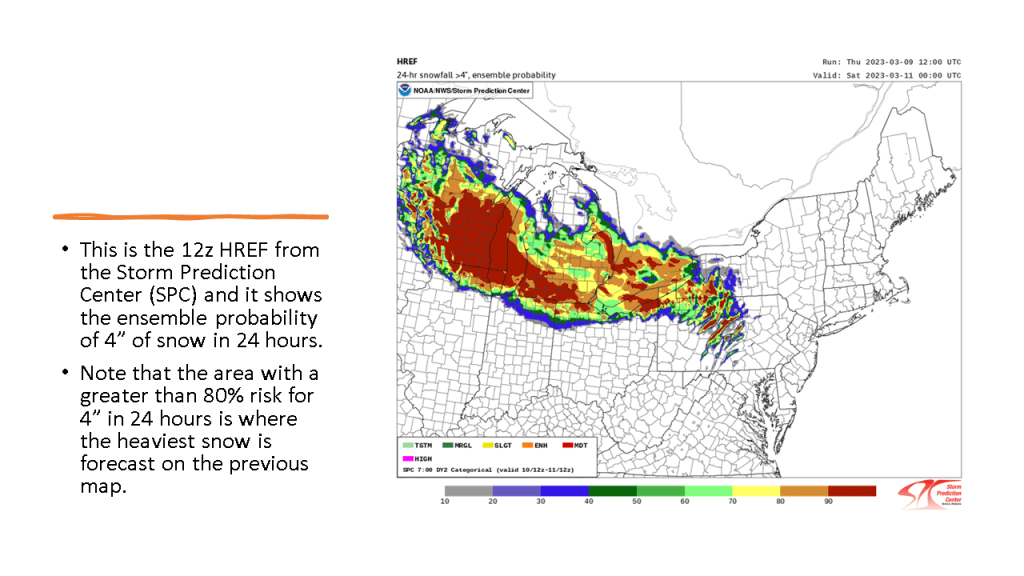
Note the clear shift in the axis of the heaviest snowfall from Monday through today. Monday the GFS had the heaviest snow near I-96, by Wednesday the heaviest snowfall shifted so south of line from Saginaw to Holland. On this morning’s runs of the GFS and NAM, and for that matter the HRRR numerous hours in a row, plus the HREF, all have the heavy snow south of Grand Rapids to near Lansing to near Saginaw.
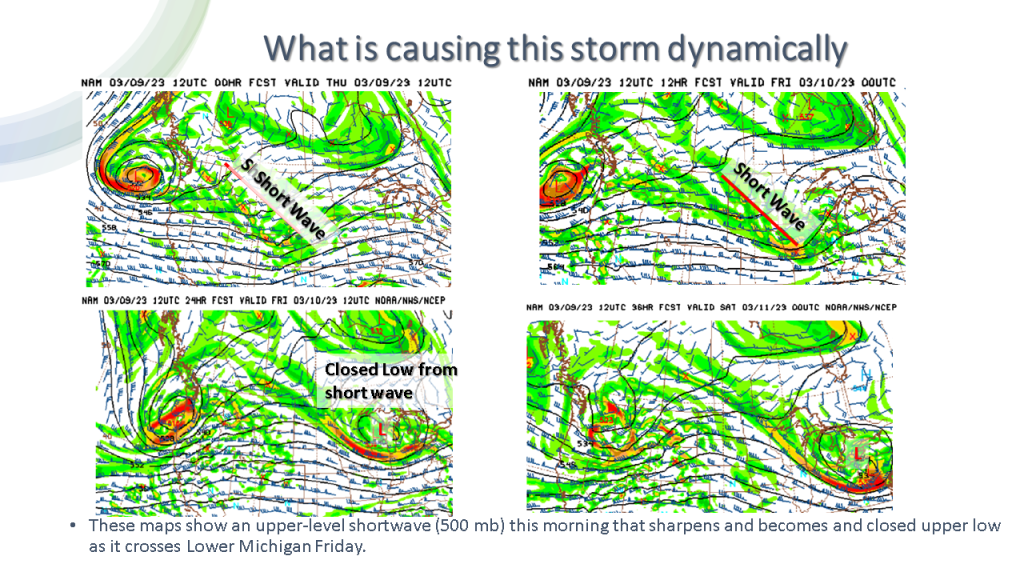
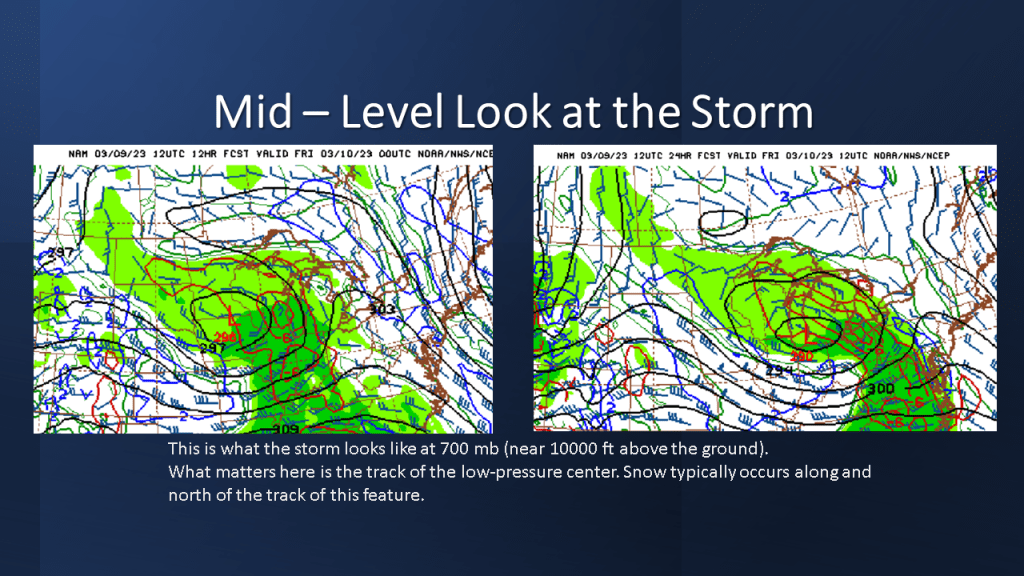
One other point about this, just about every run has an area with over a foot of snow. This storm has great upper level and mid level support plus Gulf Moisture to help it’s cause. So, there will be an area of heavy wet snow with this storm, but likely it will stay south of a line from Saginaw to Grand Rapids.
Actually once you get north of a line from Muskegon to Houghton Lake, there may not be any snow at all from this storm!
With temperatures near freezing, it will be a heavy wet snow. With at storm center being below 978 mb currently ( 2 pm), this storm will feature a fair amount of wind this evening but it is questionable given how wet the snow will be if it will blow around much. Still travel over Michigan, south of Grand Rapids will be challenging by mid evening. The snowfall should end around midnight.
I am thinking were I live in Grandville may only see an inch or two from this storm. We shall see tomorrow morning!
 themarinocast