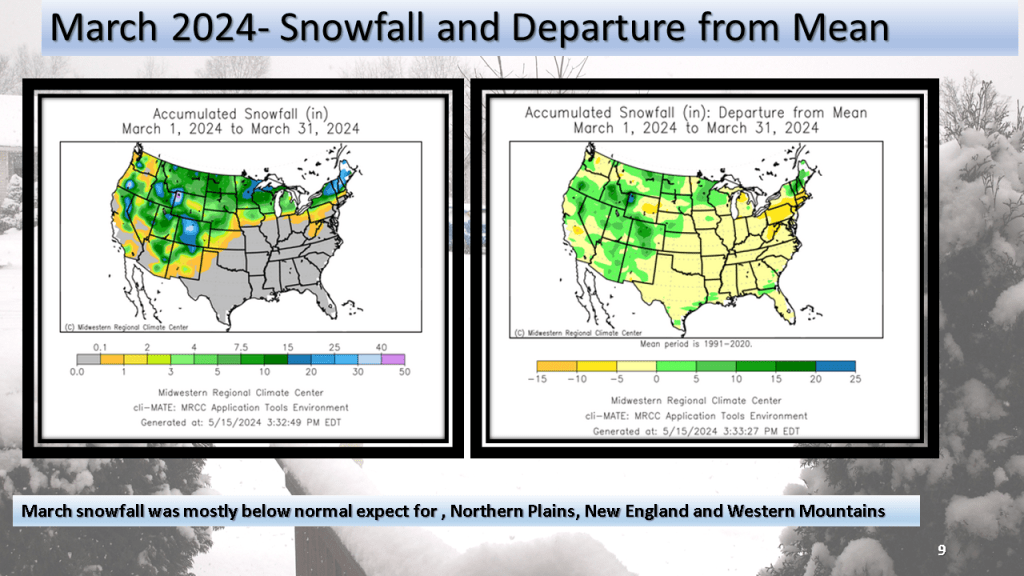
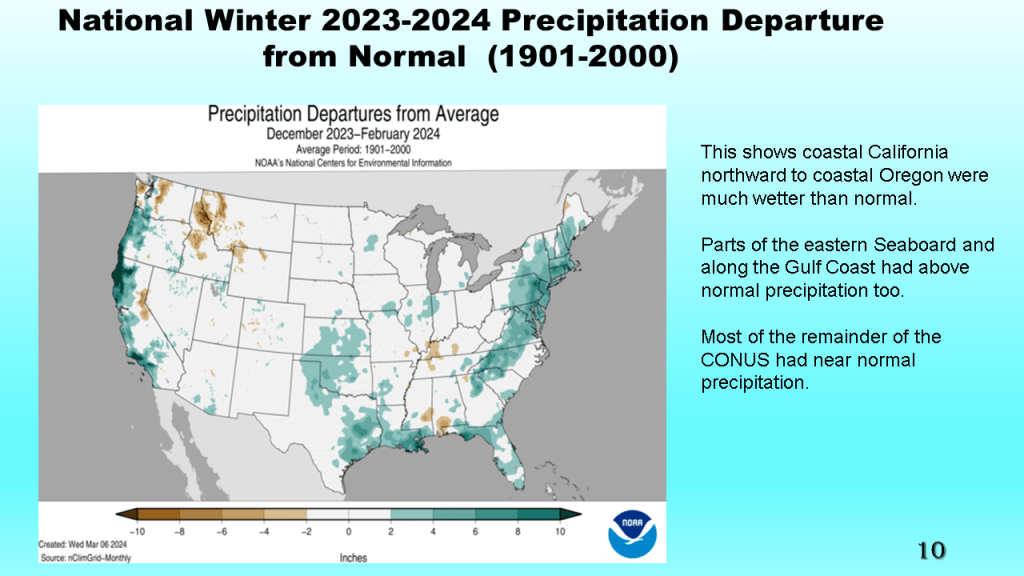
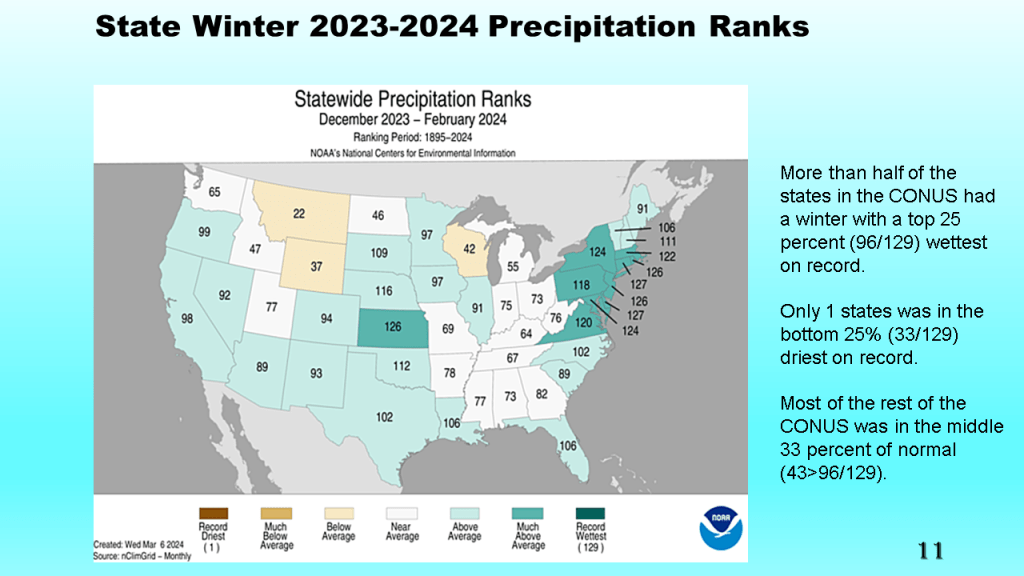
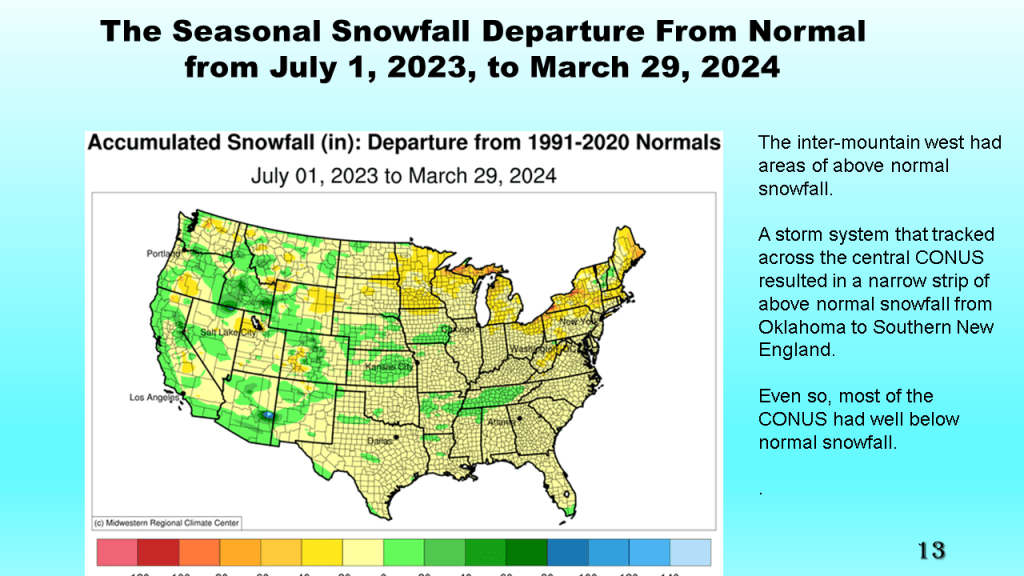
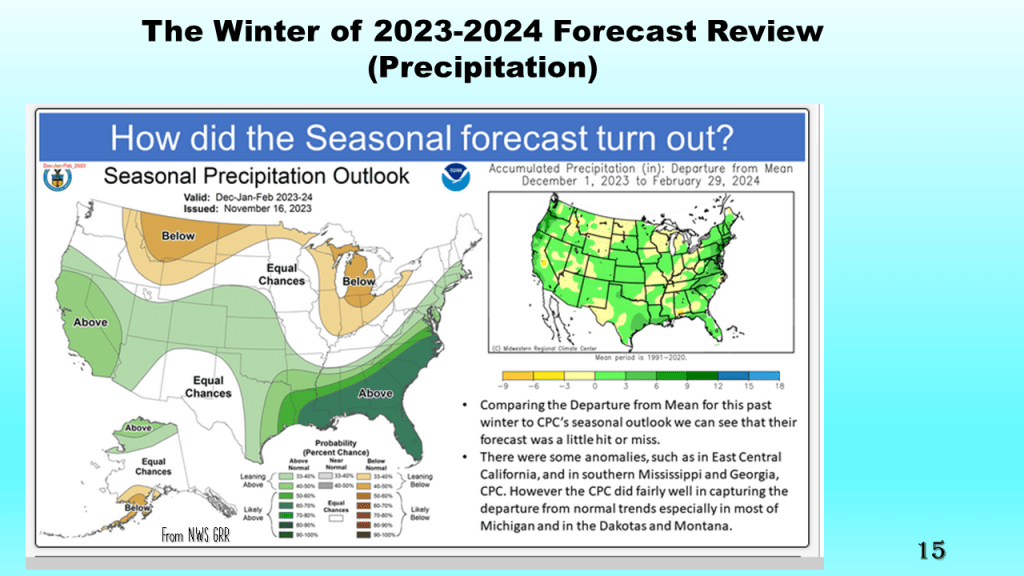
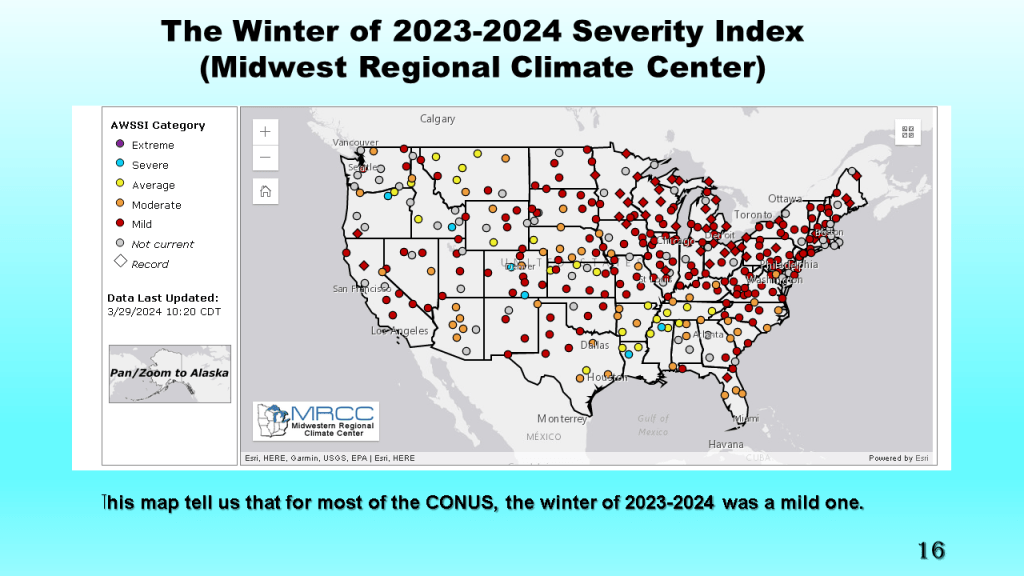
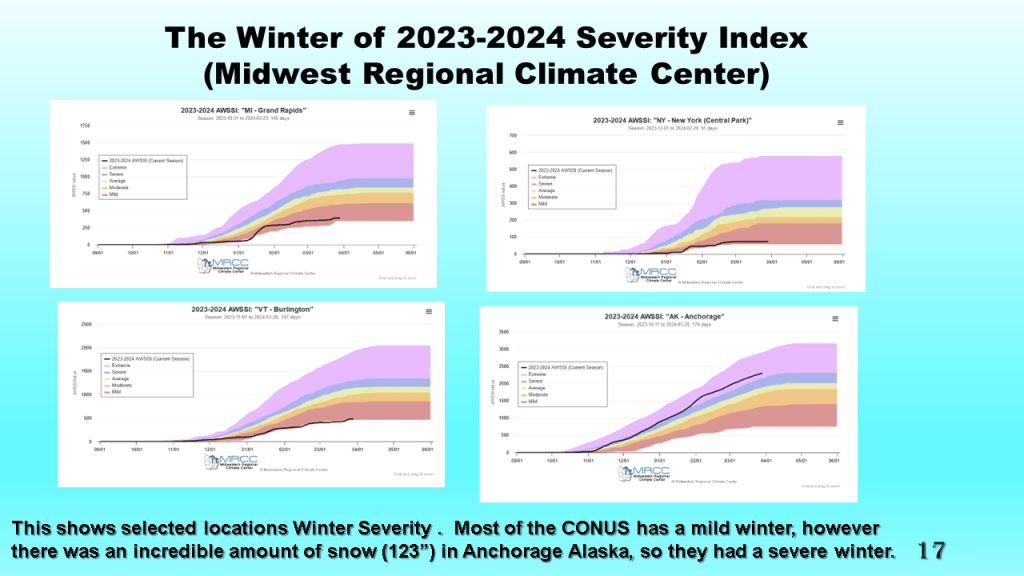
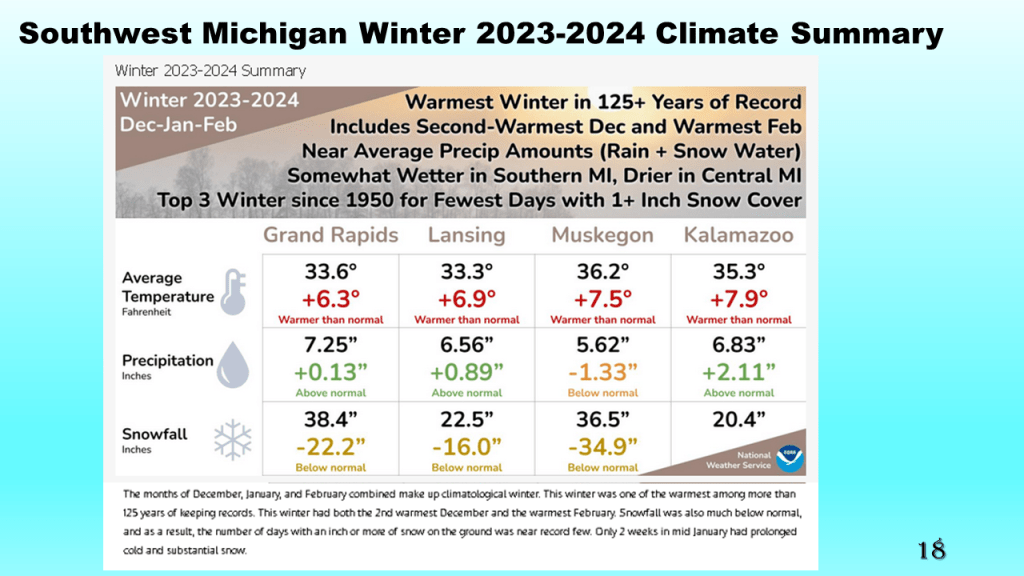
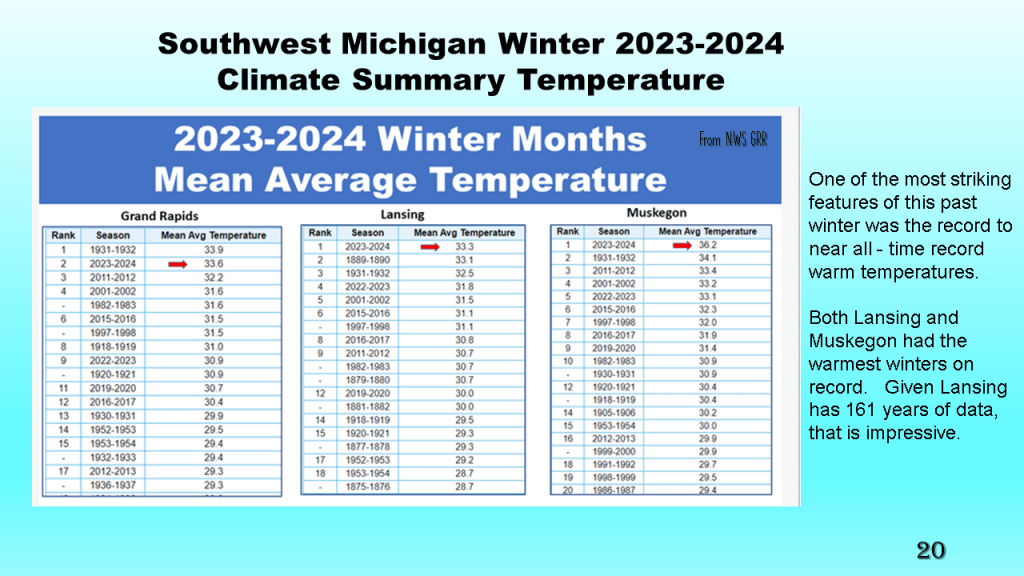
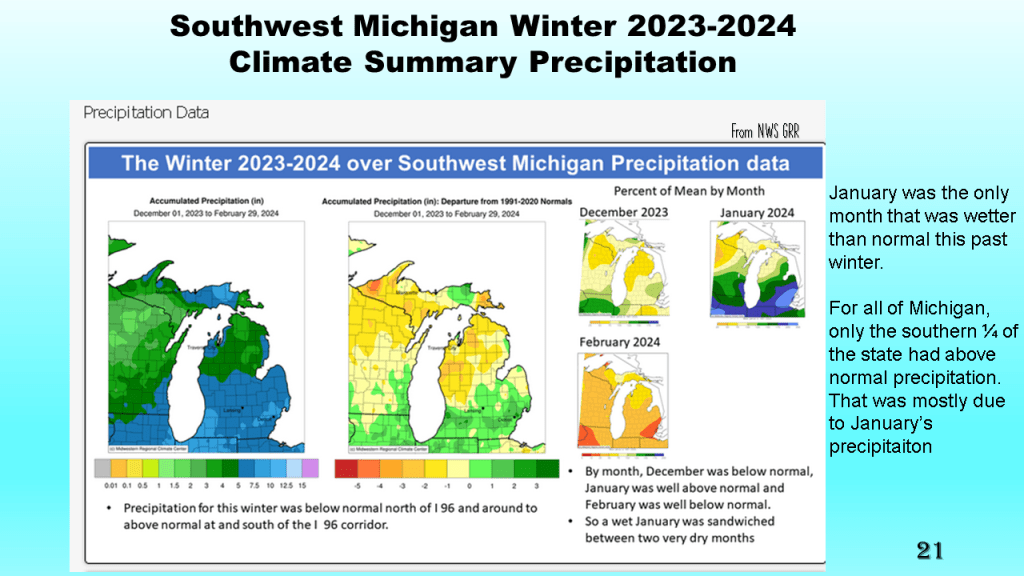
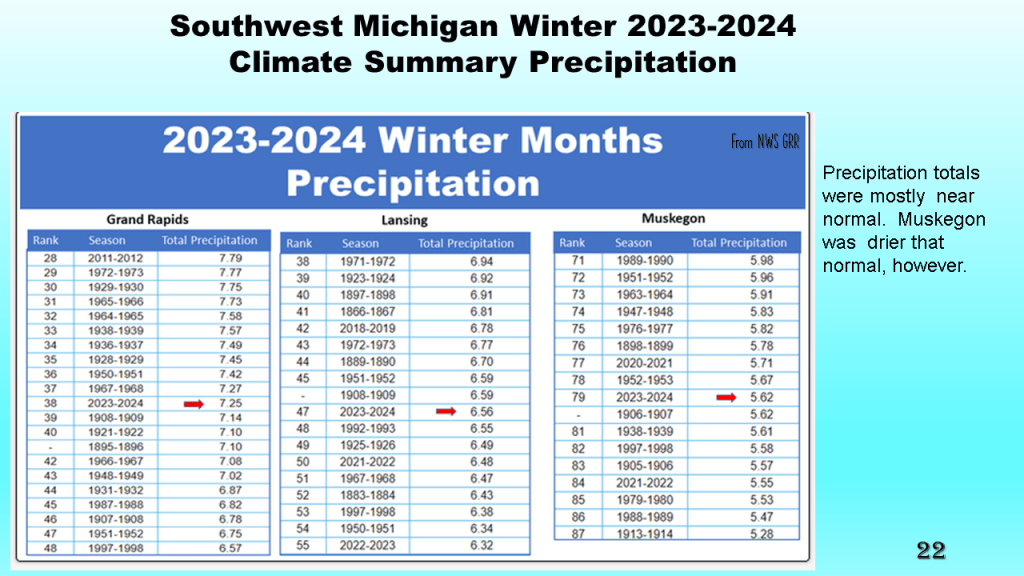
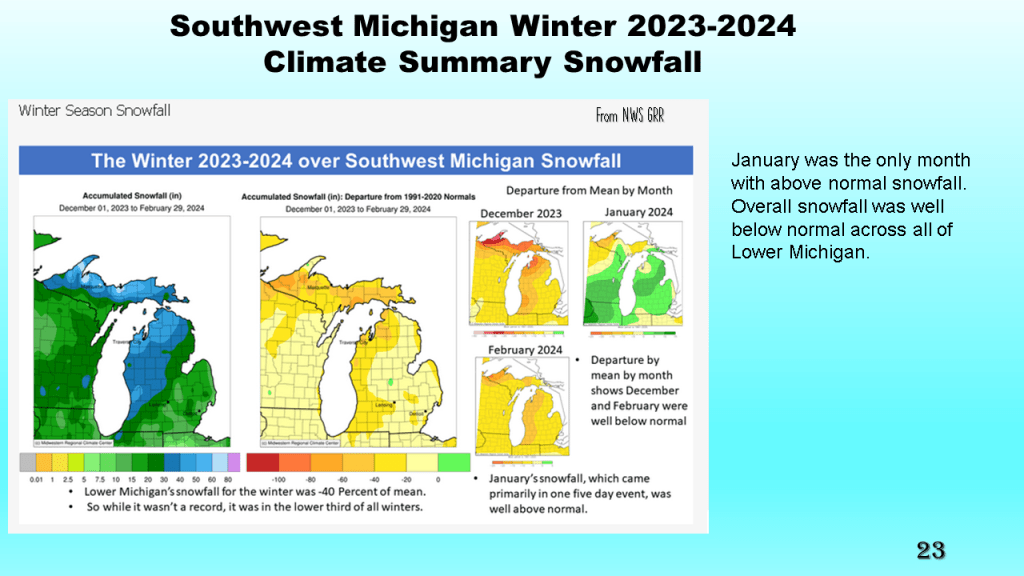
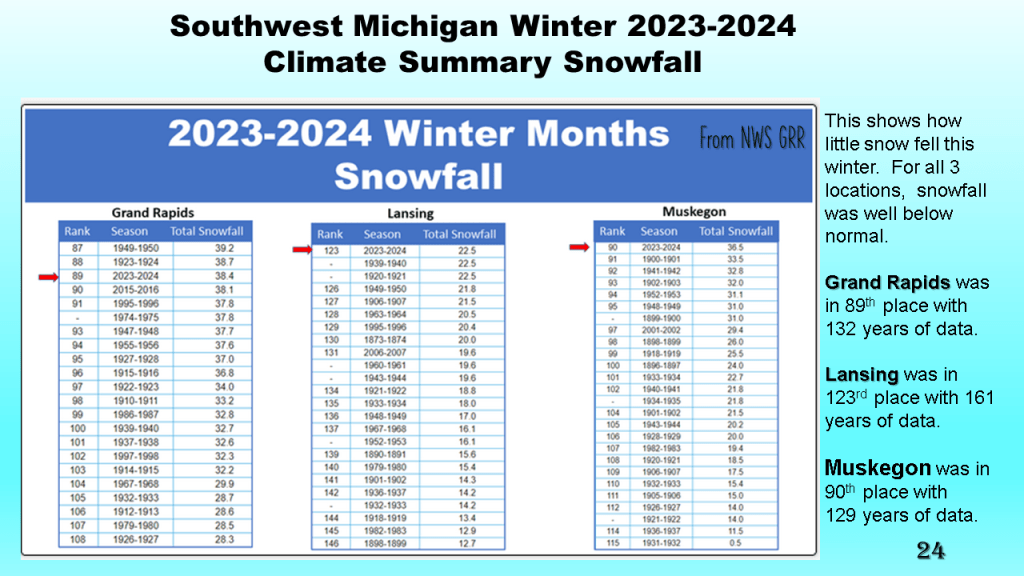
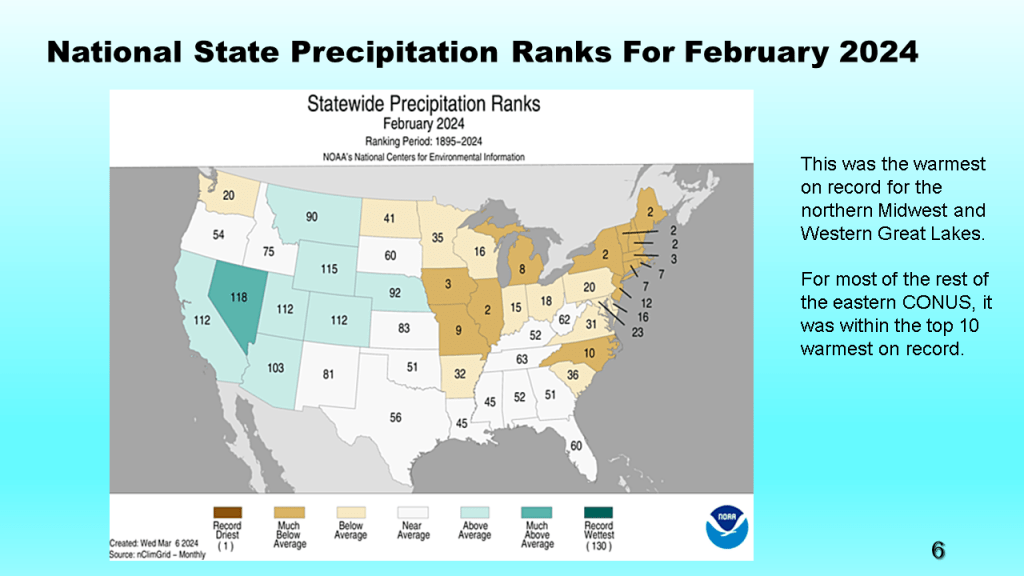
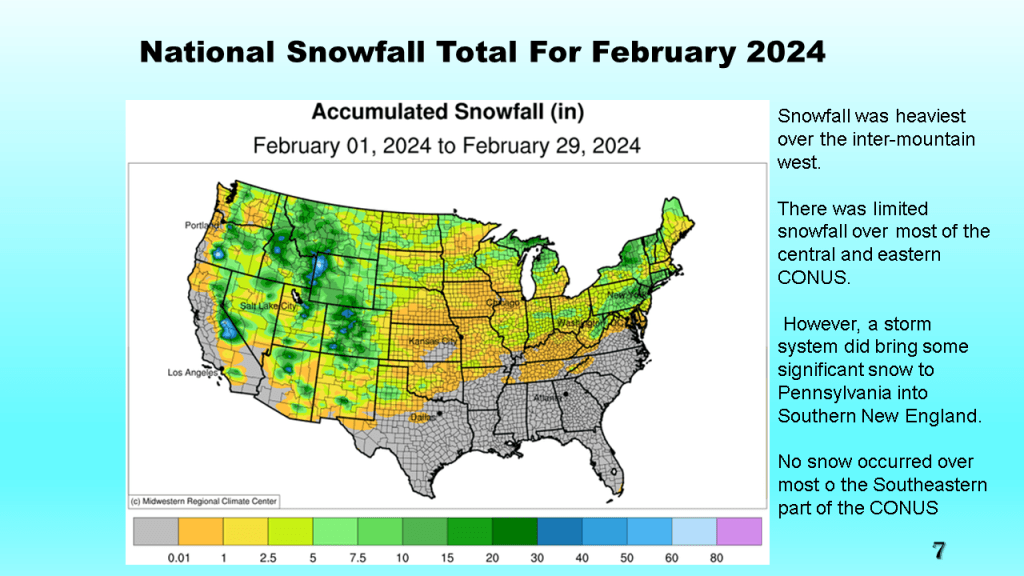
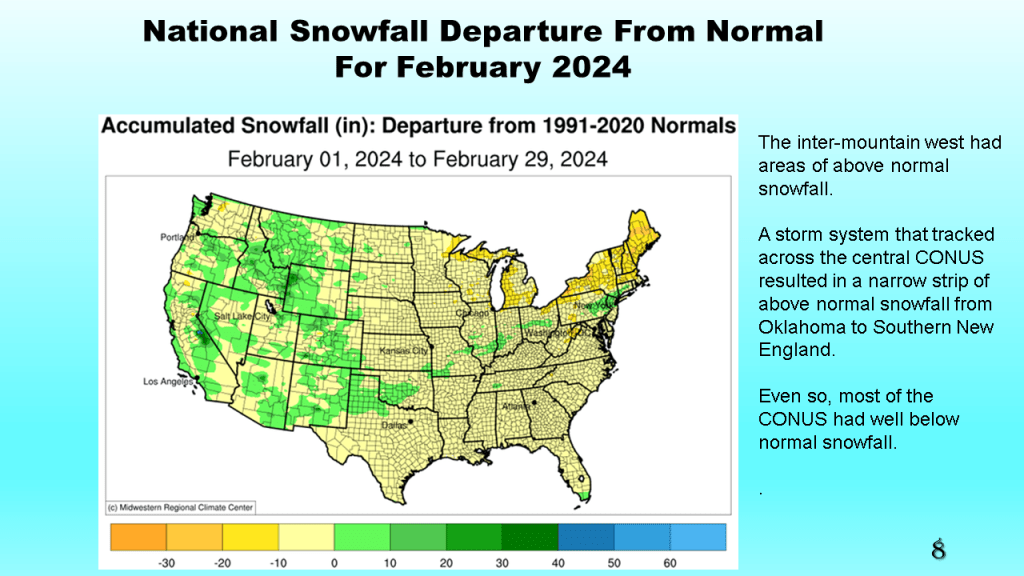
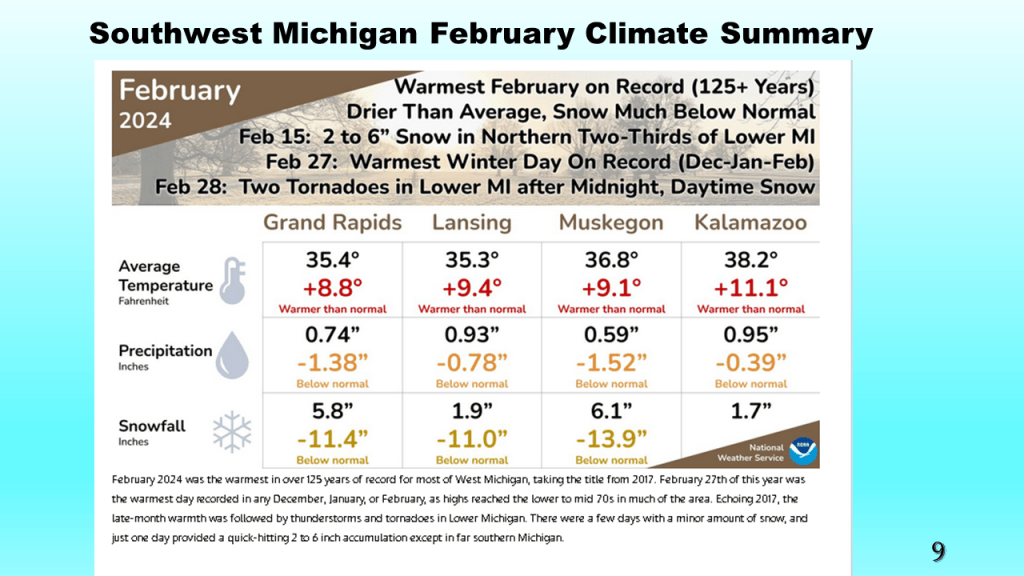
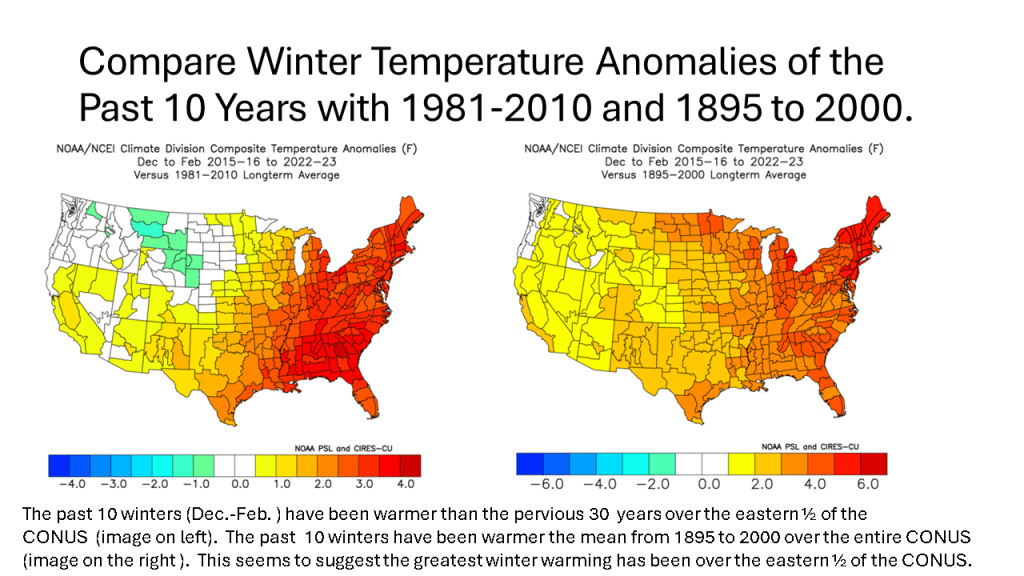
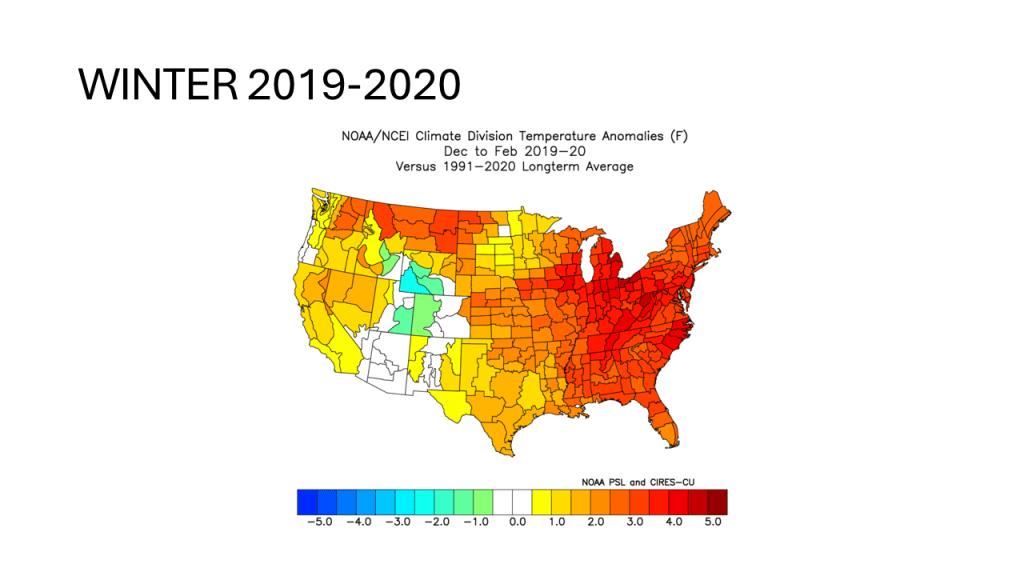
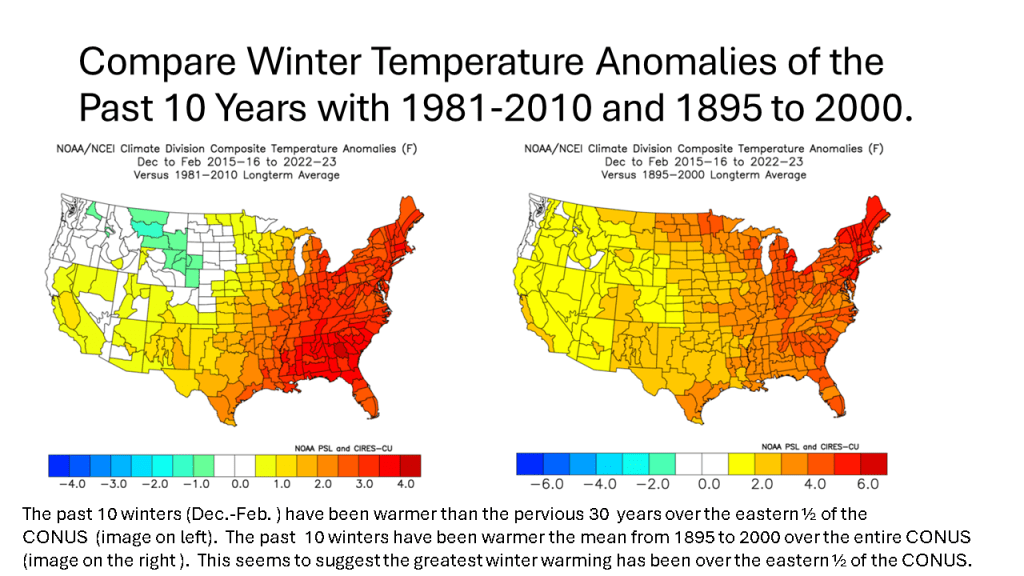
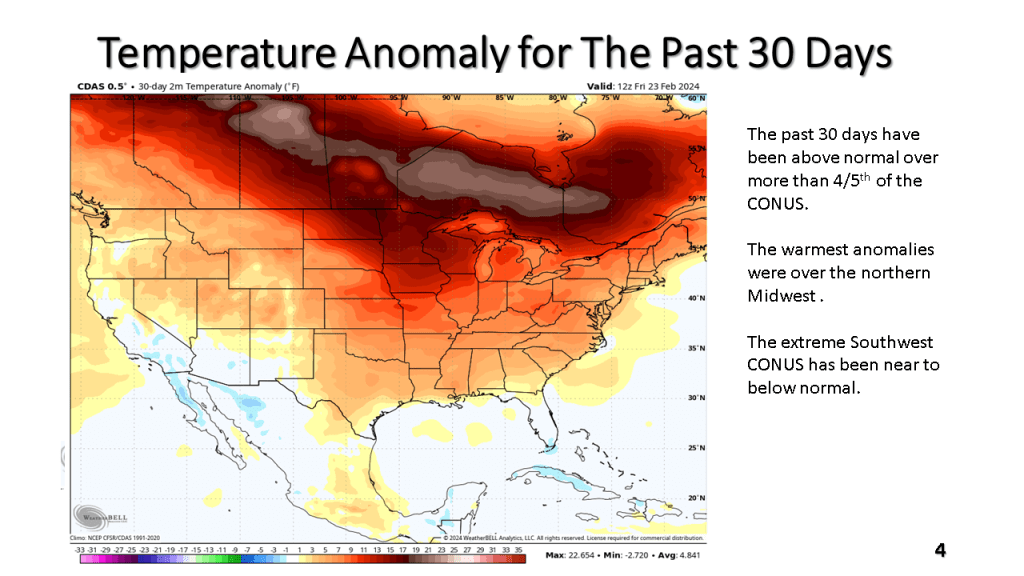
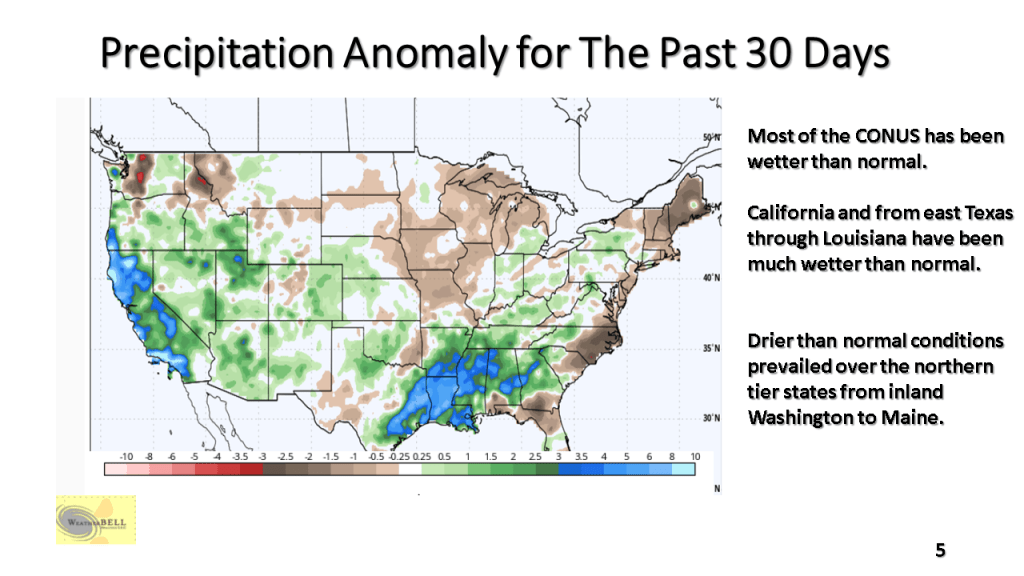
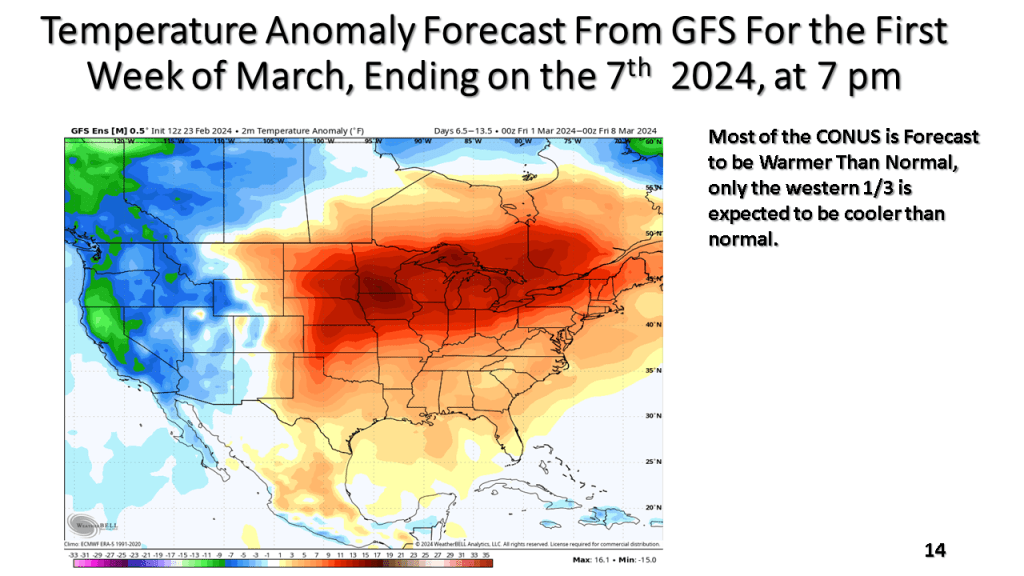
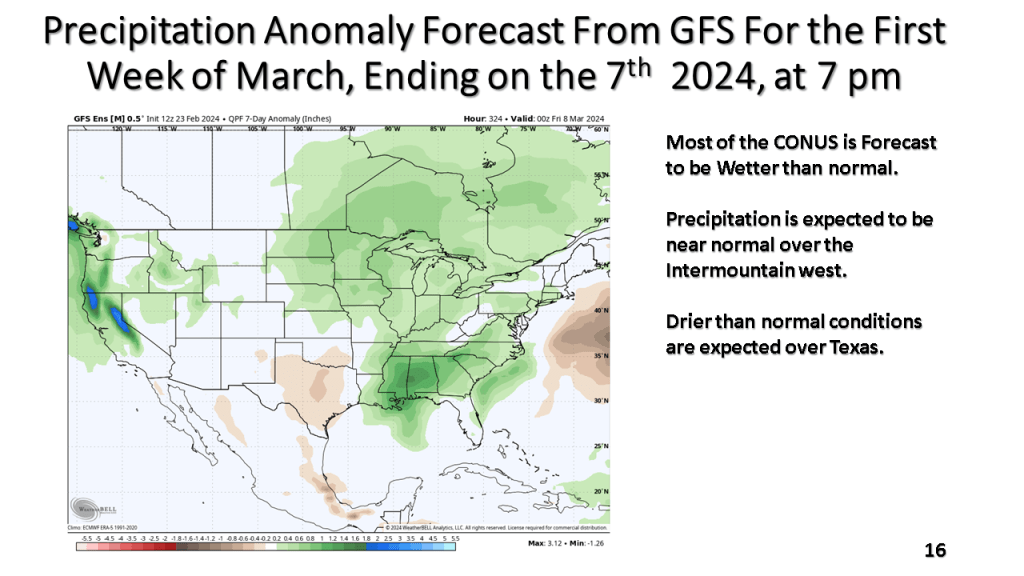
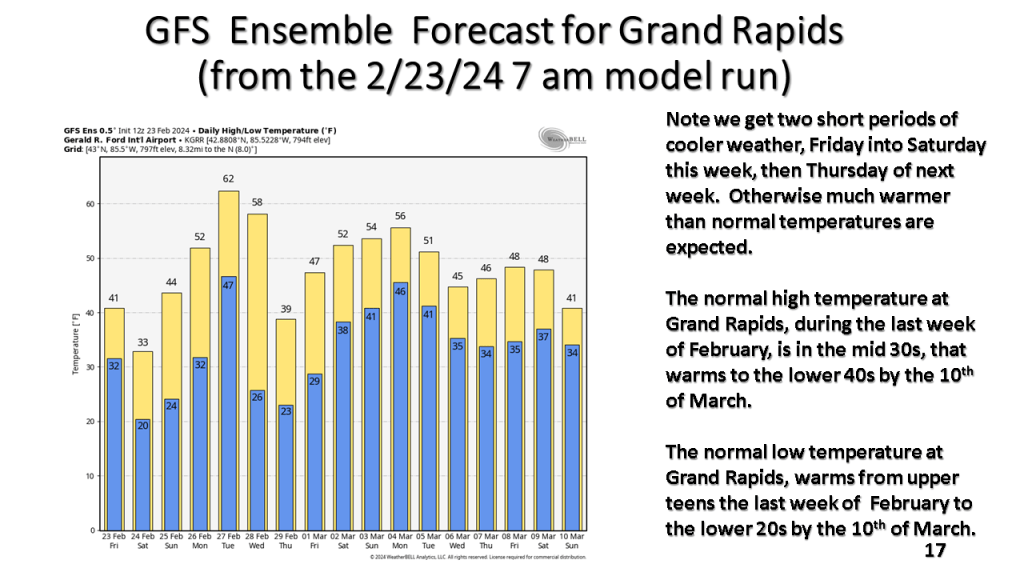
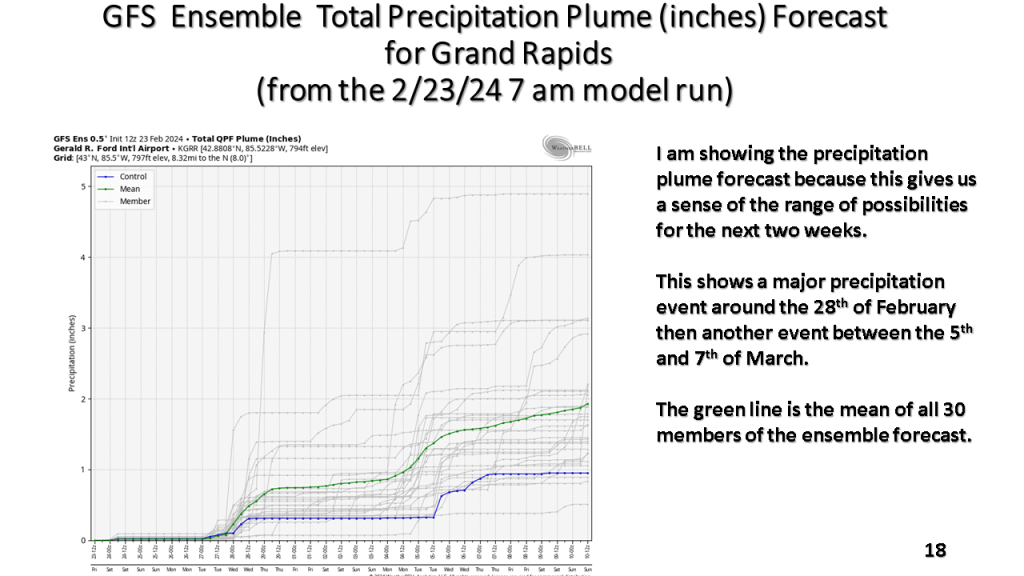
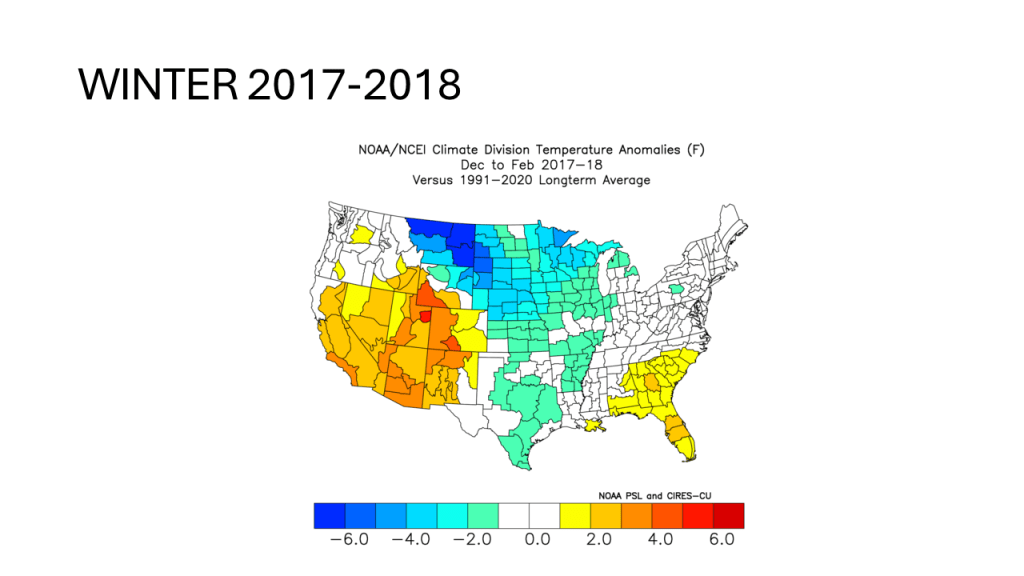
This was both nationally and locally one of the warmest winters on record, with records going back to 1895. Nationally and locally snowfall was below to well below normal. Precipitation was mostly near normal.


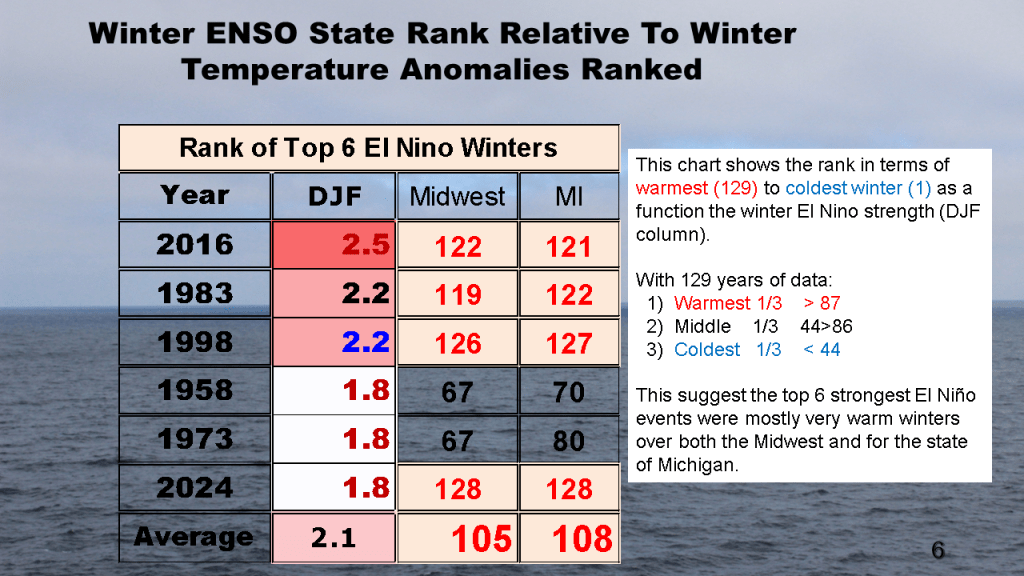
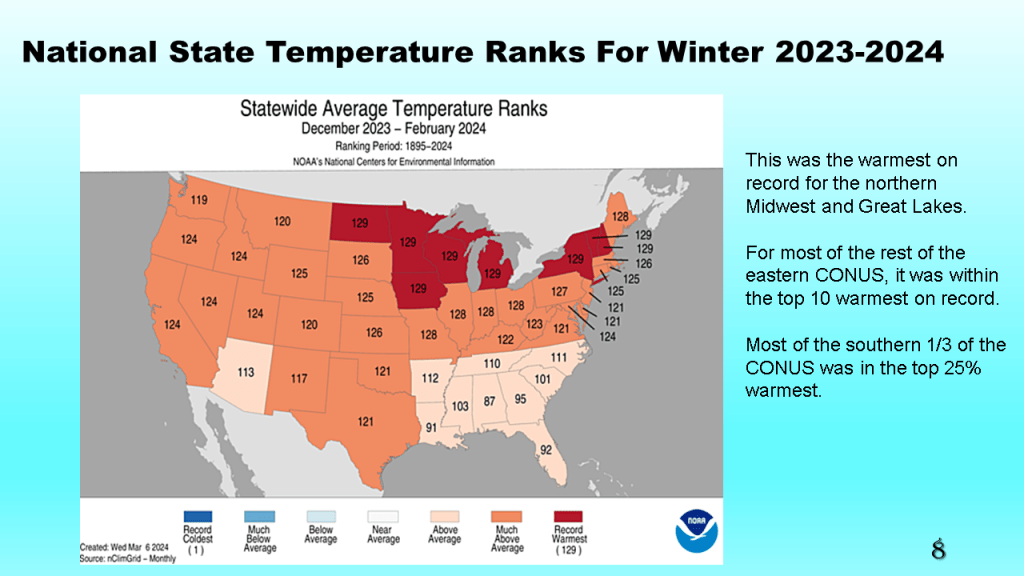
This was both nationally and locally one of the warmest winters on record, with records going back to 1895. Nationally and locally snowfall was below to well below normal. Precipitation was mostly near normal.


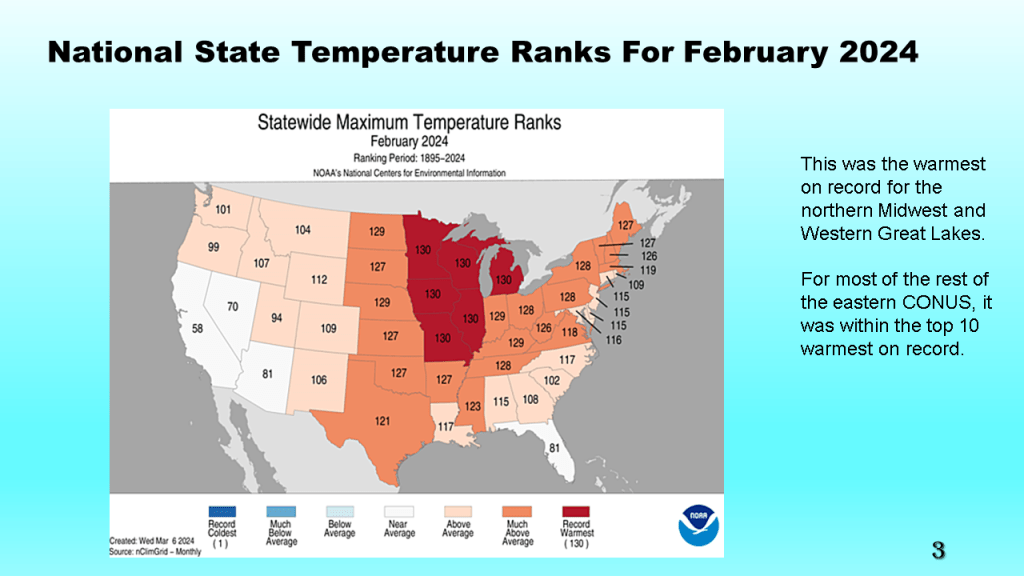
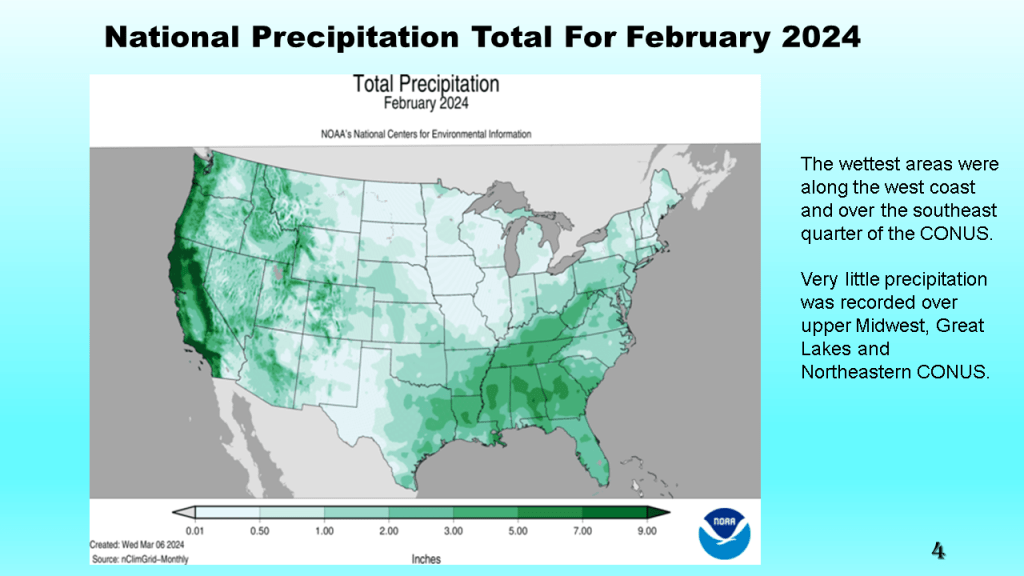
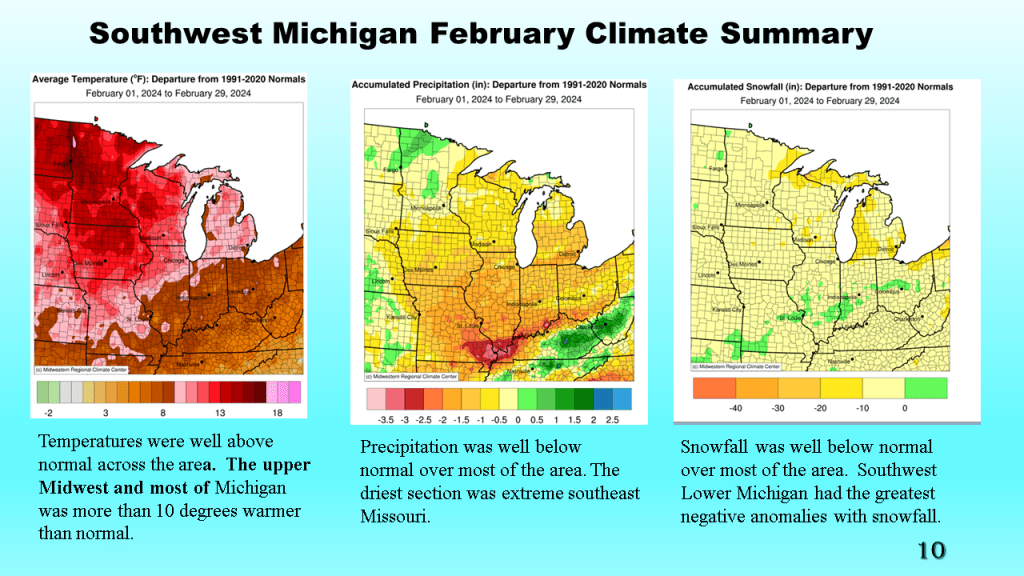
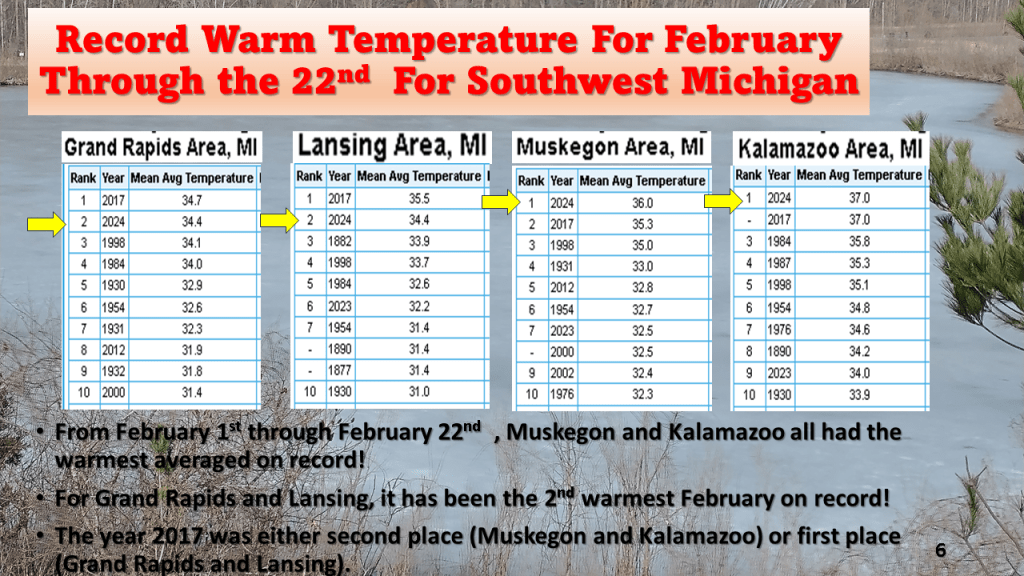
For Southwest Michigan, this was the warmest February on record. Both the total precipitation and snowfall were well below normal. Nationally this was the 3rd warmest and 40th driest on record.


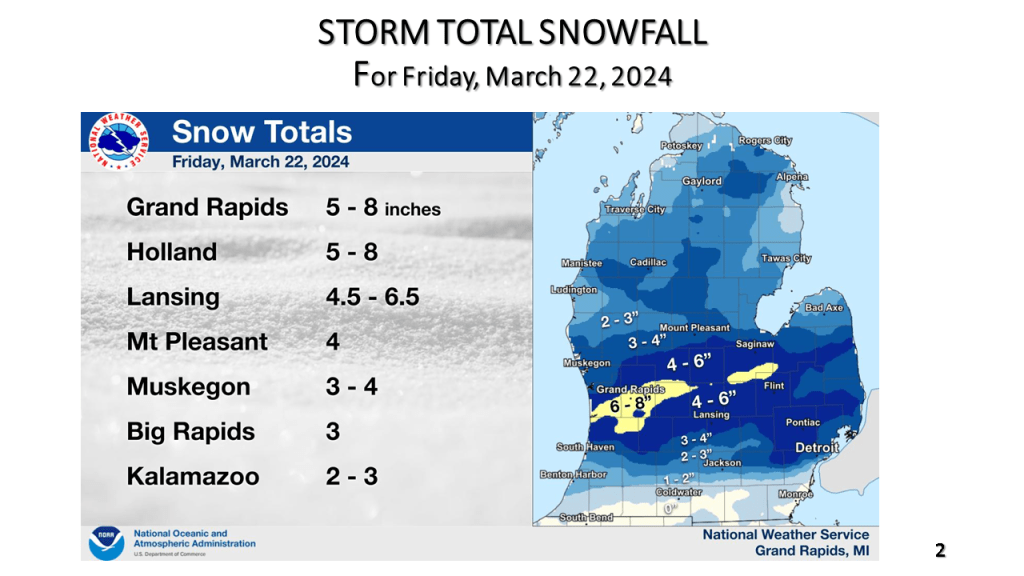
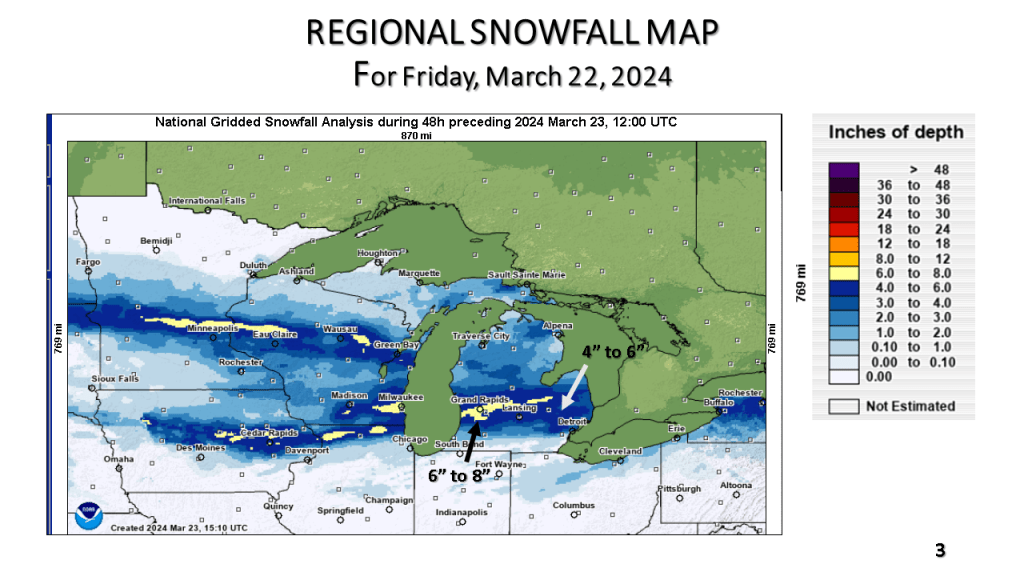
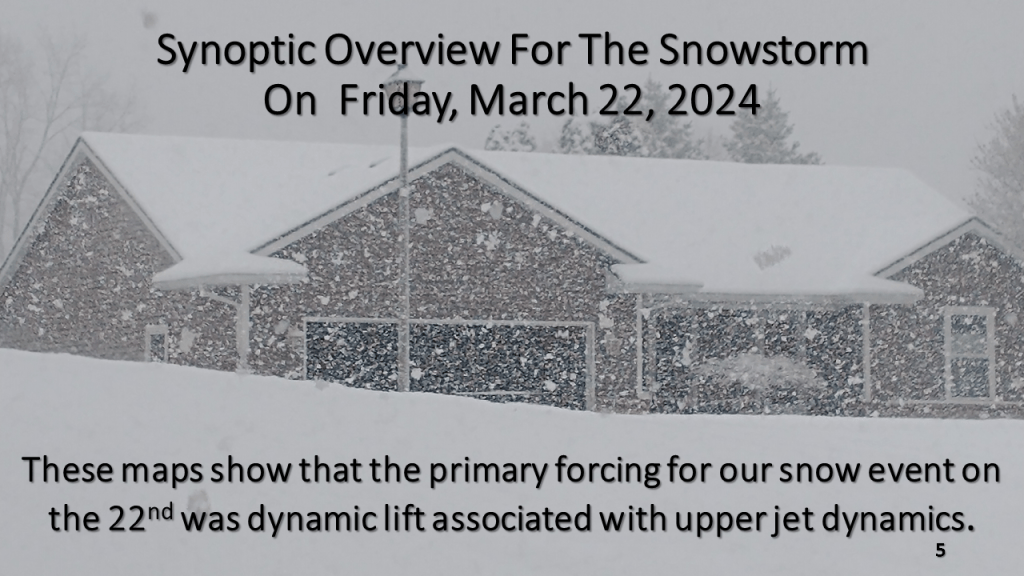
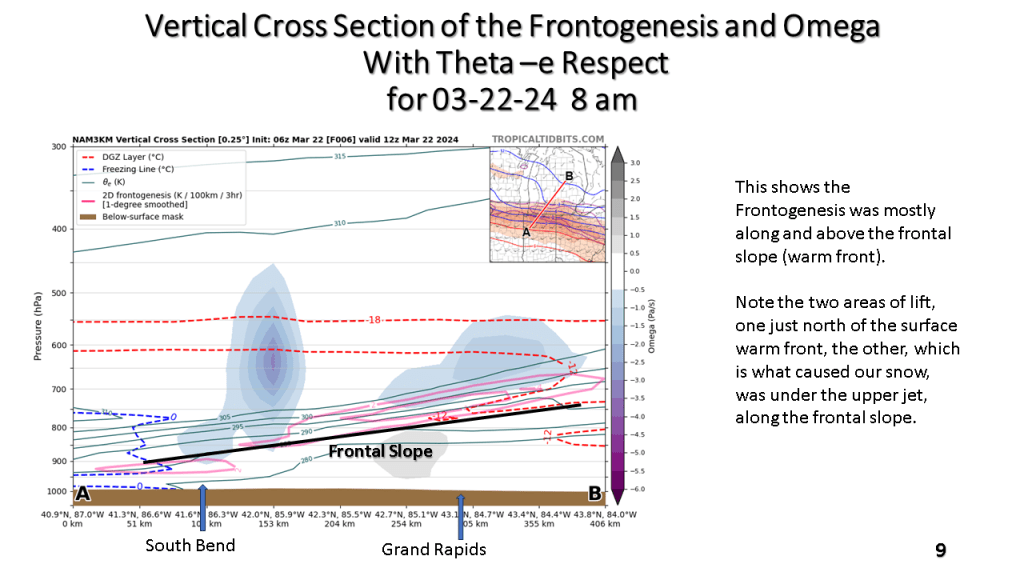
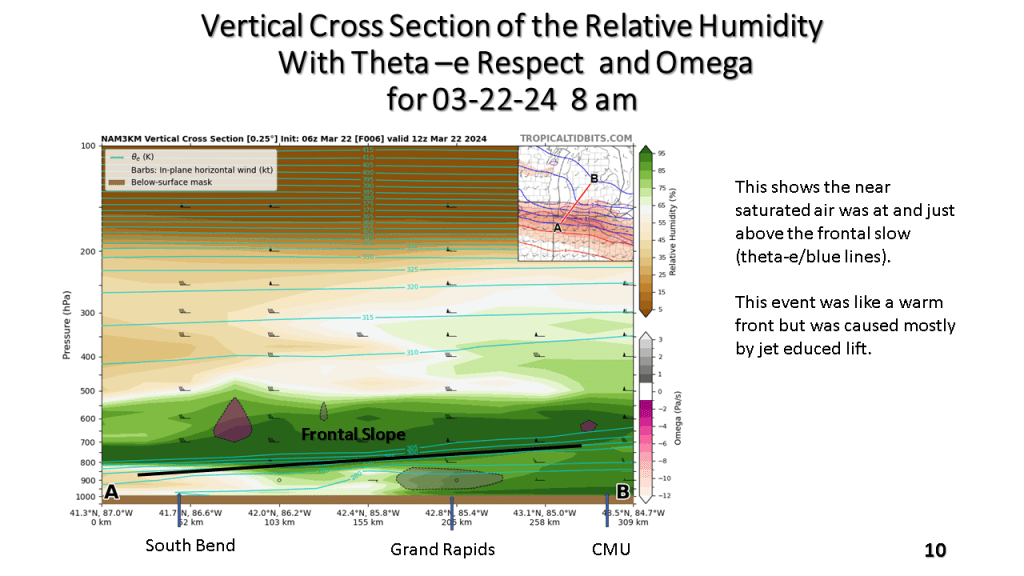
There was a narrow band of 5″ to 8″ of snow From Near Holland Michigan, across the Grand Rapids area, to just north of Flint. Most of the snow fell in about 12 hours.


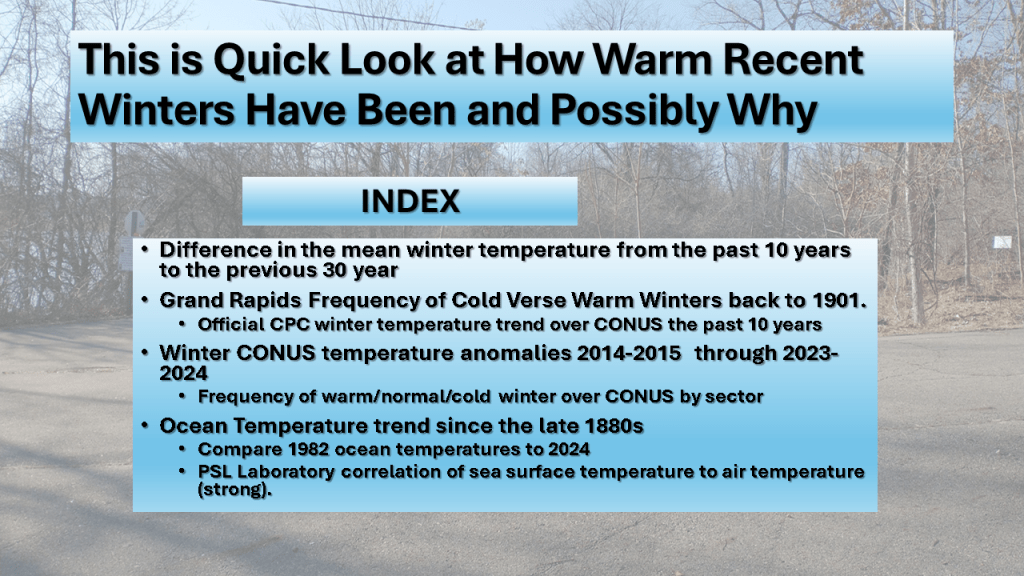
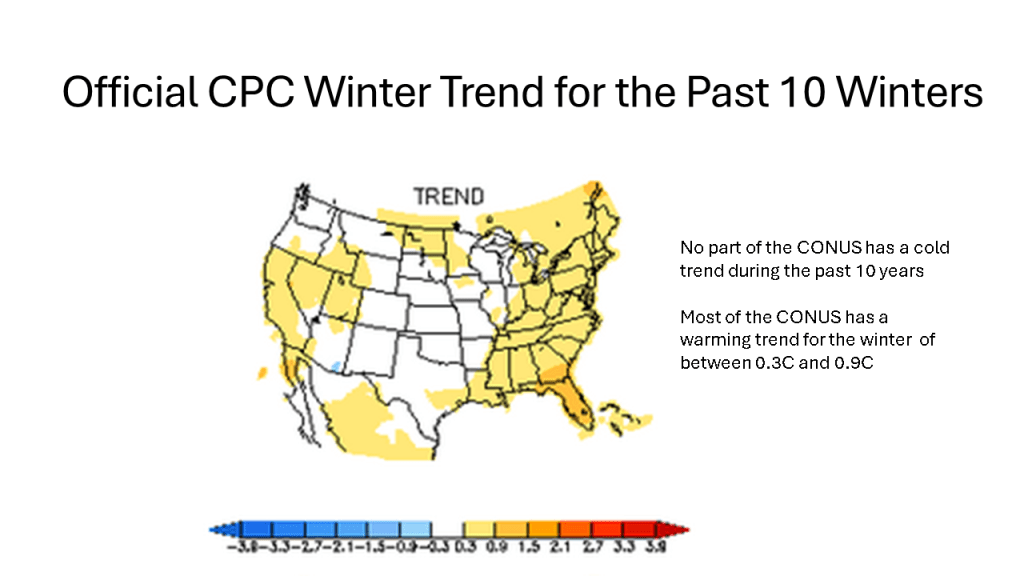
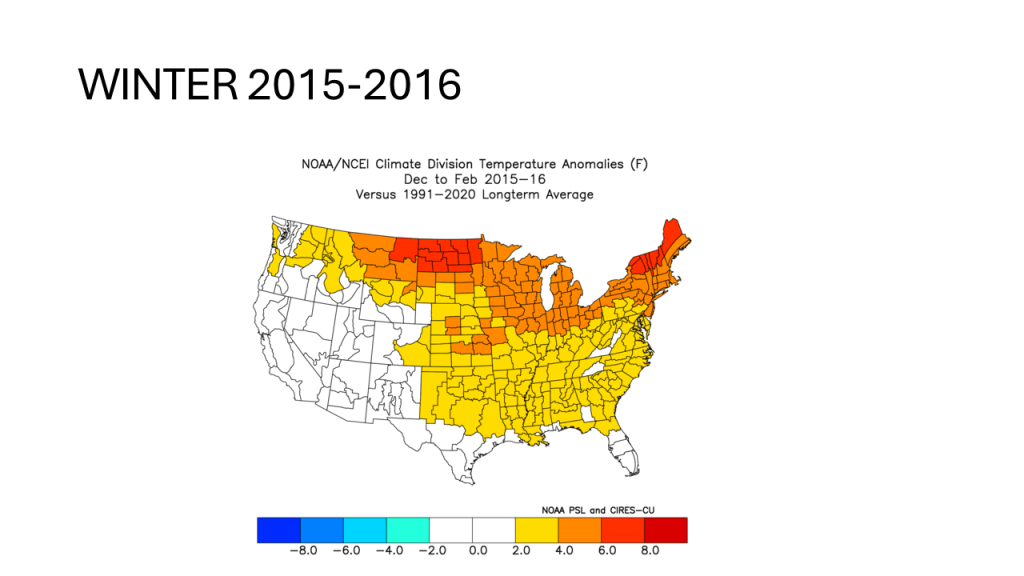
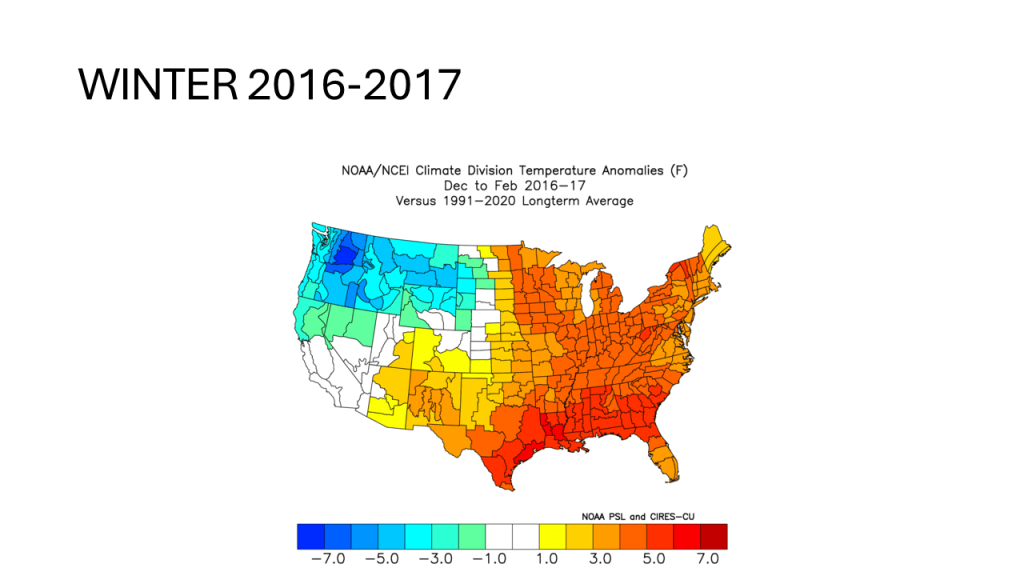
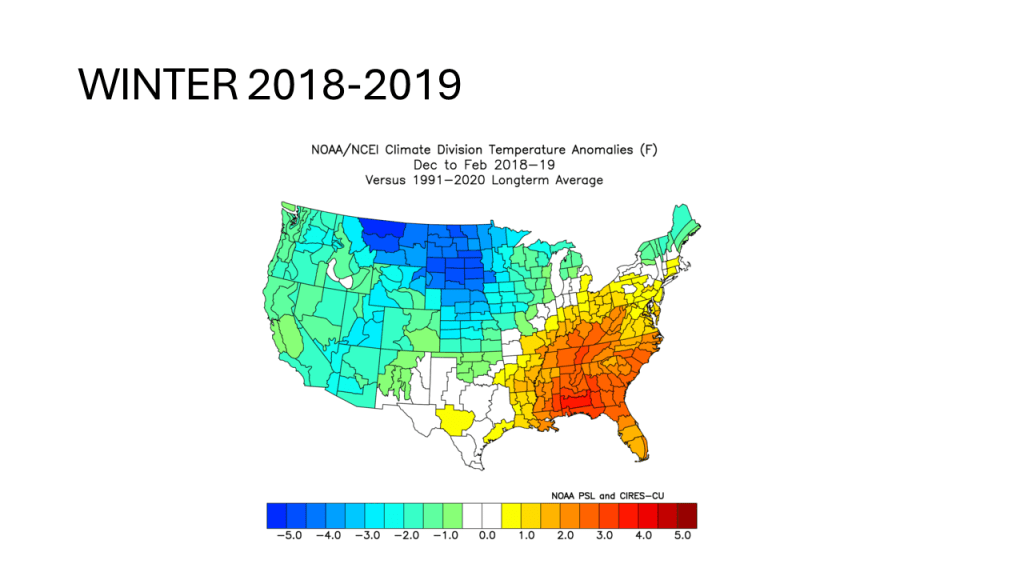
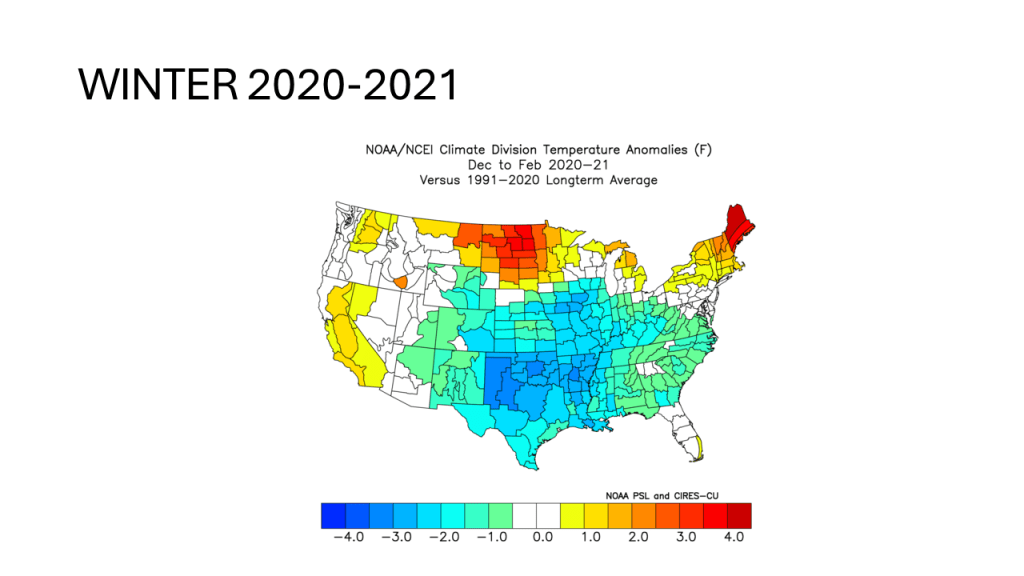
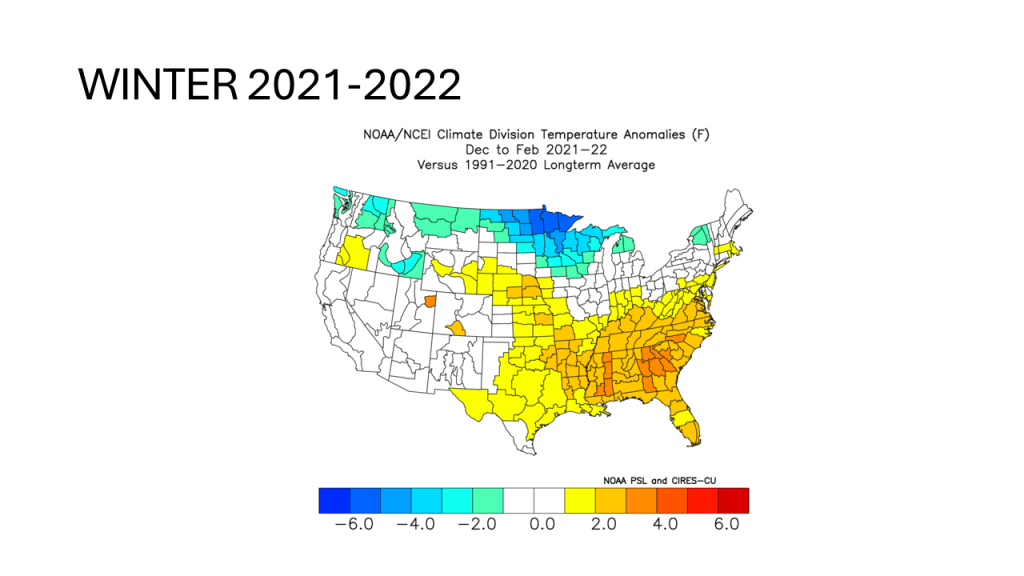
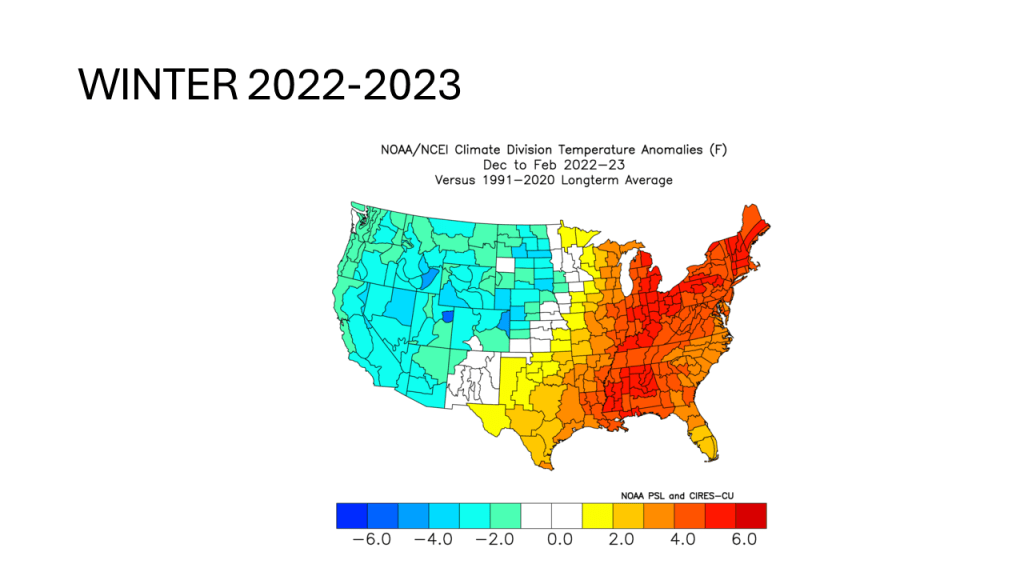
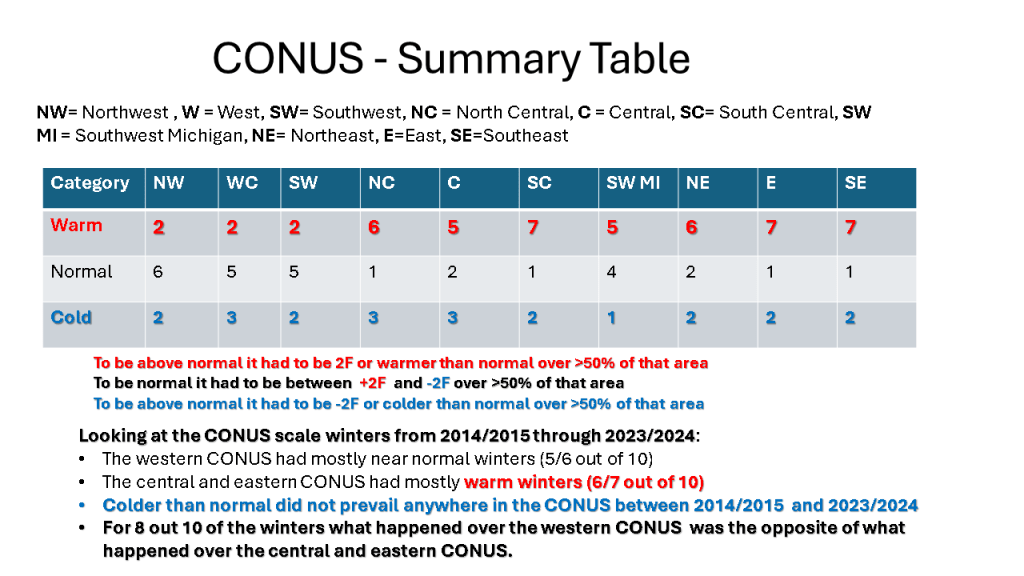
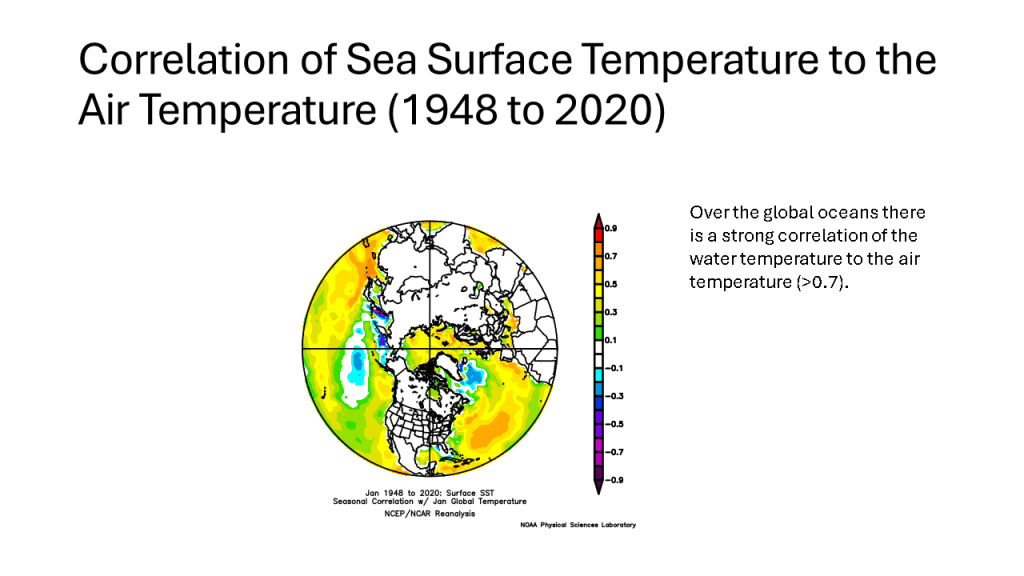
This is an update to what I did yesterday but with a lot more detail. I have added CONUS scale winter temperature anomalies for each of the past 10 years so you can see for yourself, in your area how the cold winter frequency has changed (there is a summary CONUS scale summary table for this now too). I have added correlation slides from CPC and Physical Science Laboratories to show there really the correlation I am suggesting is true.


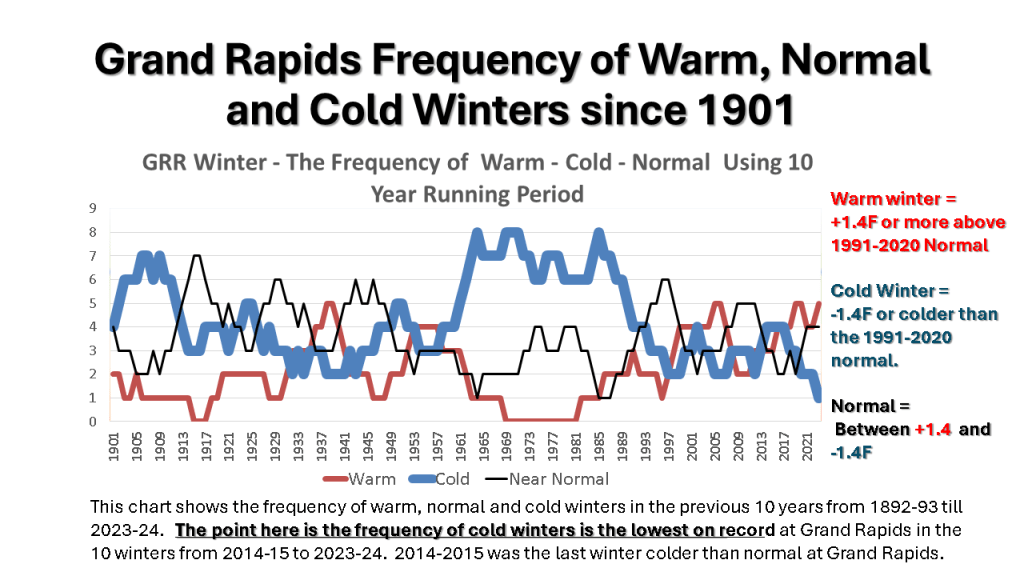
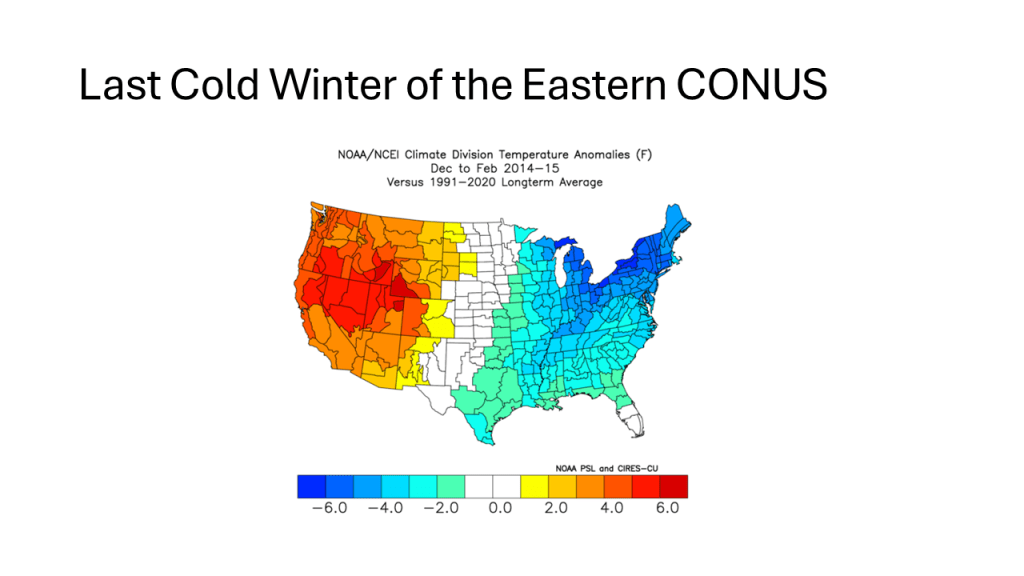
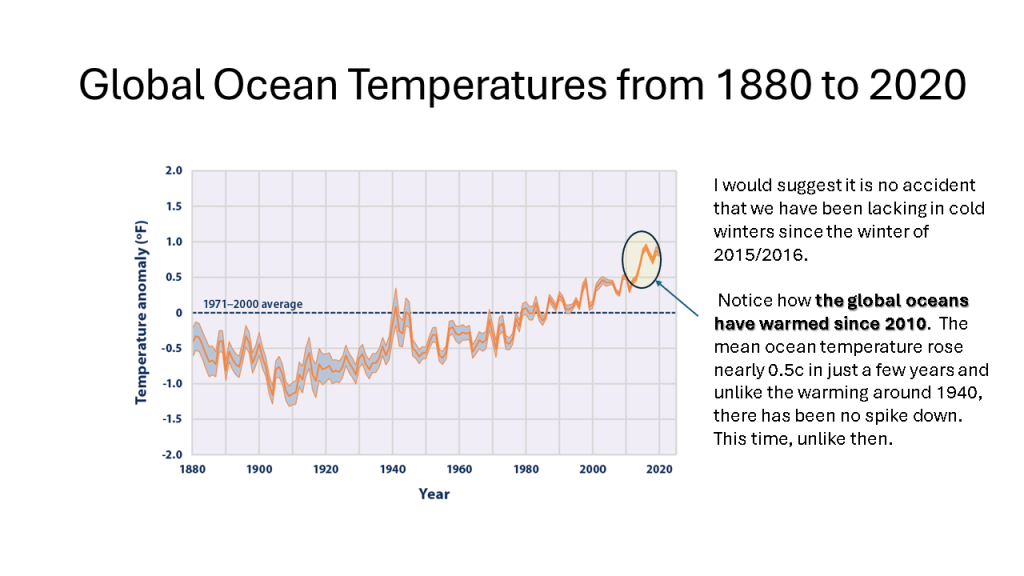
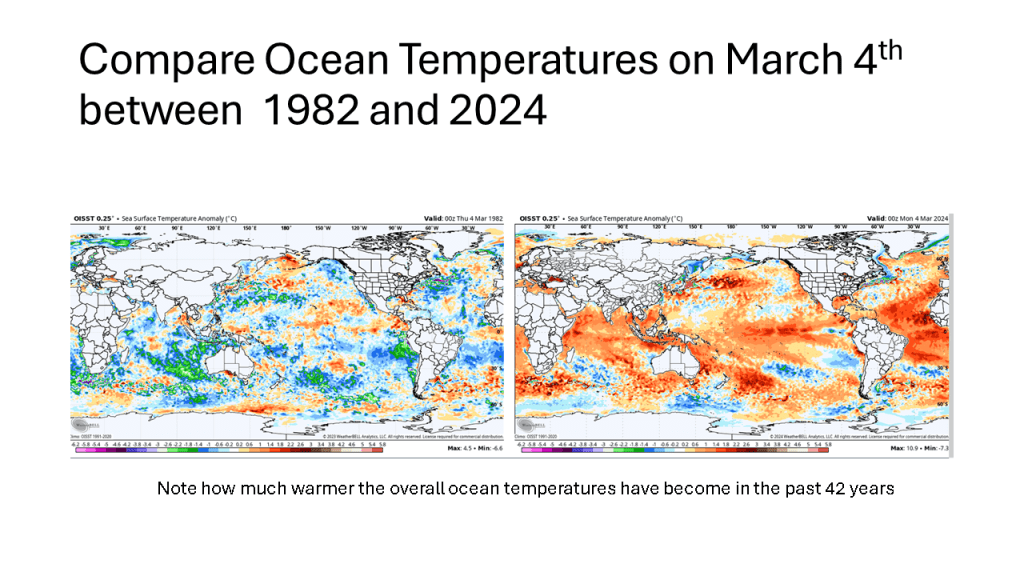
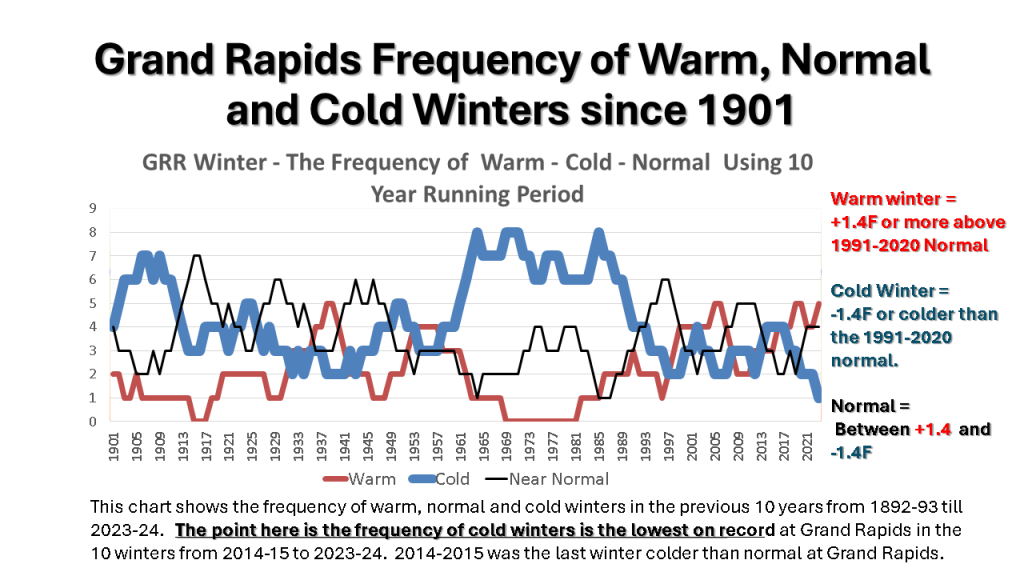
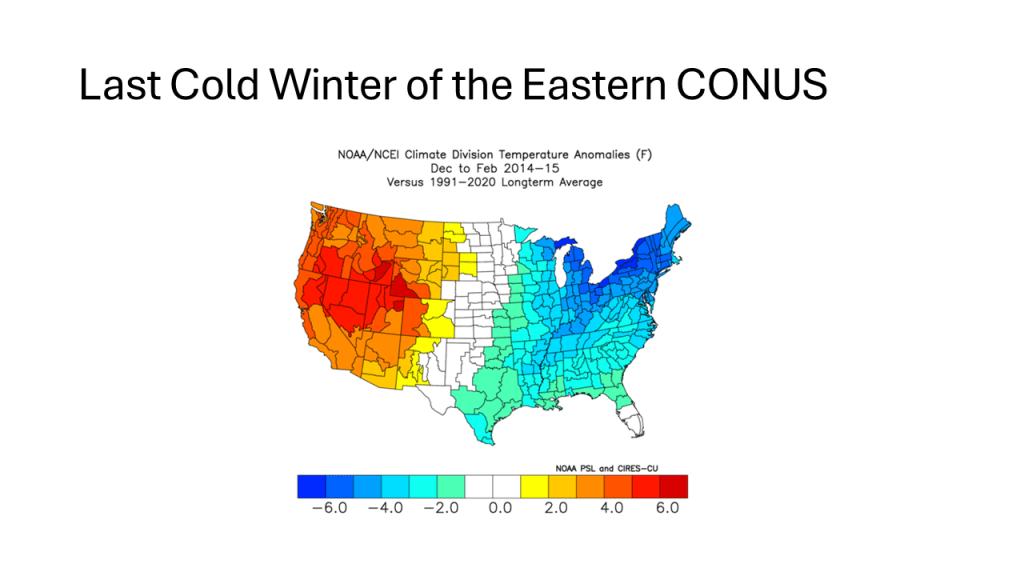
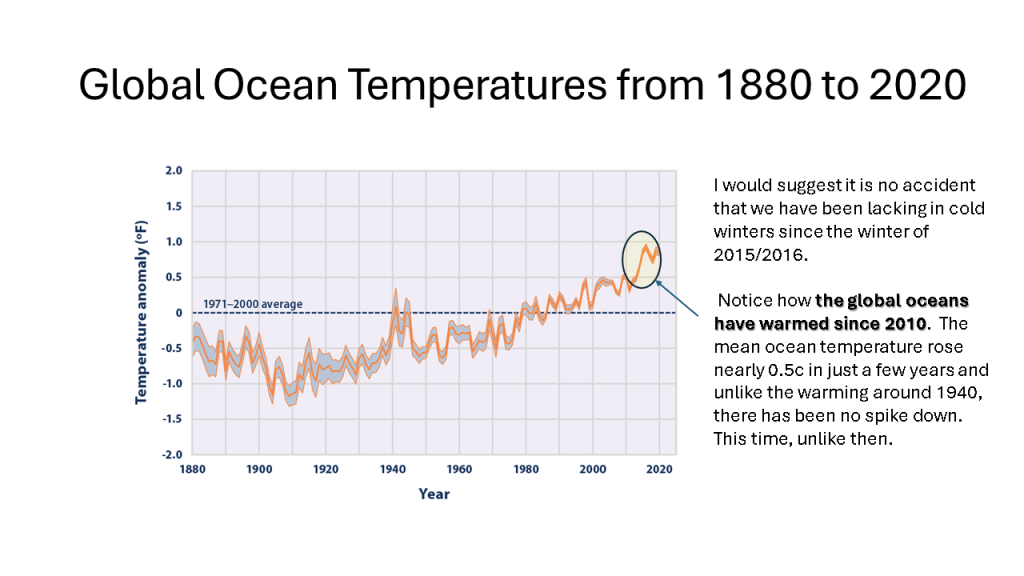
At least over Southwest Michigan and likely most of the northern CONUS, we have lacked cold winter (relative to 1991-2020 normal) since the winter of 2014/2015, which was the last cold winter. I would suggest warming oceans are at least part of the story.


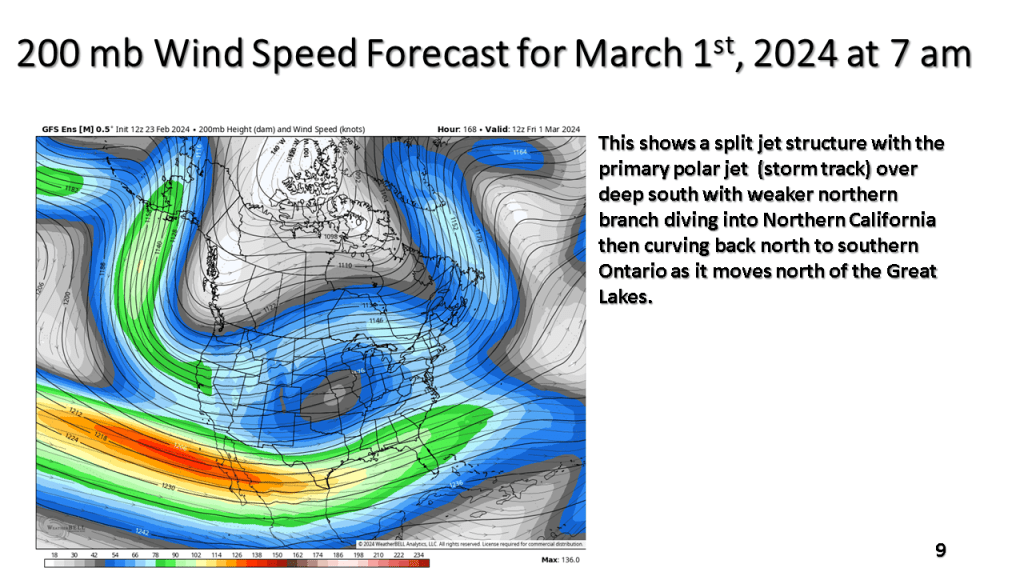
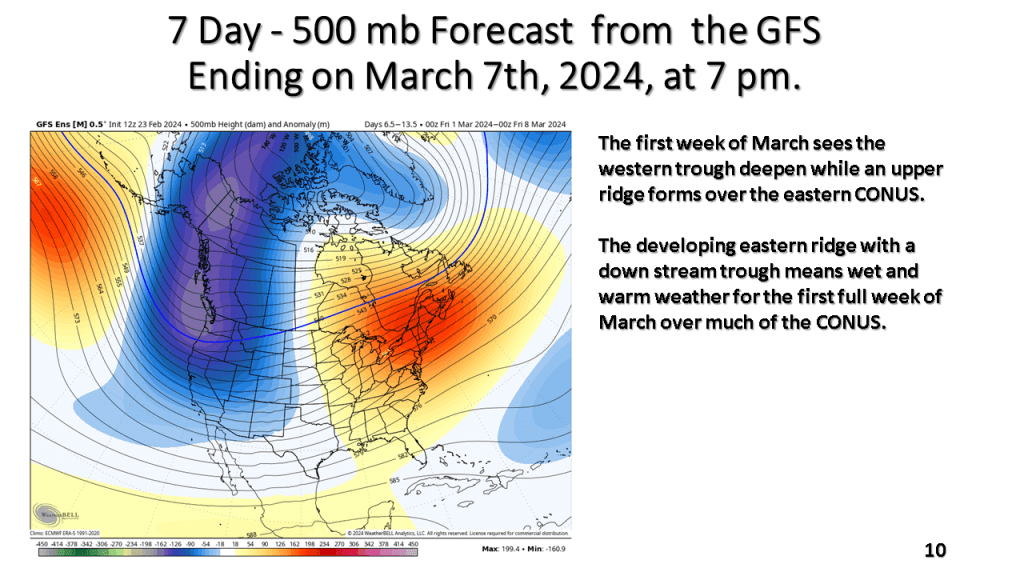
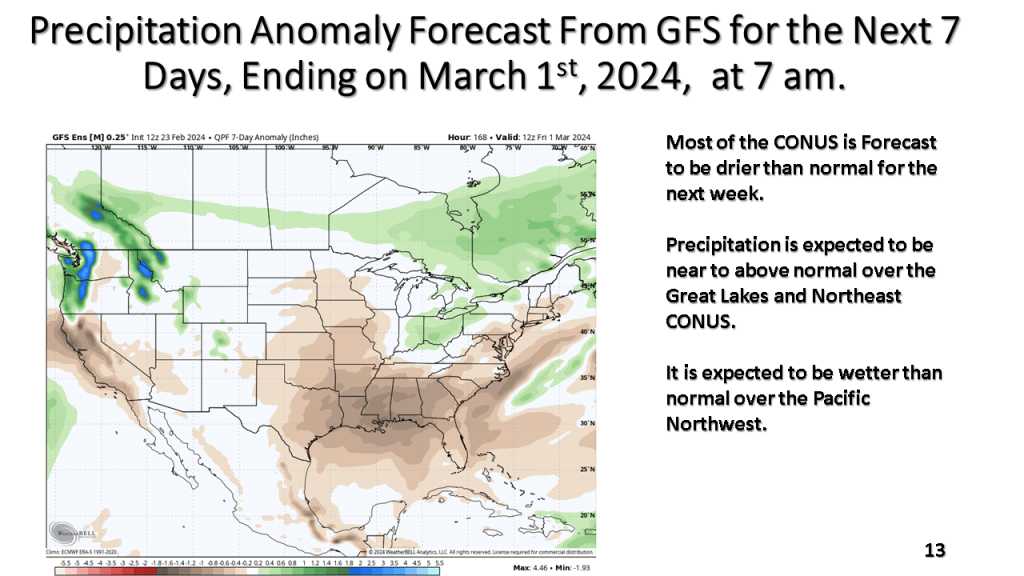
Largely this means warmer and wetter over the CONUS but cold and snowy over southern Canada.


What makes this more striking is that over the past 30 years, the last week of January and the first two weeks of February are the coldest weeks of the entire year. The mean of 37.2 degrees in Grand Rapids would be normal for the 20th of March (using the 1991-2020 normal).


The bottom line is it will be very warm, relative to normal until around Valentine’s Day, the it will get cold across most of the central and eastern CONUS with a significant amount of snow over the Great Lakes and New England.