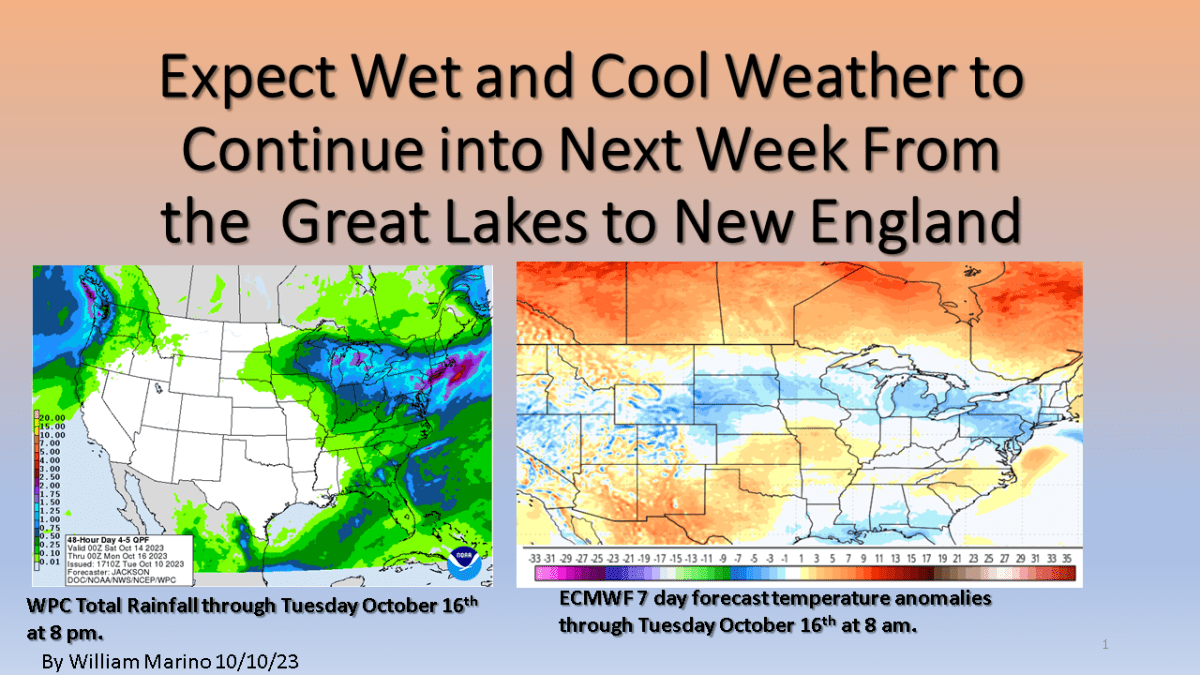


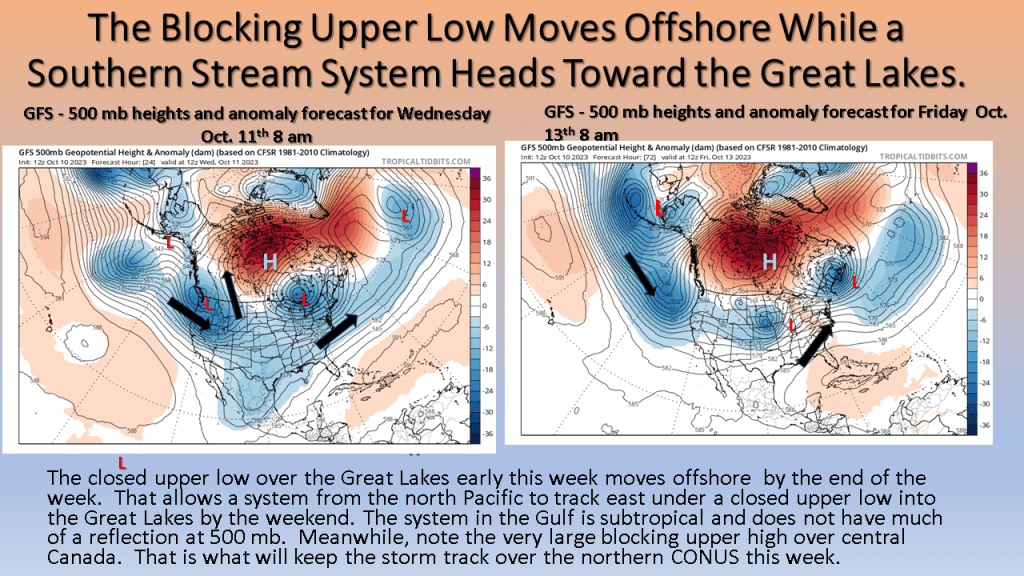

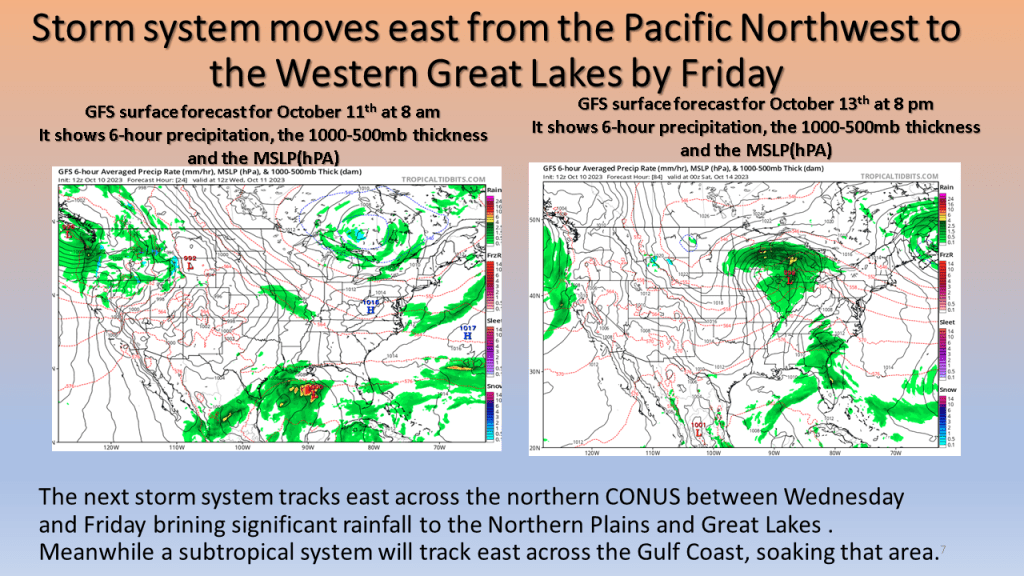
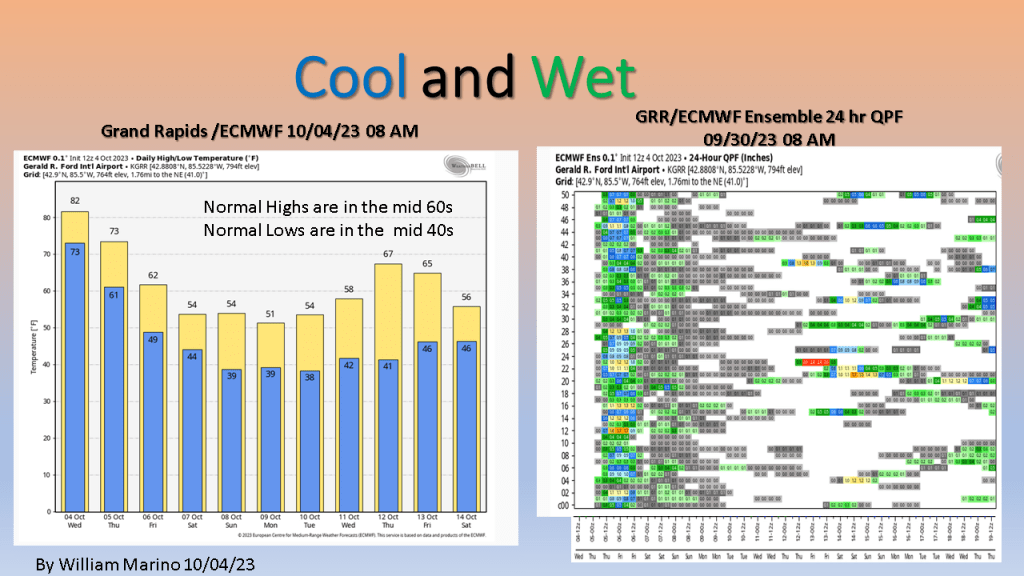
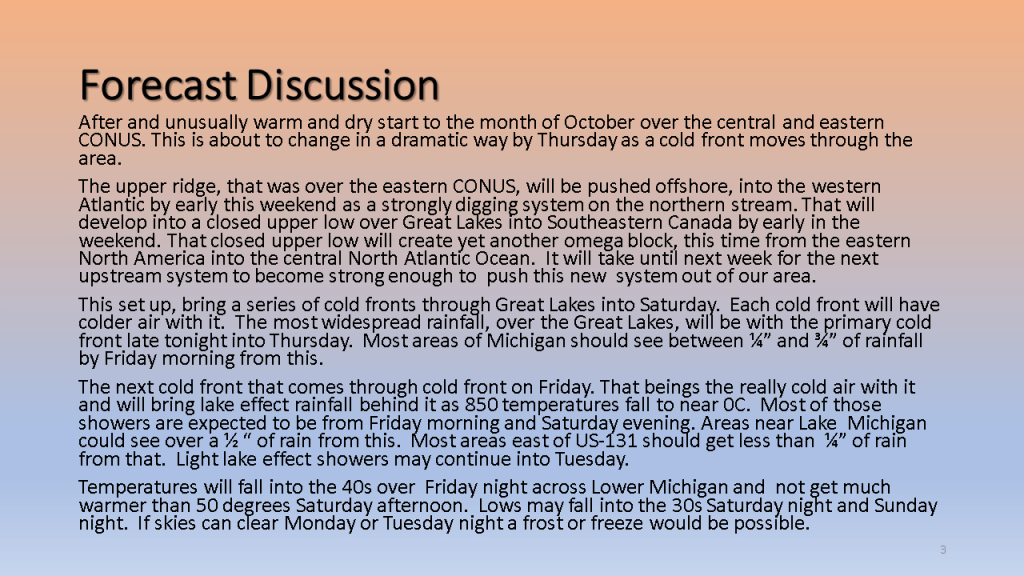
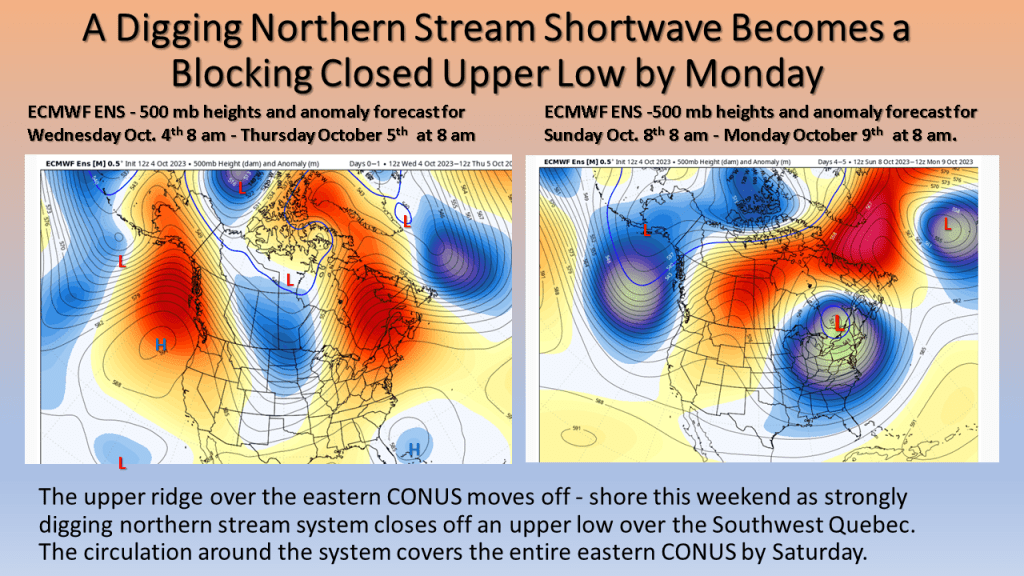
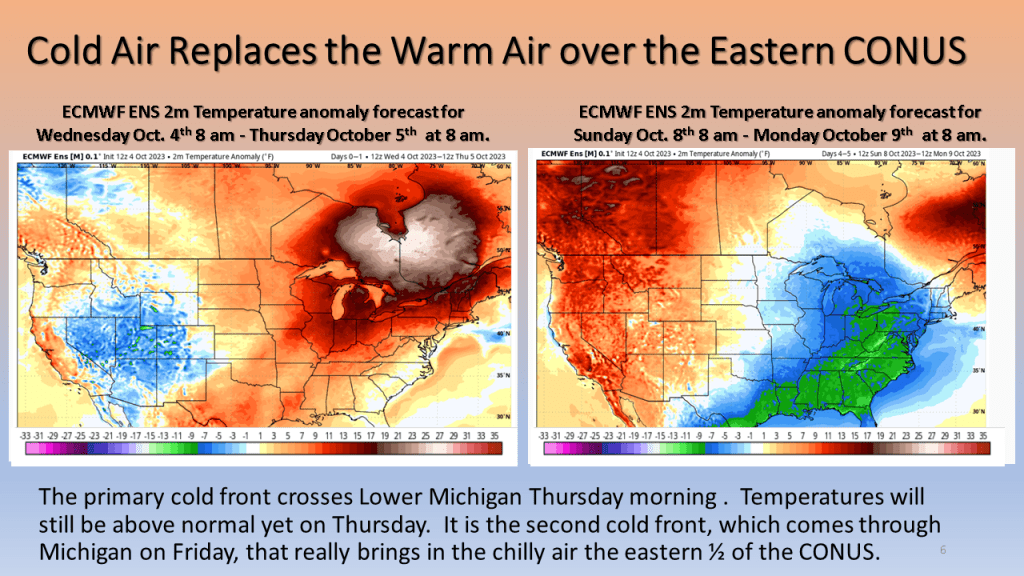
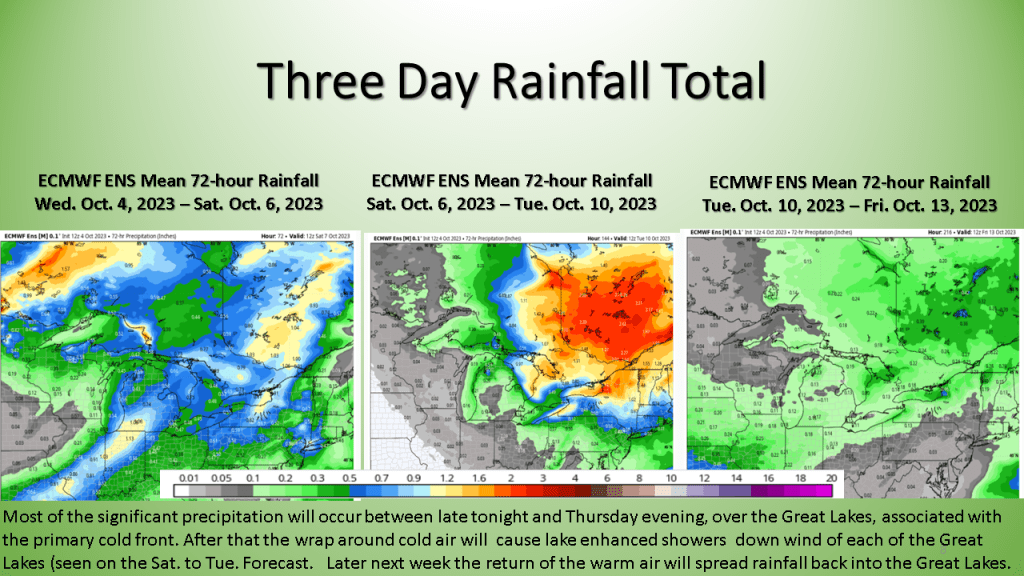
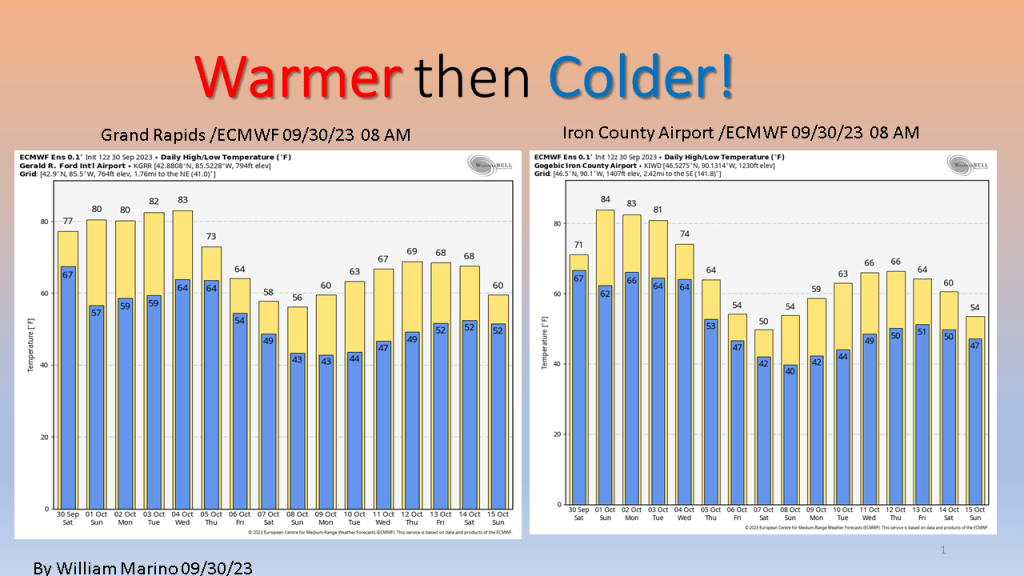
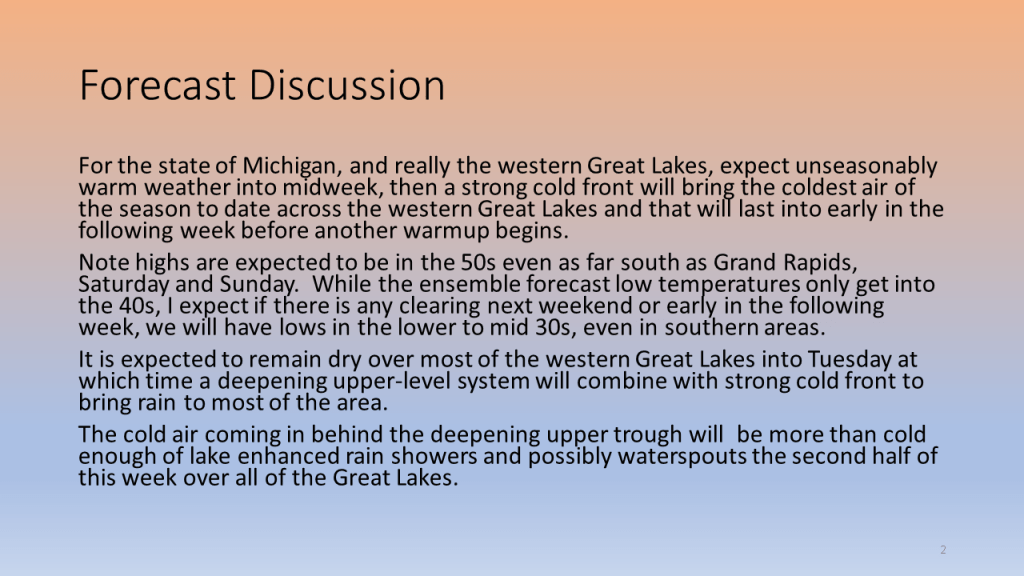
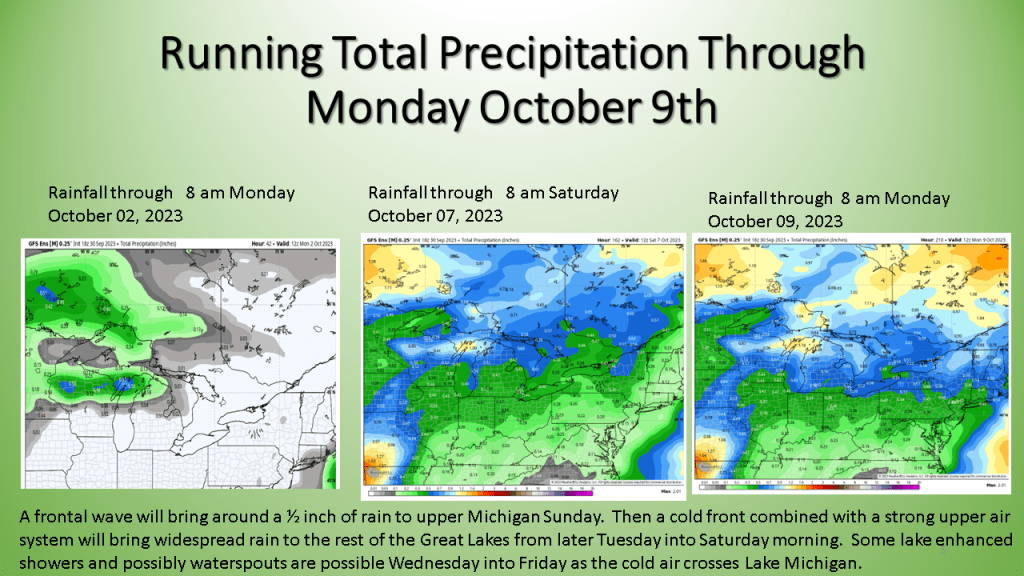
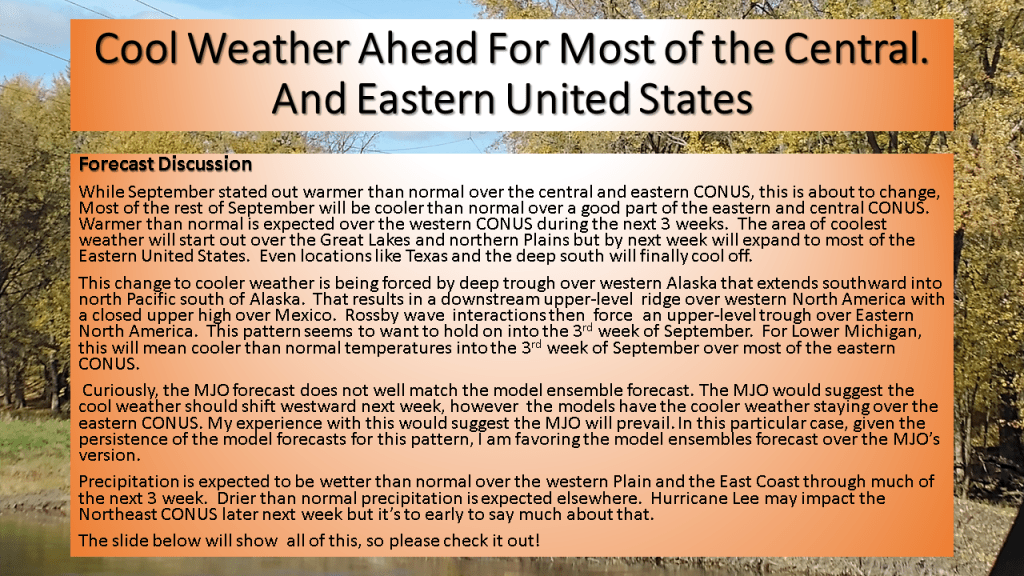
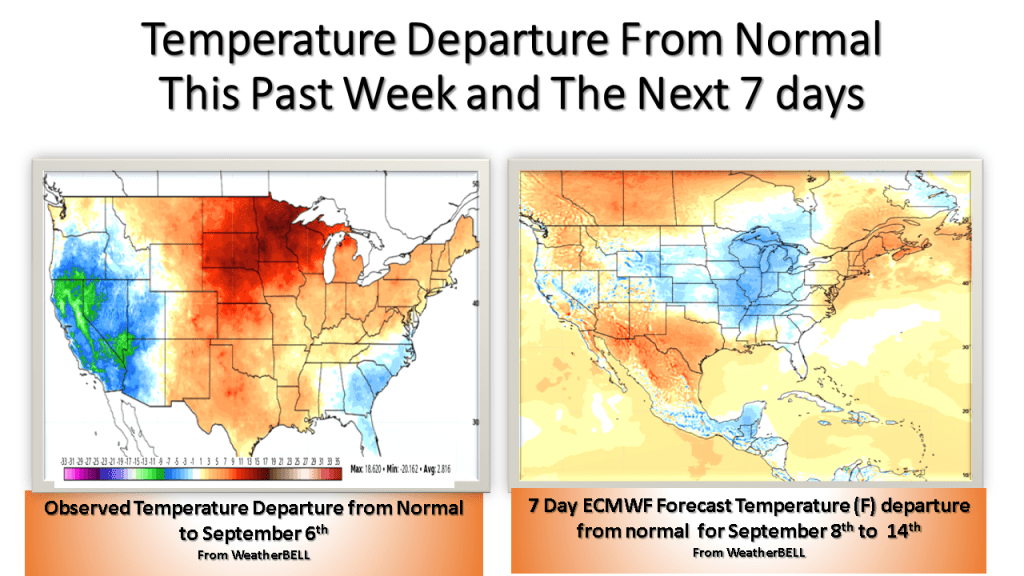
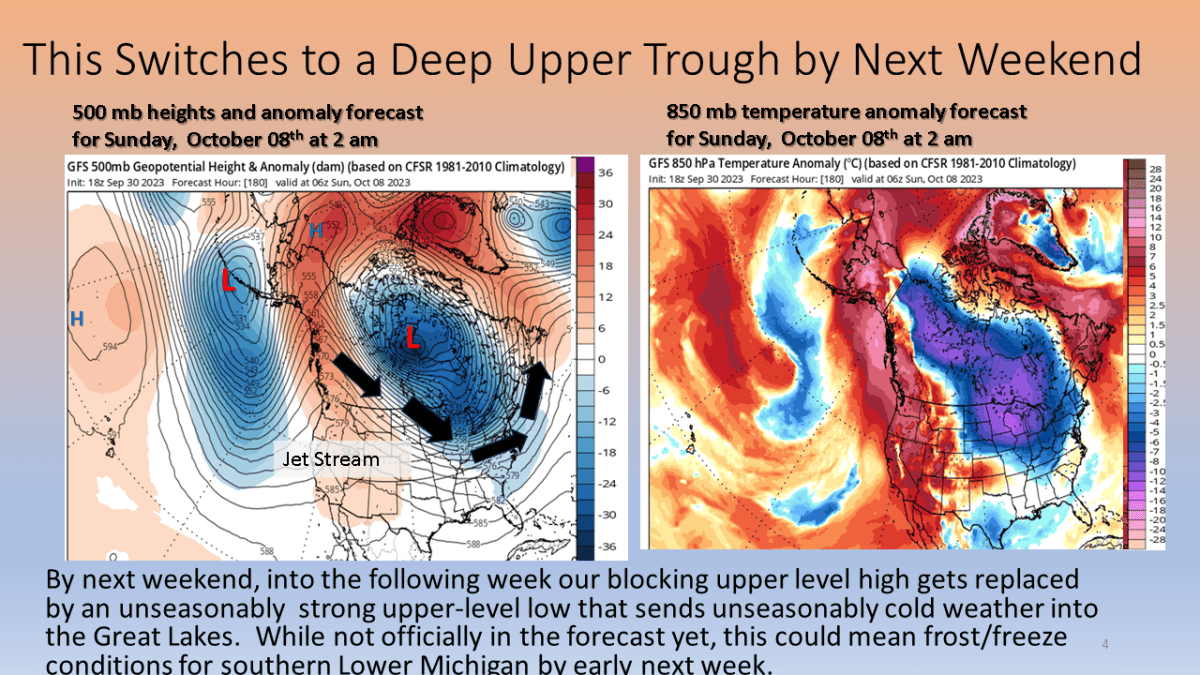
It will fell like fall by Friday morning and that chilly and showery weather my last into Tuesday morning before the system is far enough to east to allow for some clearing. It will remain chilly Tuesday into Wednesday before a warm up starts by Thursday of next week.





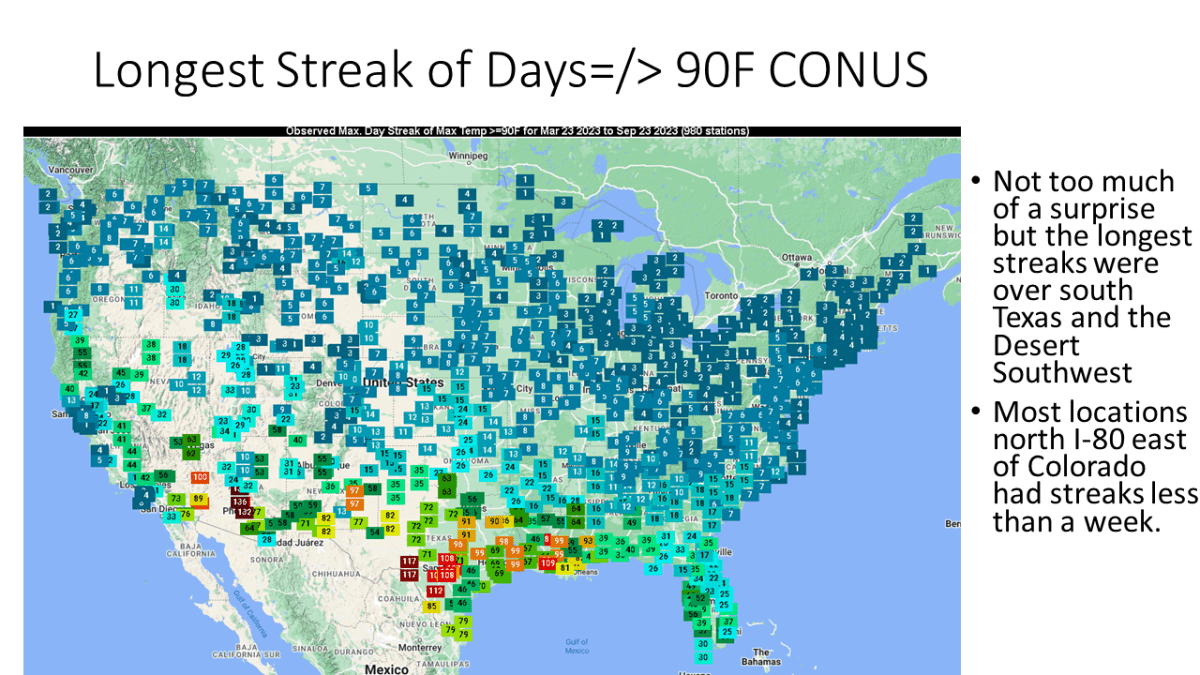
I through it would be fun and informative to see the frequency for hot days across our Nation.
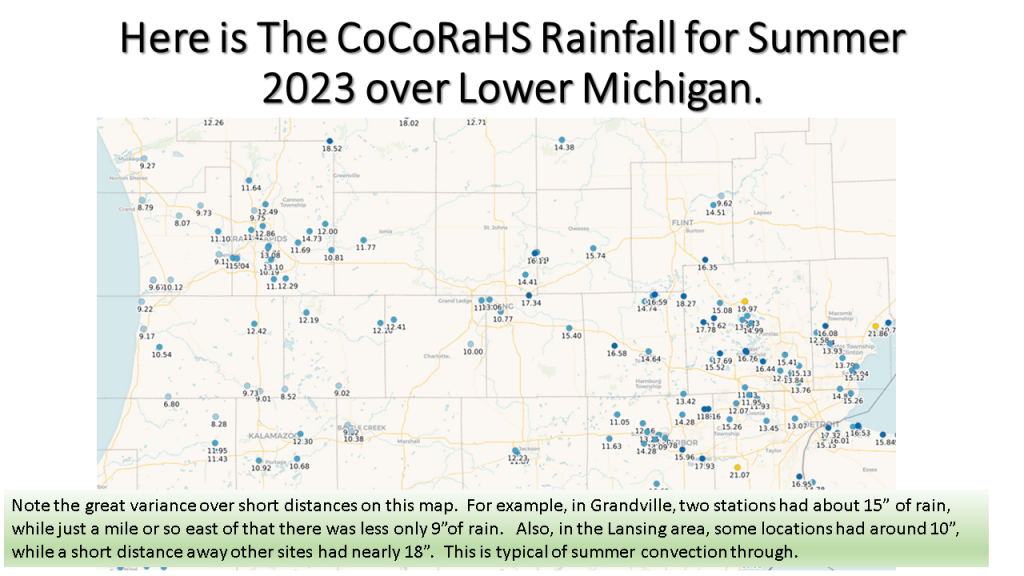
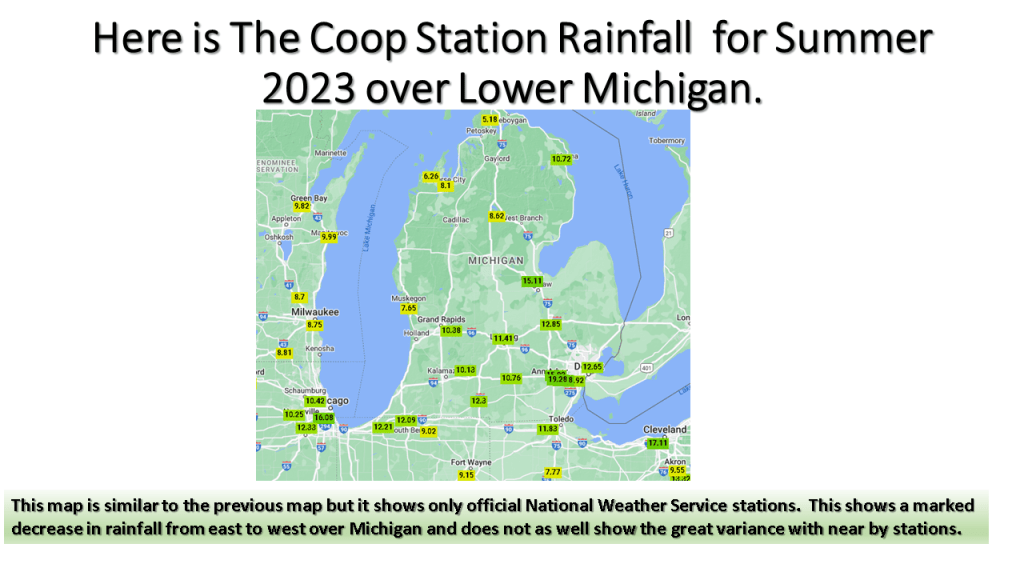
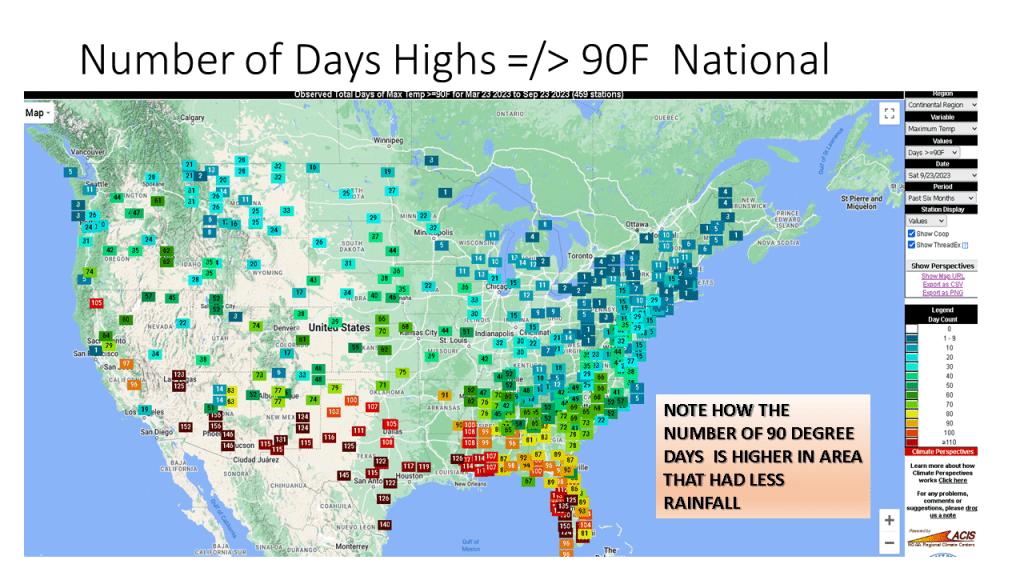
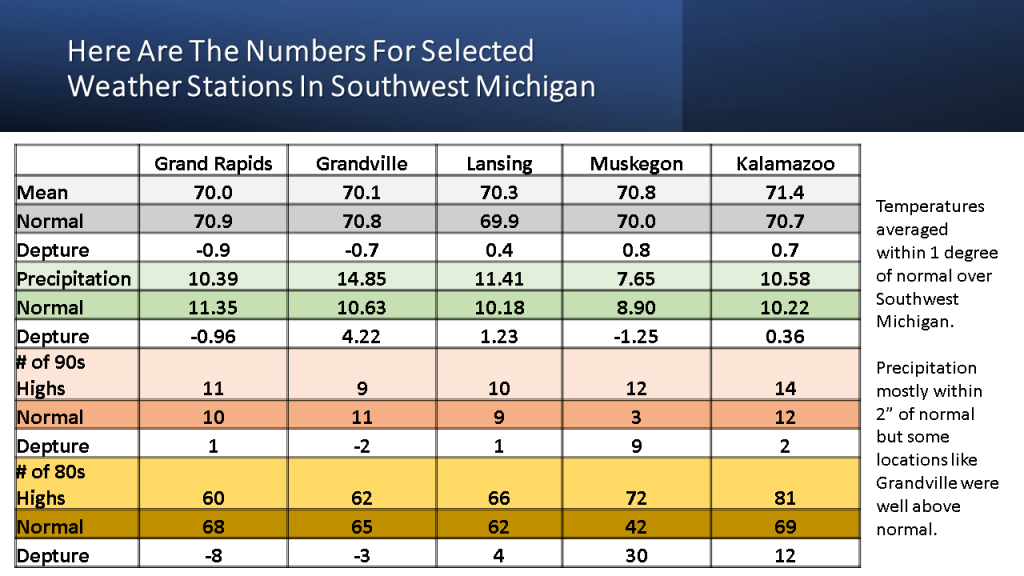
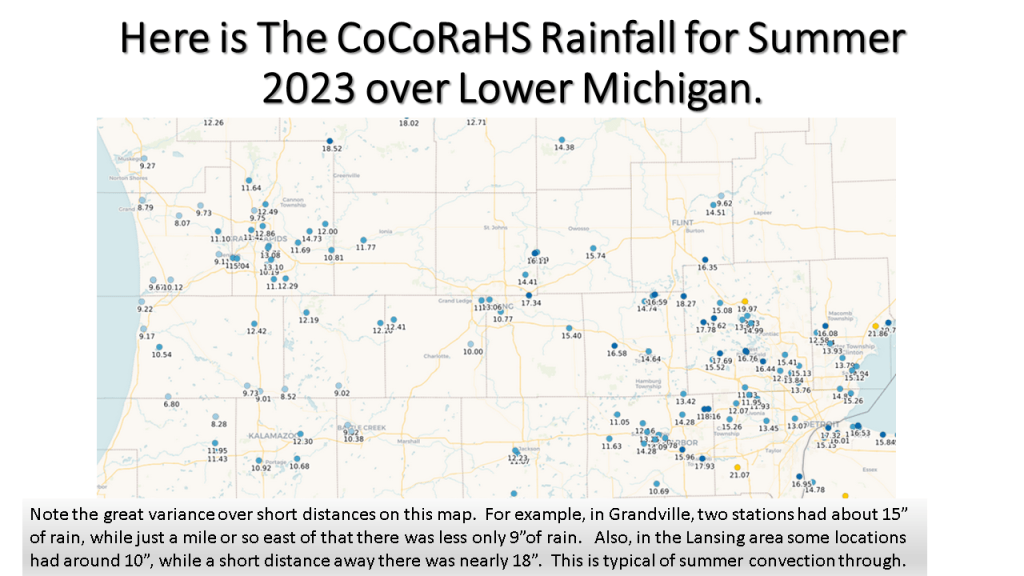
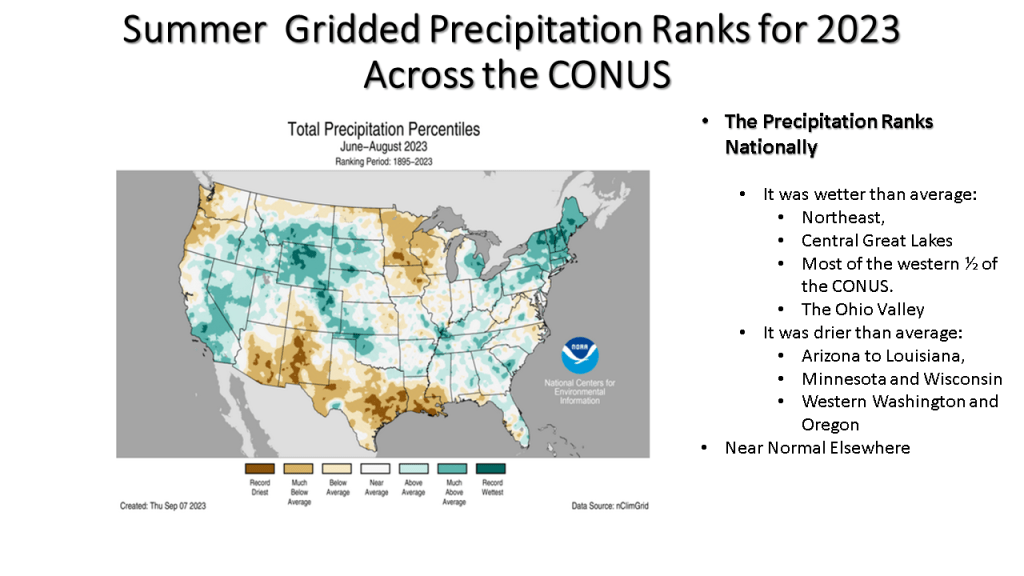
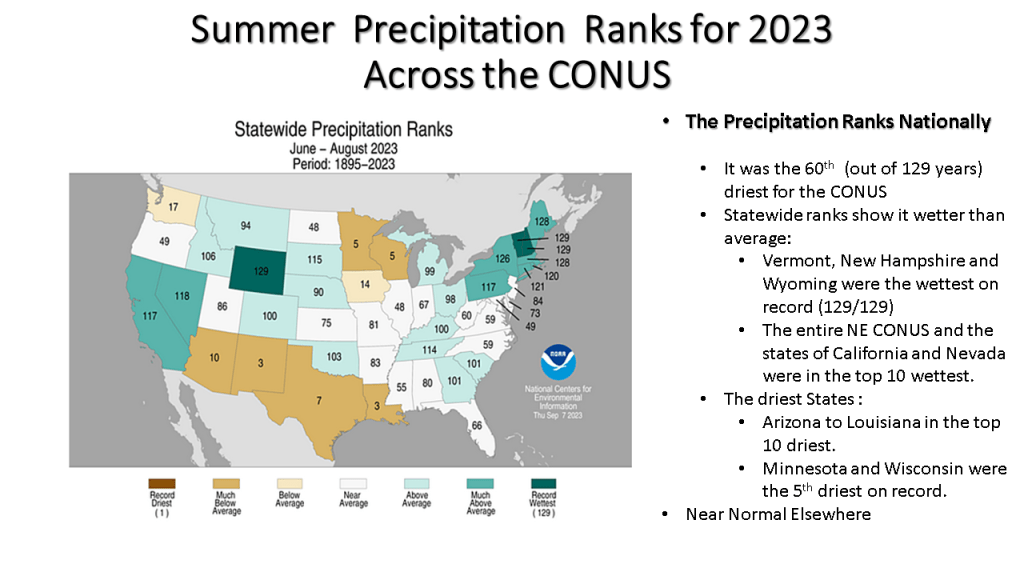
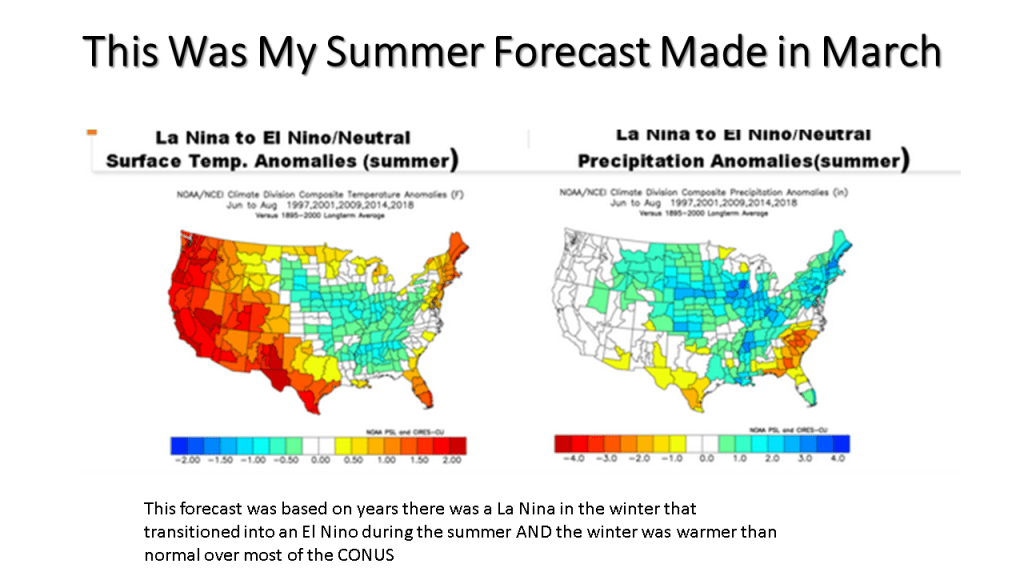
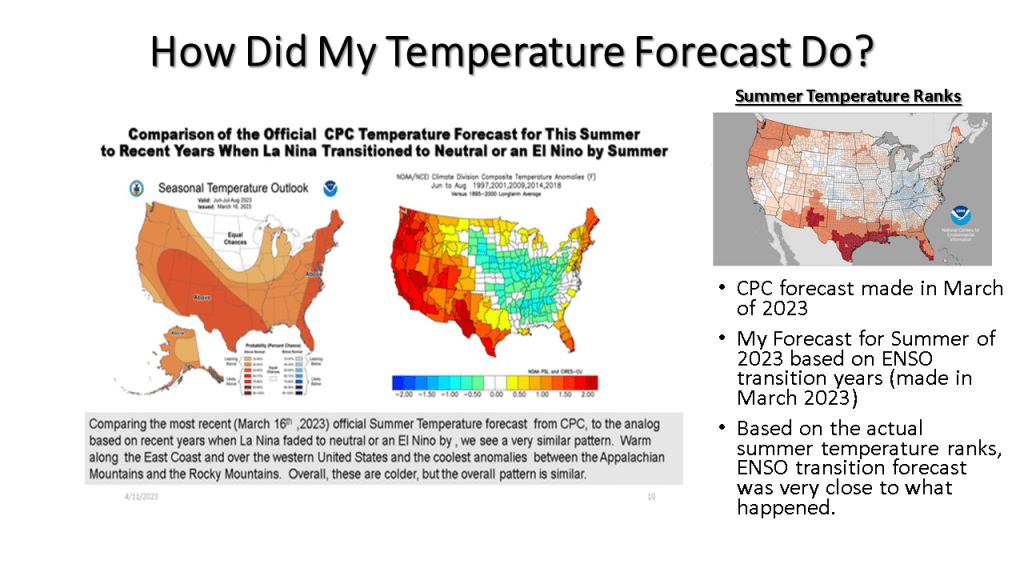
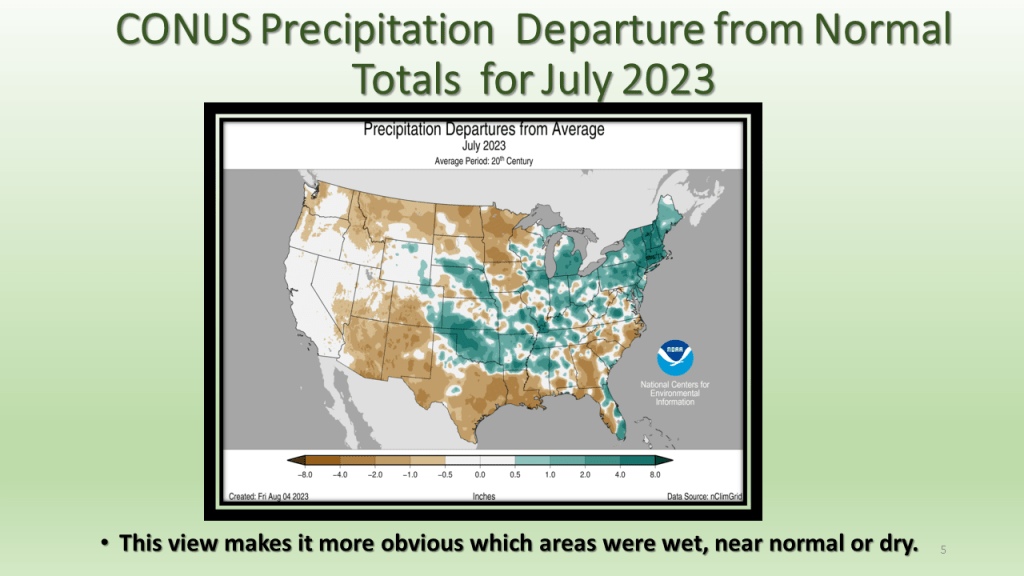
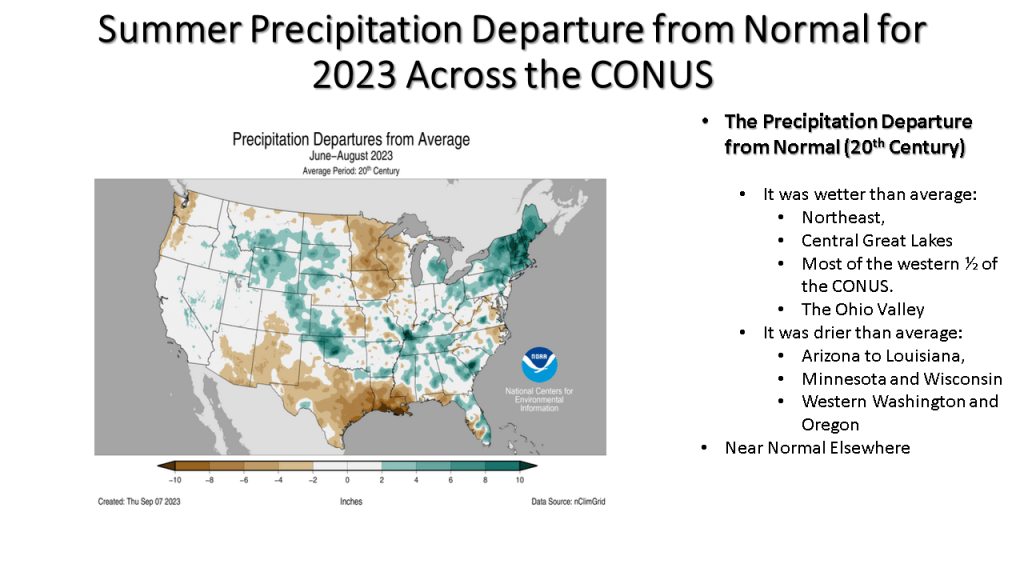
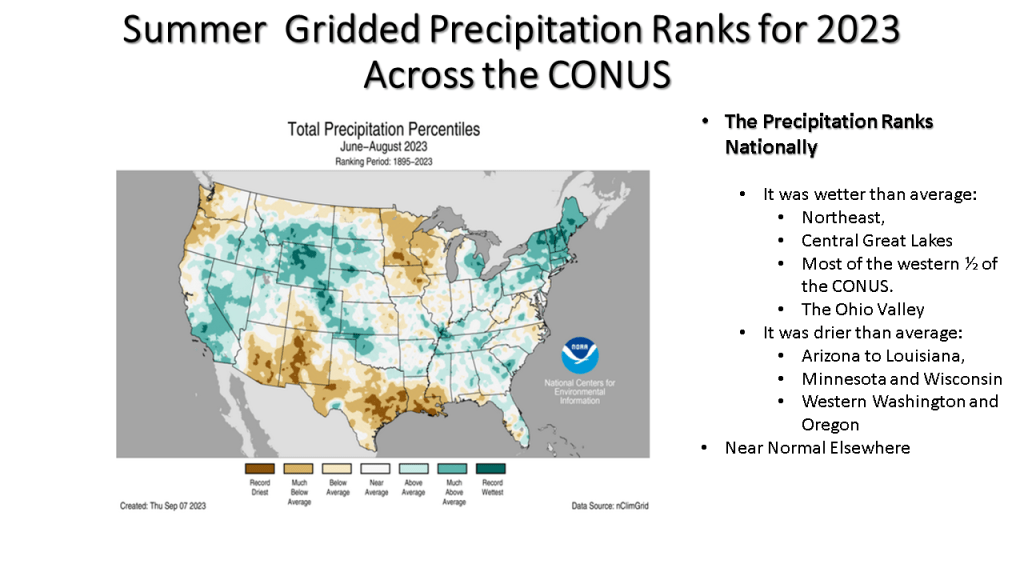
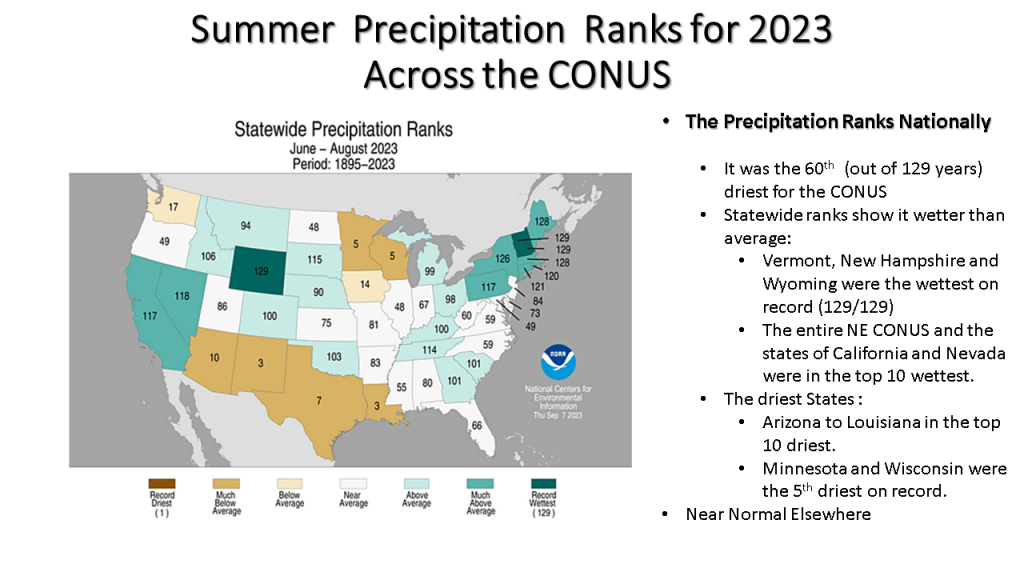
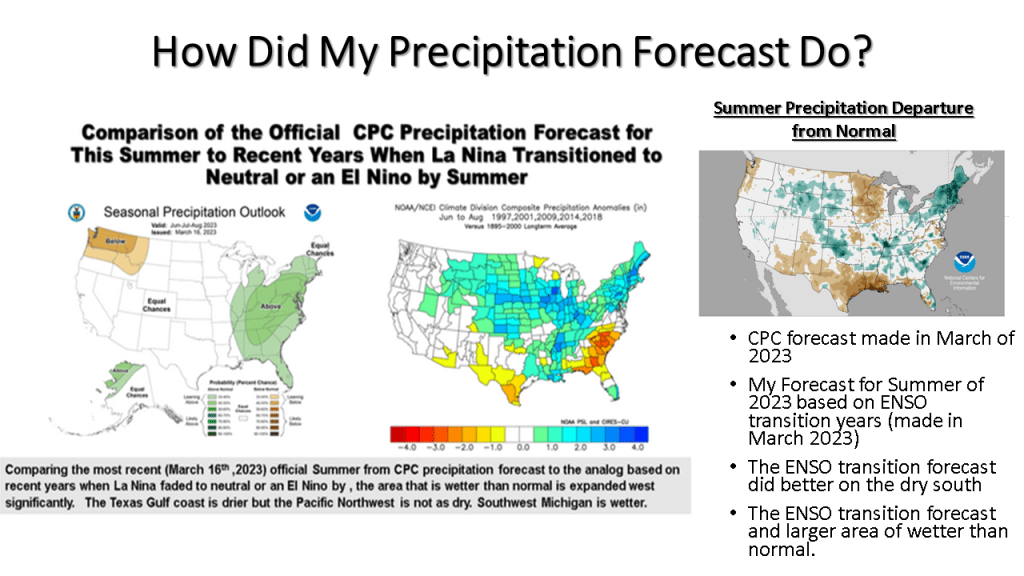
Here I have the frequency for highs in the 90s across the CONUS (Continental United States), the longest streak across the CONUS, the frequency of lows of 70 or more and I few more NCEI charts to show how hot of a summer this was both nationally and regionally. I also have a few precipitation maps so you can see that the great frequency for hot weather was were it rained less, relative to normal for that area.
I have added 2 slides to this presentation ( 8 and 9). These two slides show that what one uses for the “normal”, greatly impacts what the departure from normal looks like. I used 1991 to 2020, the official NWS normal period for the image on the top left, then 1895 to 2000 for the image on the top right, not the area of below normal is significantly less. That is because the period 1991 to 2020 was warmer than the 1895 to 2000 period. On the bottom left the mean is 1895 to 2020, that has no below normal areas. This seems questionable to me since the ranked normal’s on the next slide look a lot like the 1895 to 2000 on slide 8. I added this because I was getting some questions on this matter. I hope this helps.



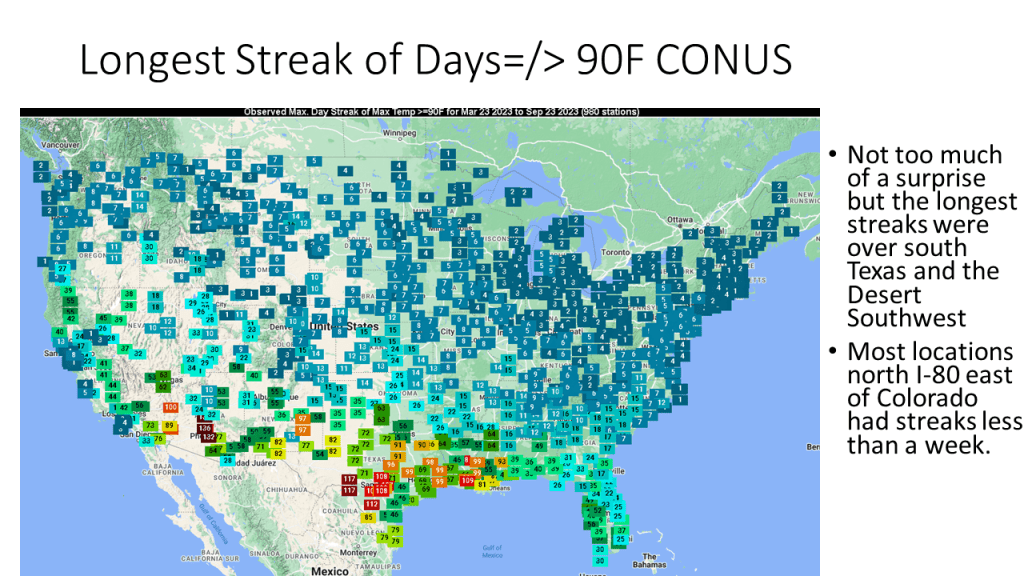

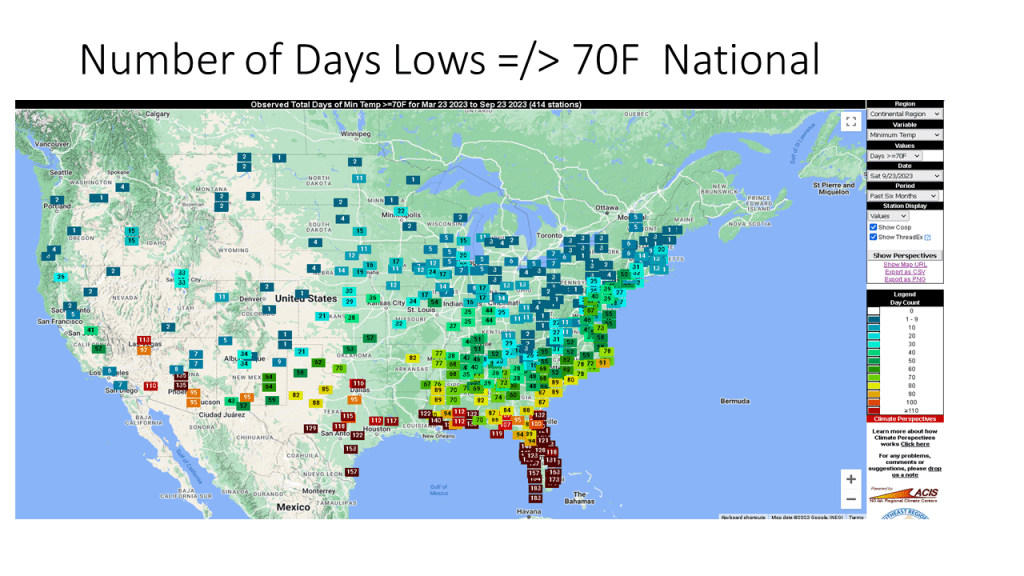


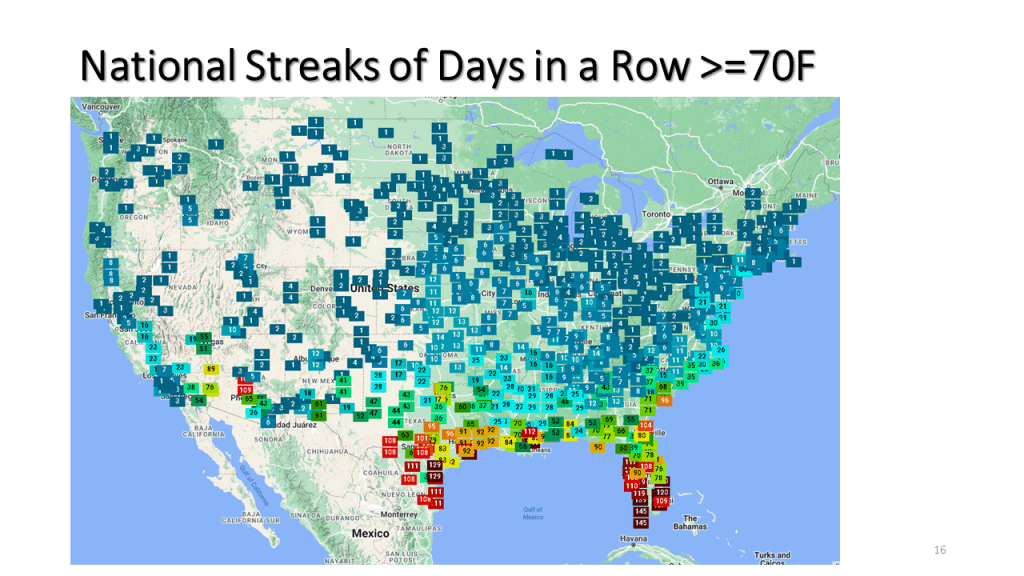

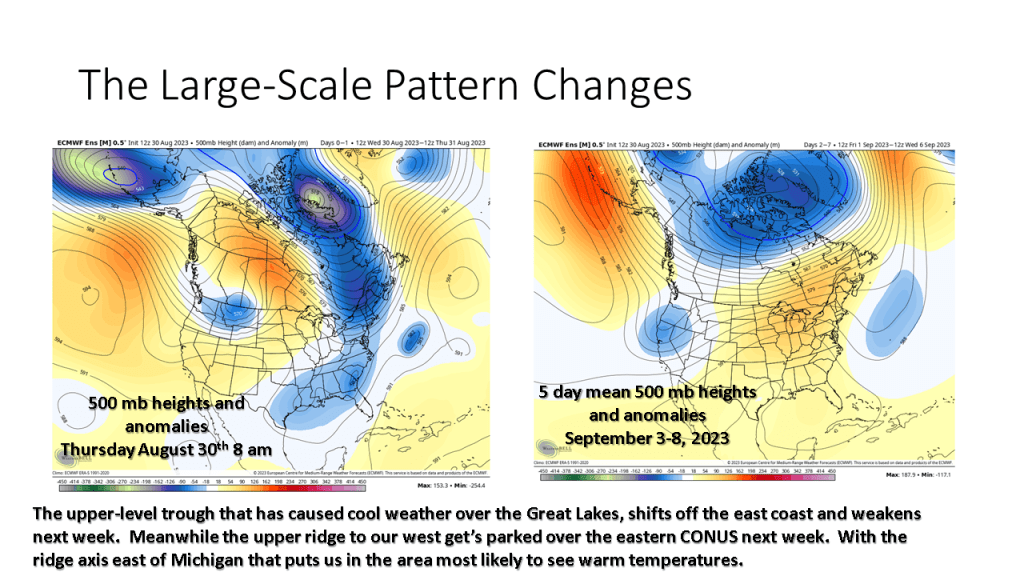
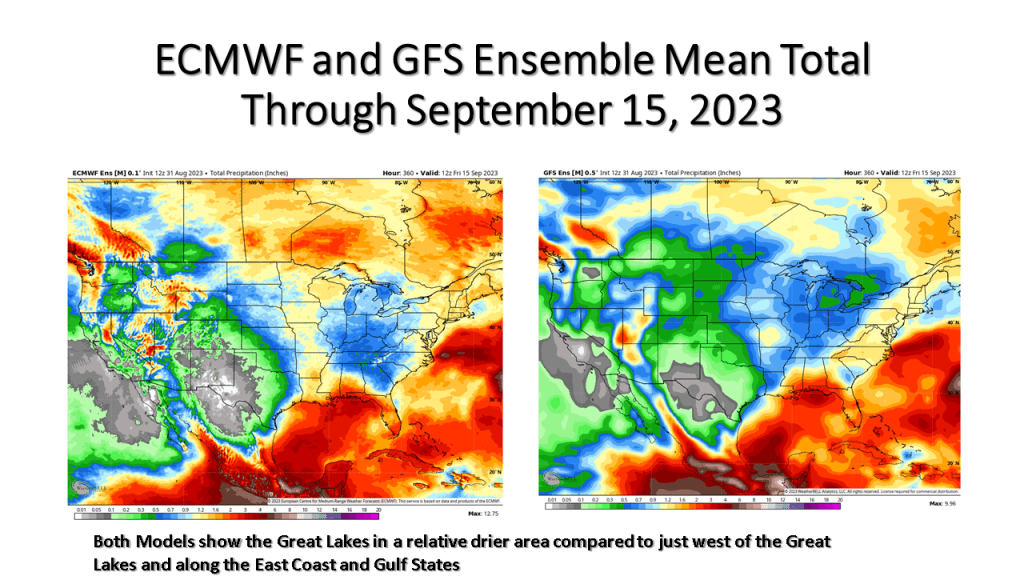
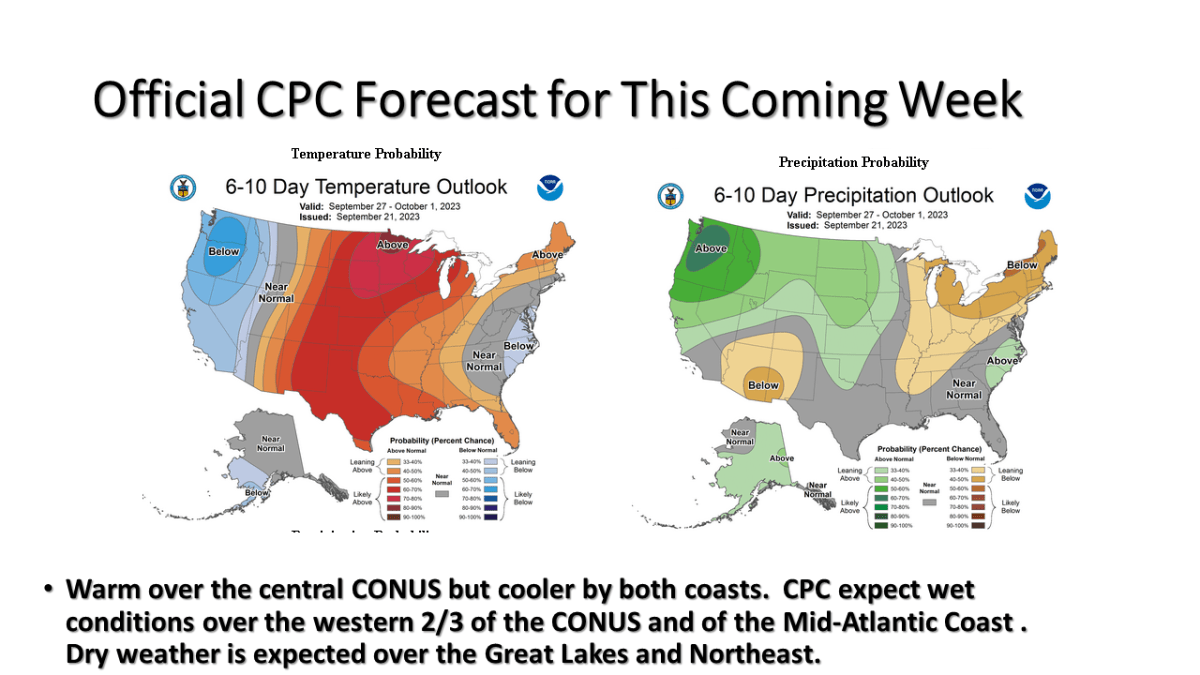
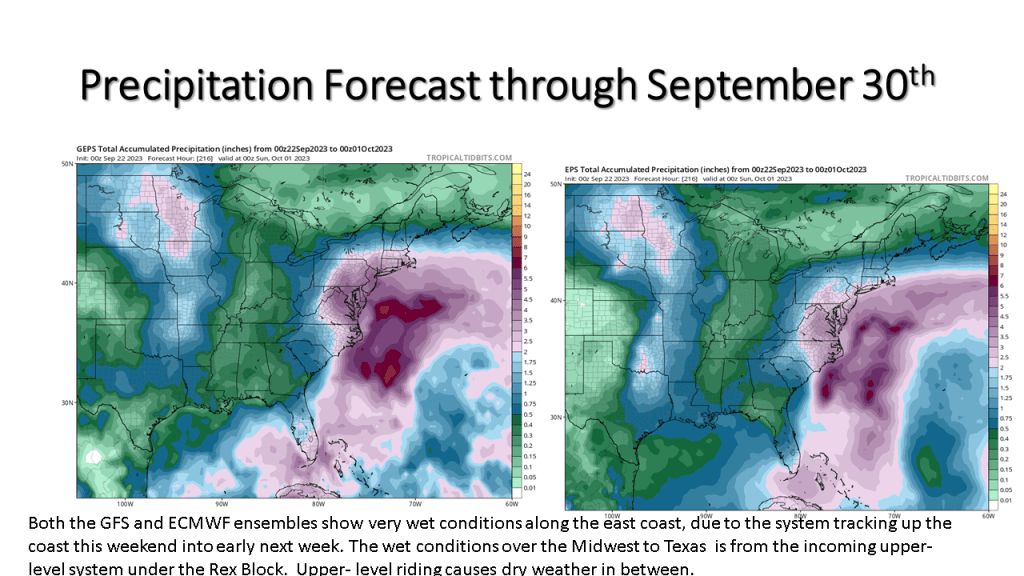
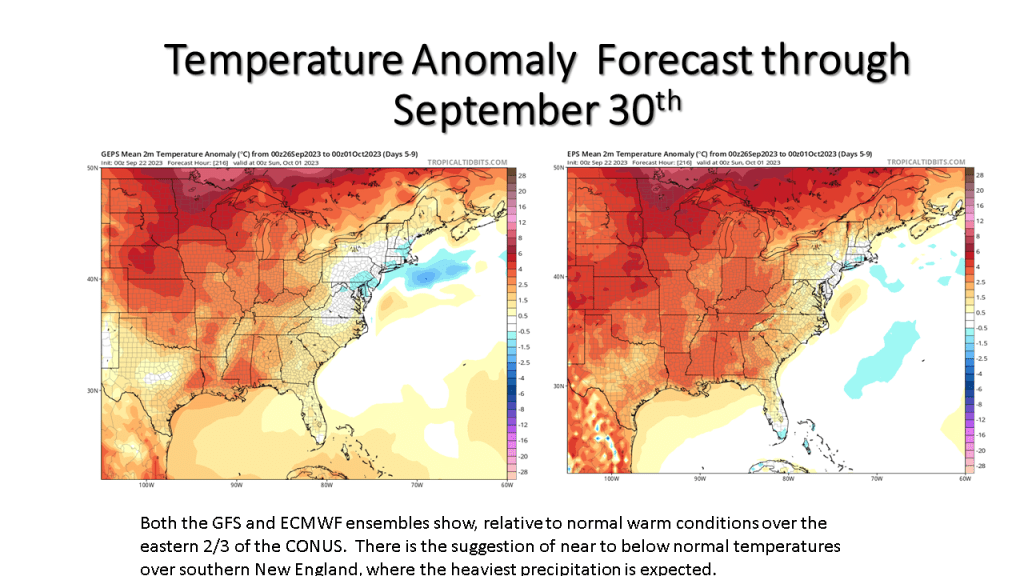
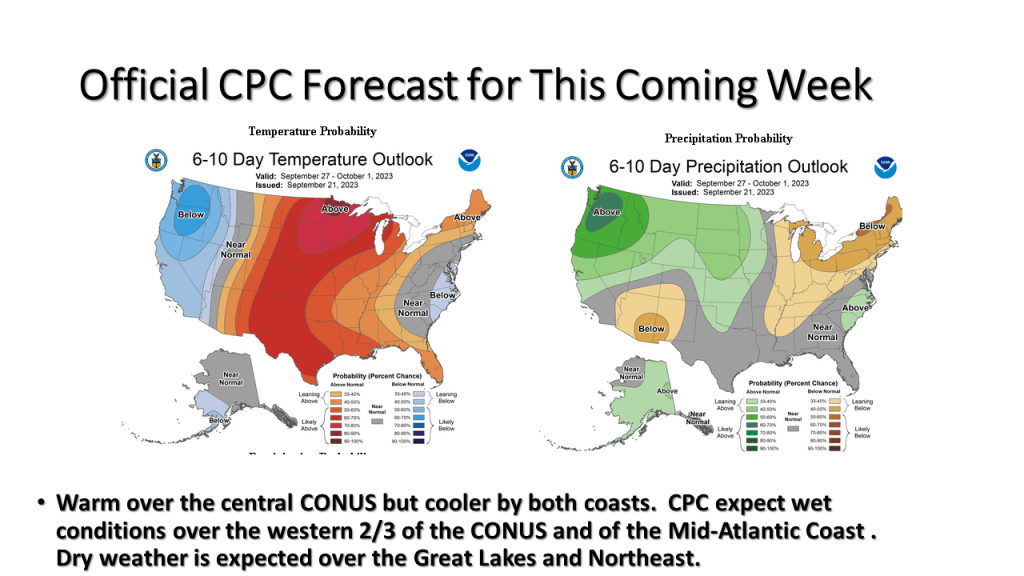
I am expecting warm and dry weather this week over Michigan but warm and wet over the east coat, and cool and wet over the west coast.
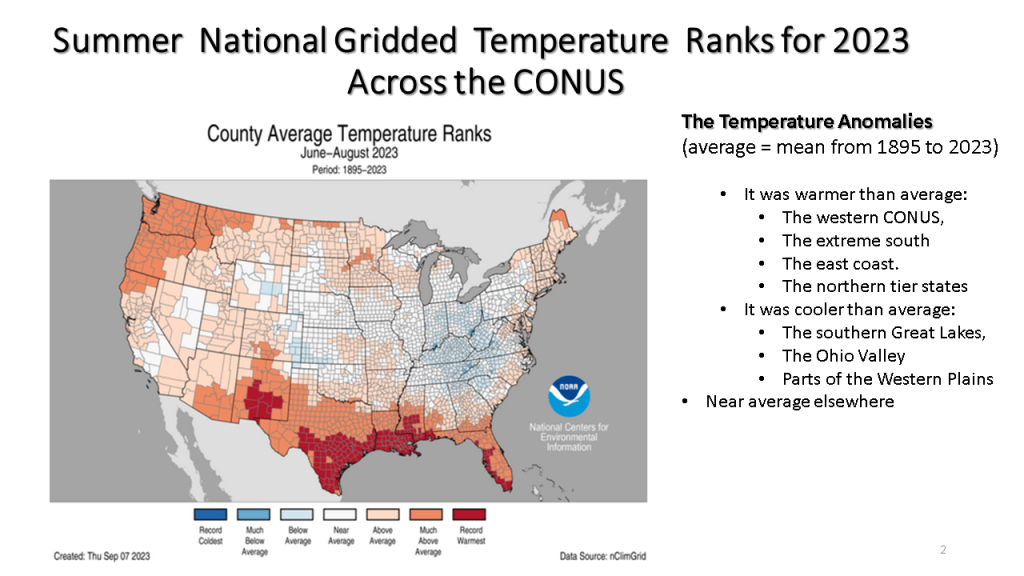
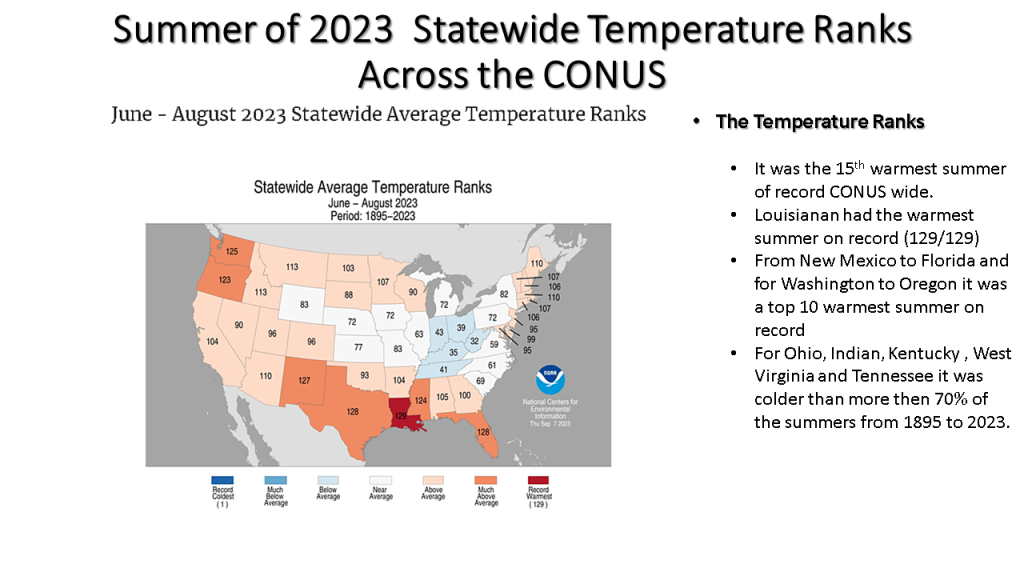
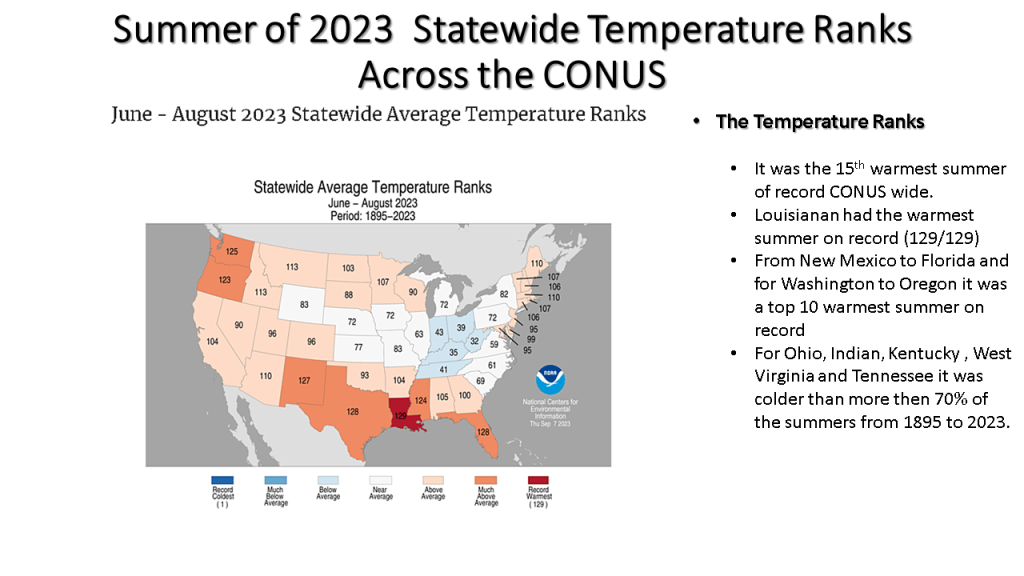
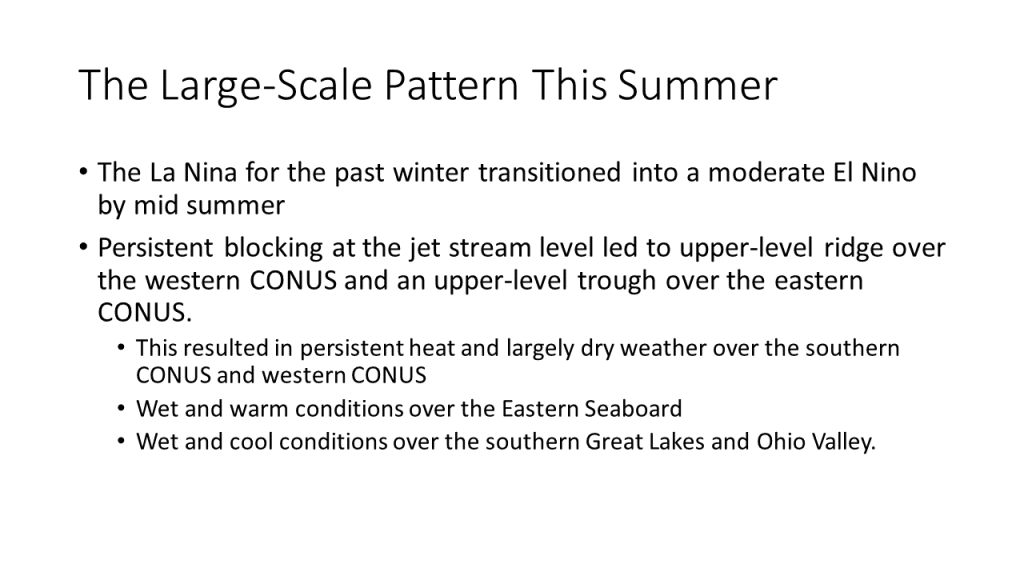
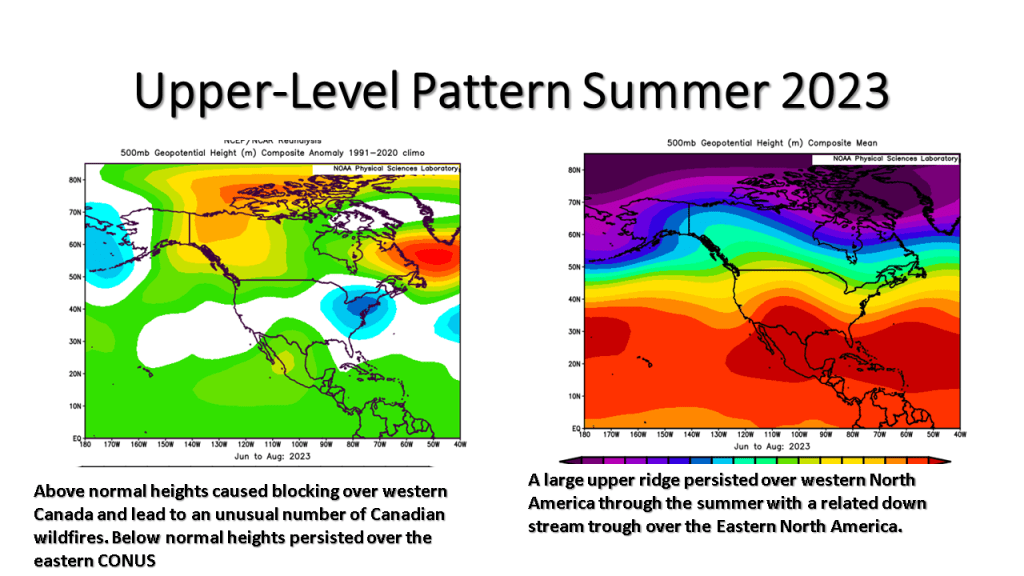
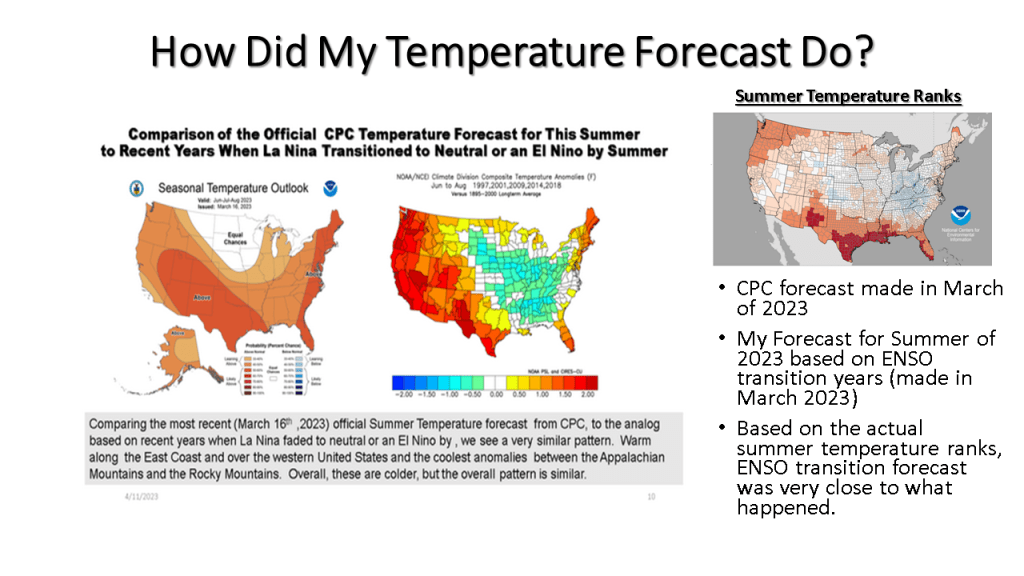
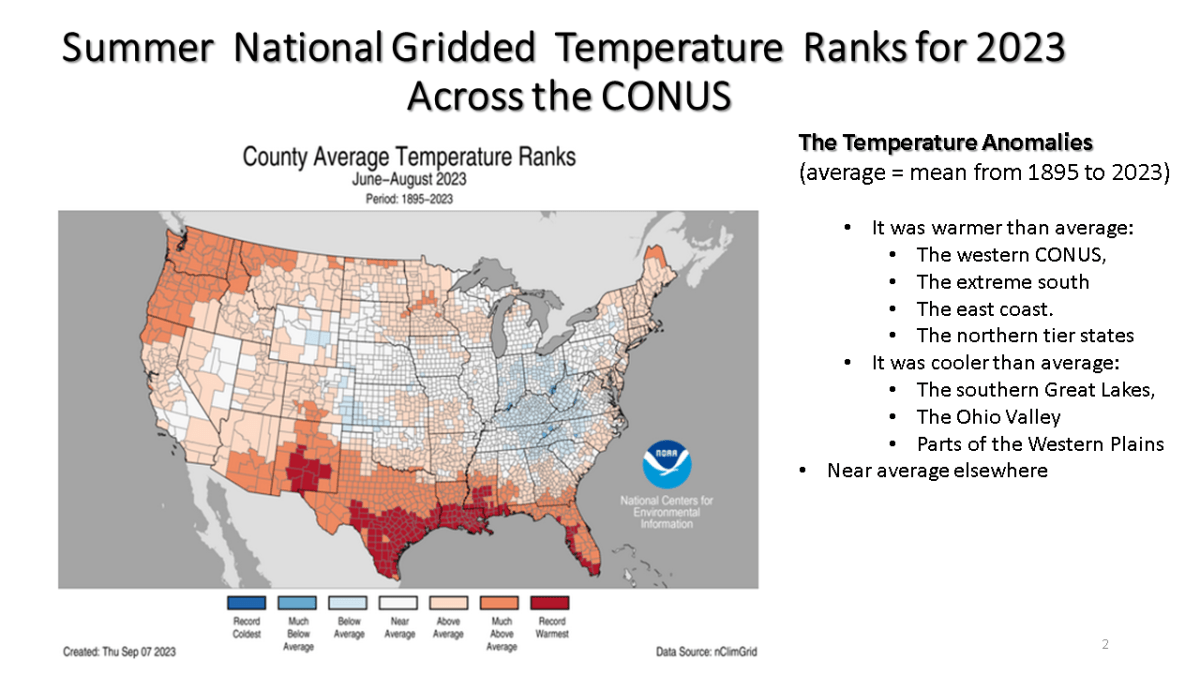
This was a summer that featured persistent weather patterns over most of North America and lead to one of the most active Canadian wildfire seasons on record. It also lead the the 15th warmest summer on record (back to 1895) over the CONUS.
While it was the 15th warmest summer on record nationally, not all of the CONUS had a warm summer. You may want to find out how your area did relative to normal for this summer.

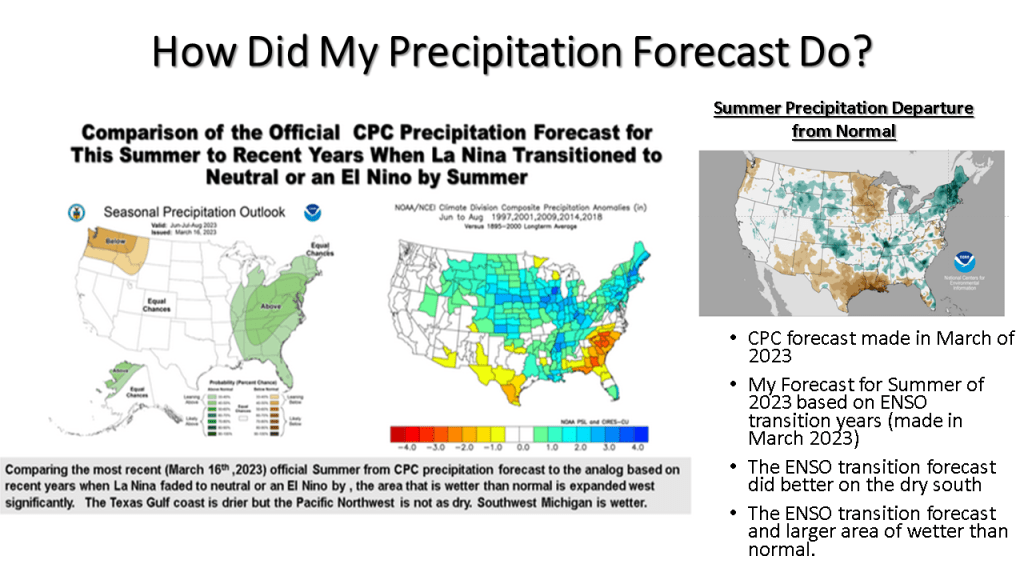
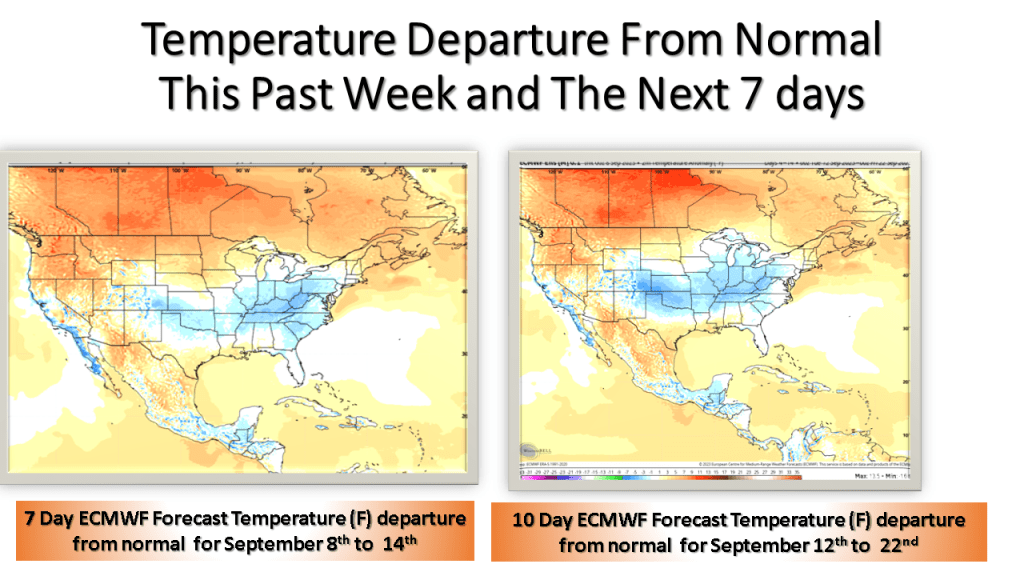
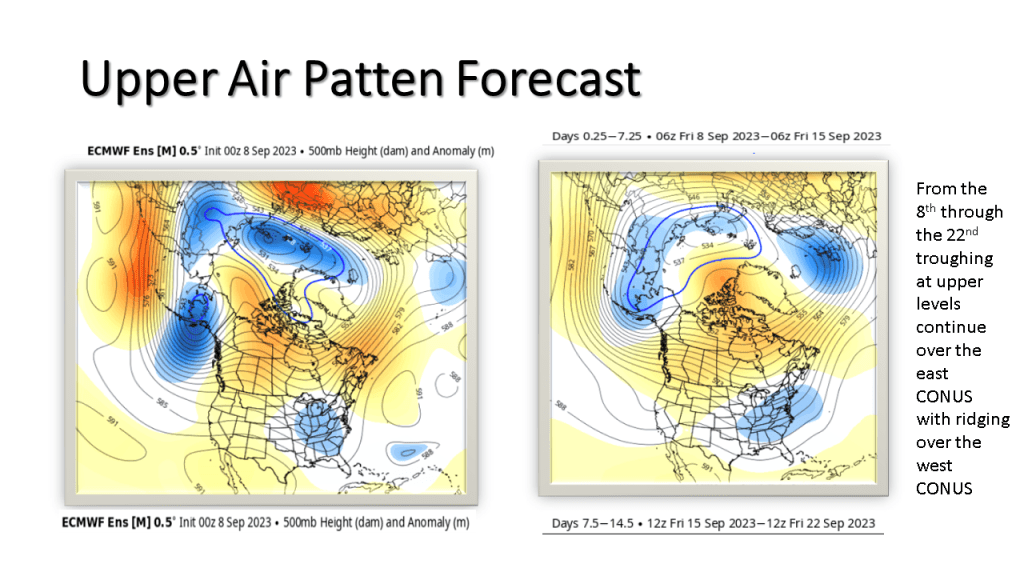
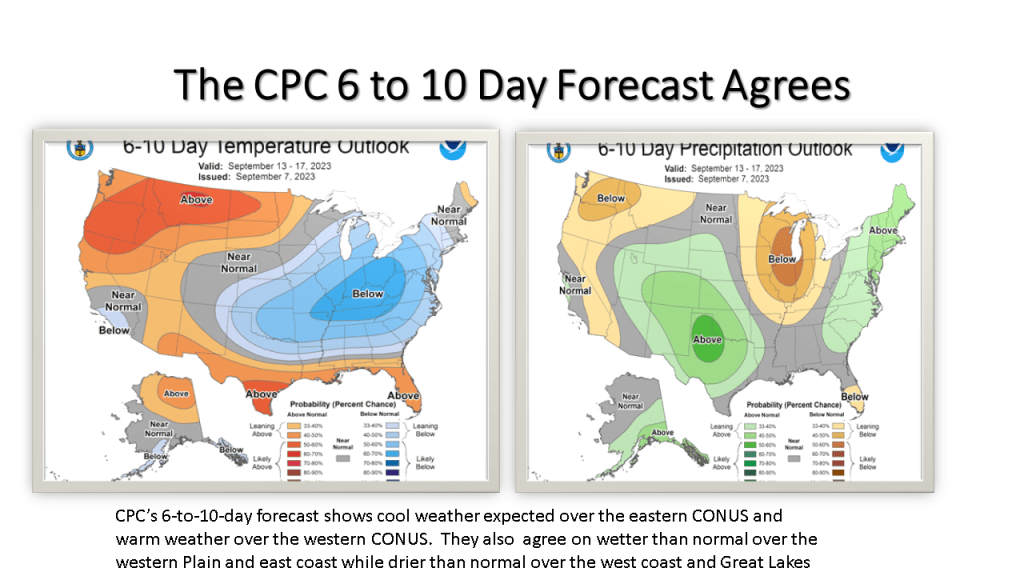
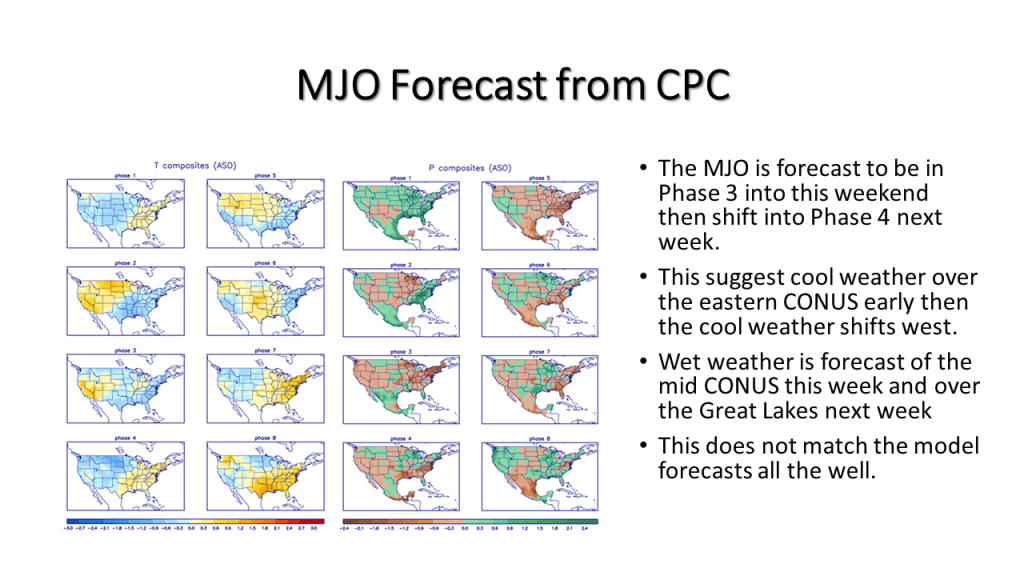
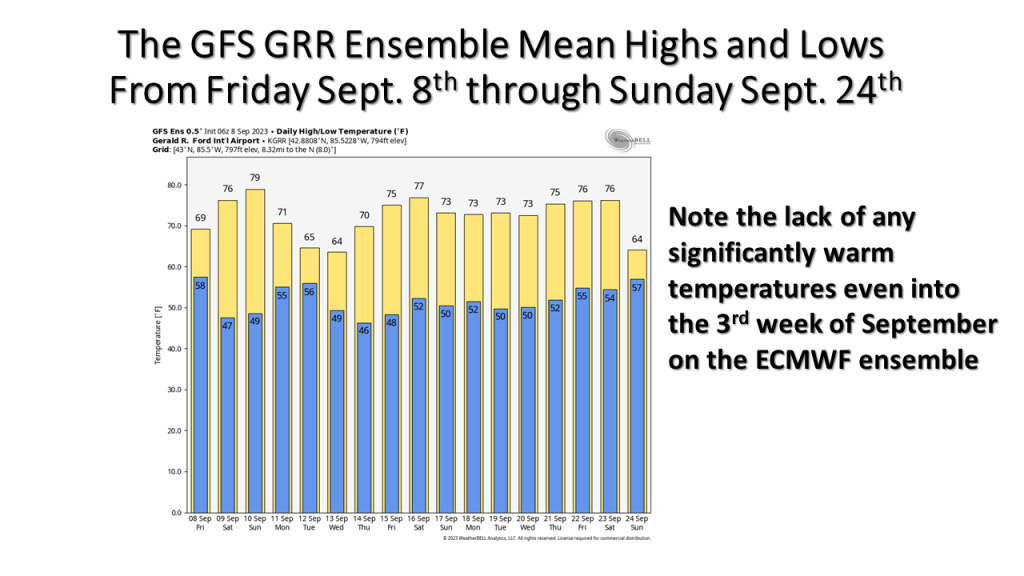
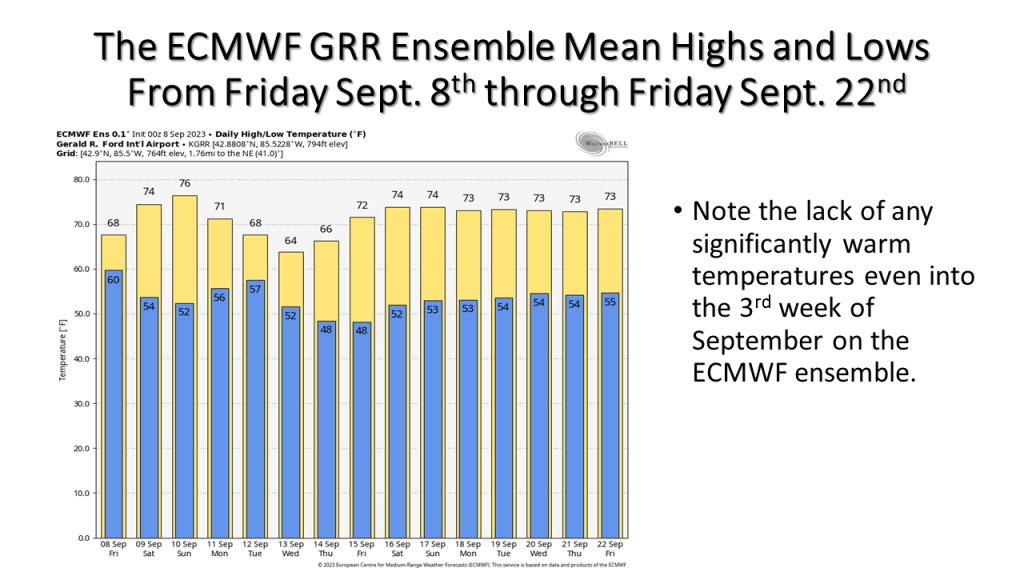
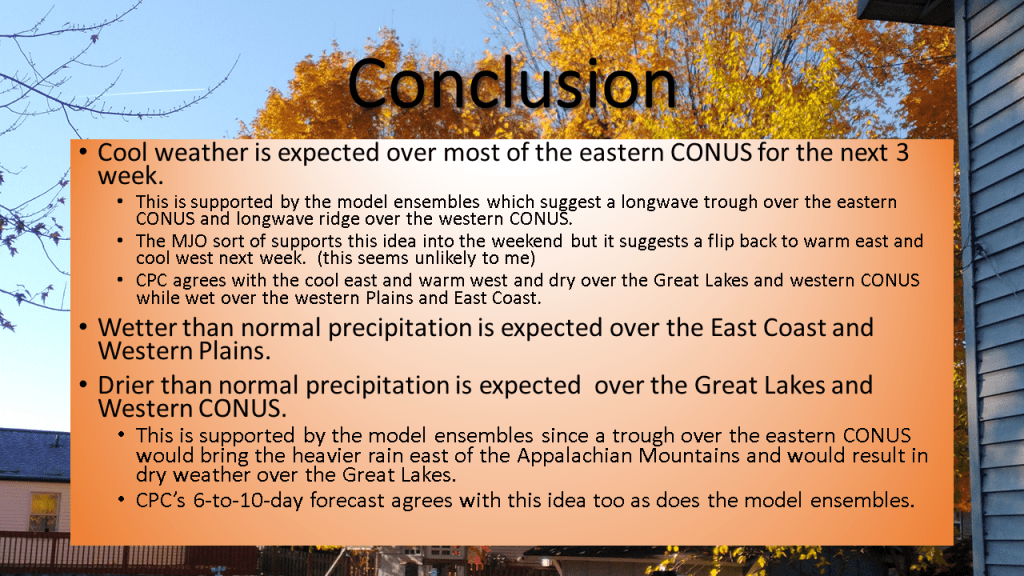
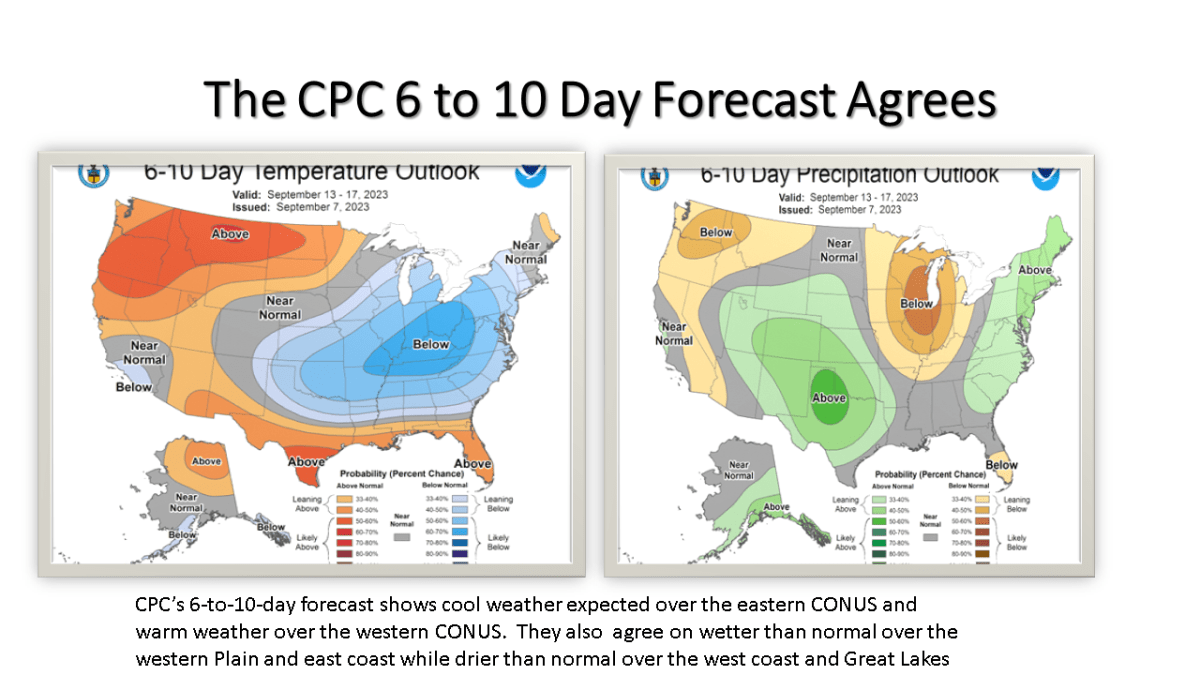
Expect the next 3 weeks to be cooler than normal over most of the eastern United States. It will be dry over the Great Lakes but very wet over the eastern seaboard.

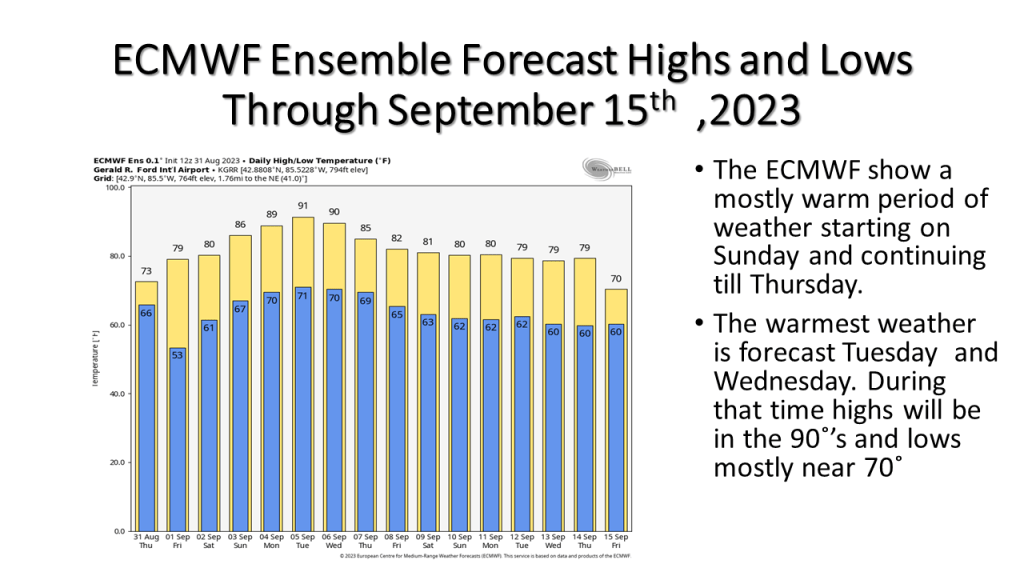
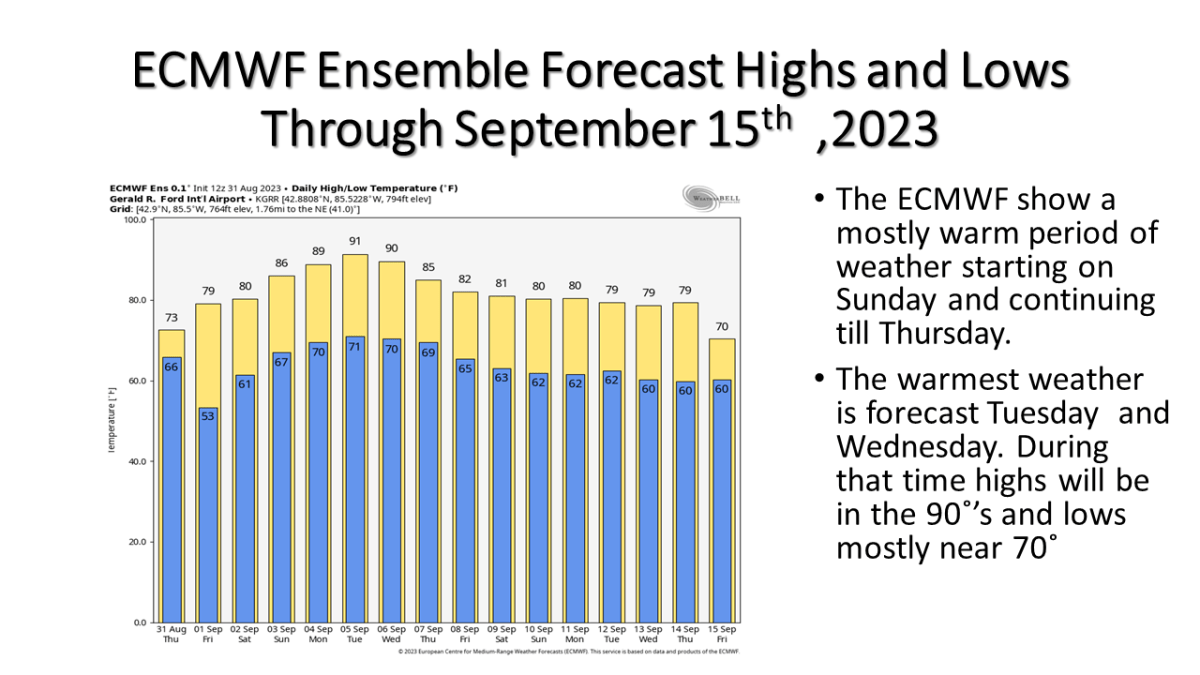
Warmer temperatures are expected from Labor Day into the middle of the week. A cold front coming through the area in late Wednesday/Thursday time frame may bring showers and slightly cooler weather .




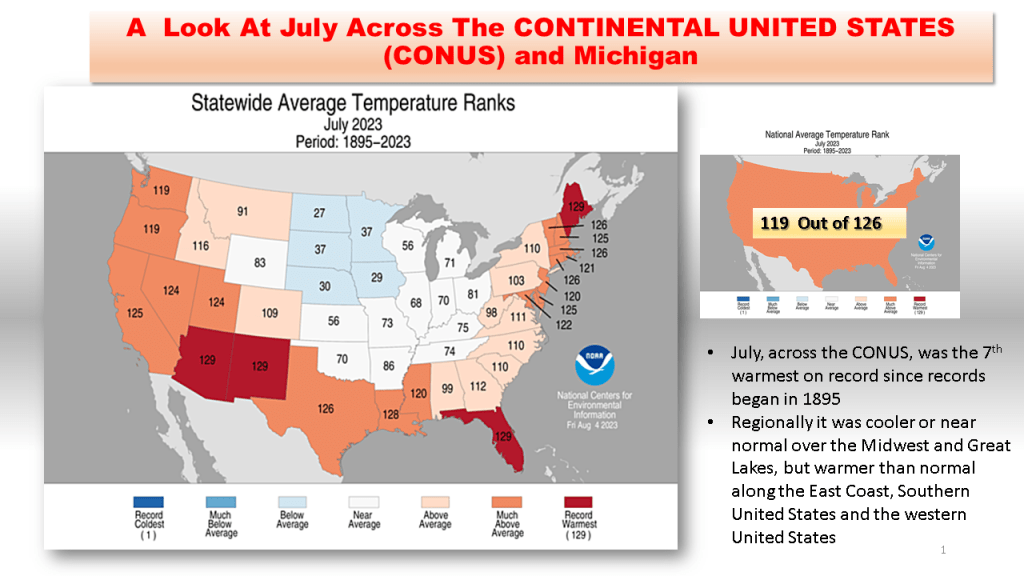
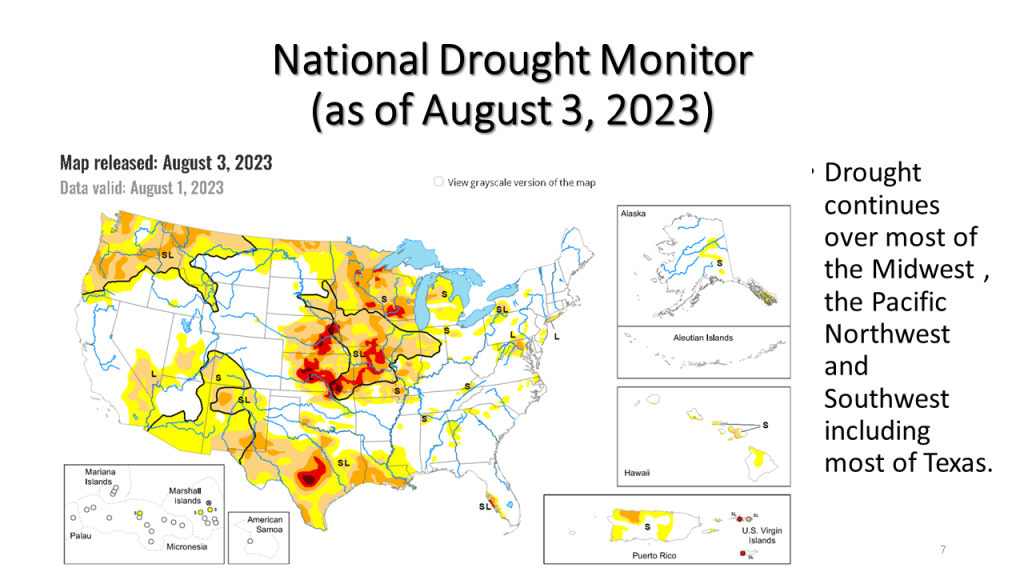
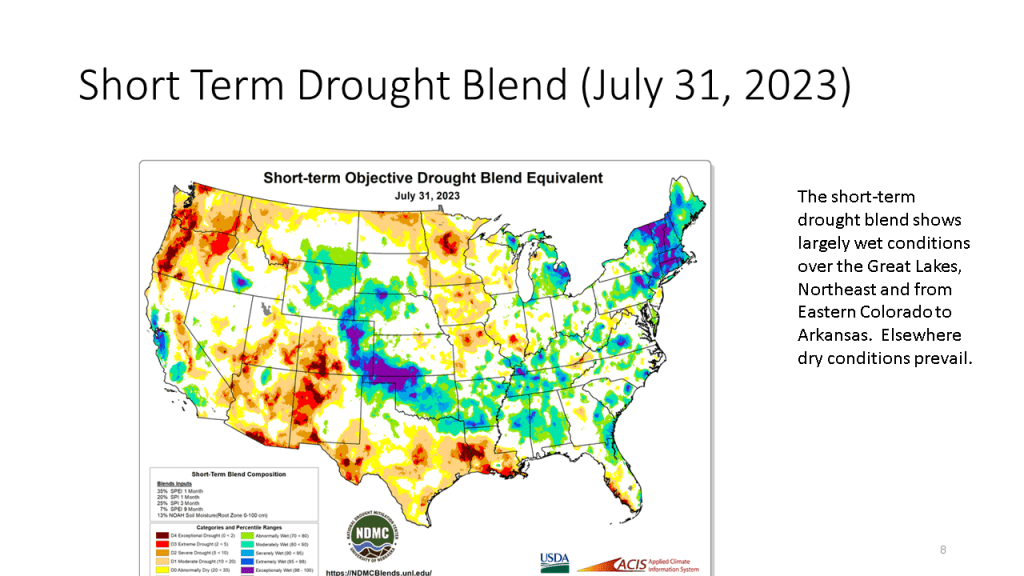
As promised I have posted the national images of July 2023. The short story is it was the 7th warmest and 45th wettest for the CONUS. In Michigan it was the 58th warmest and 5th wettest on record.












 themarinocast