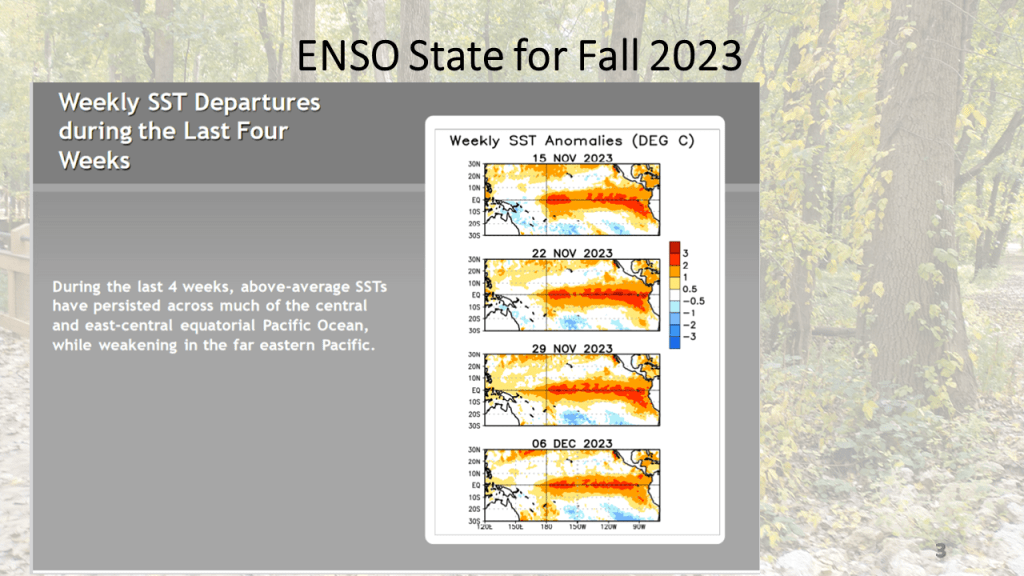
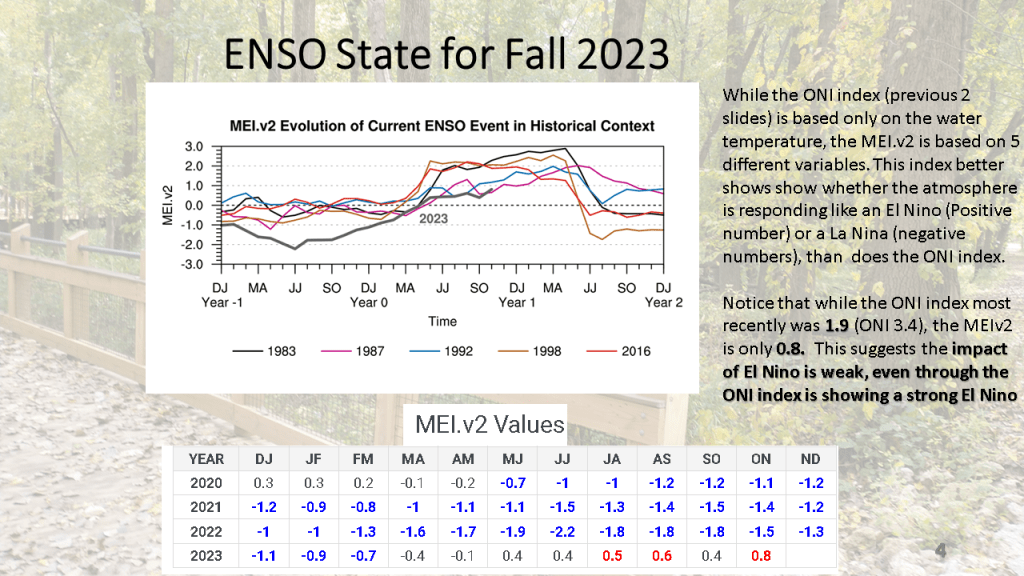
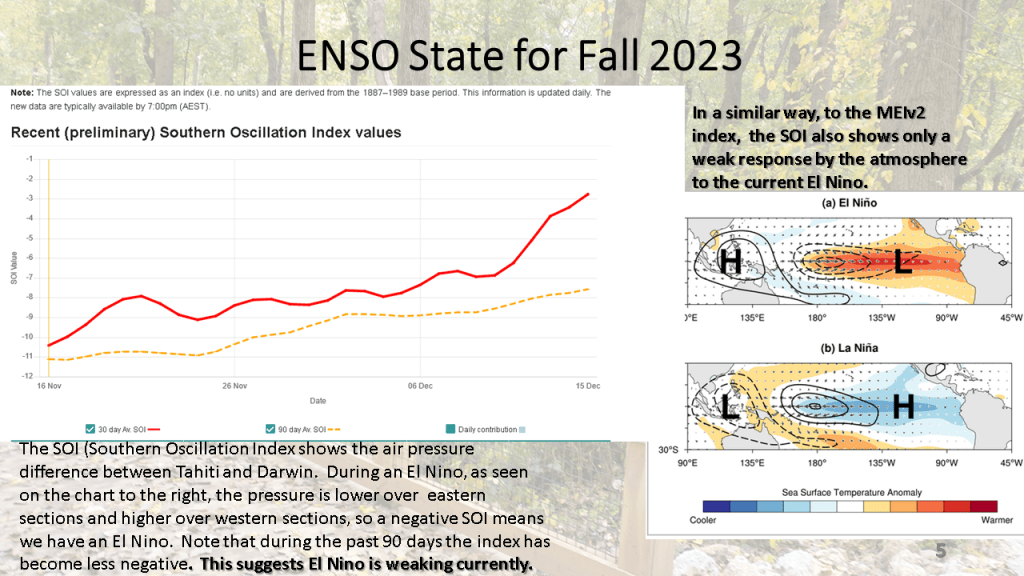
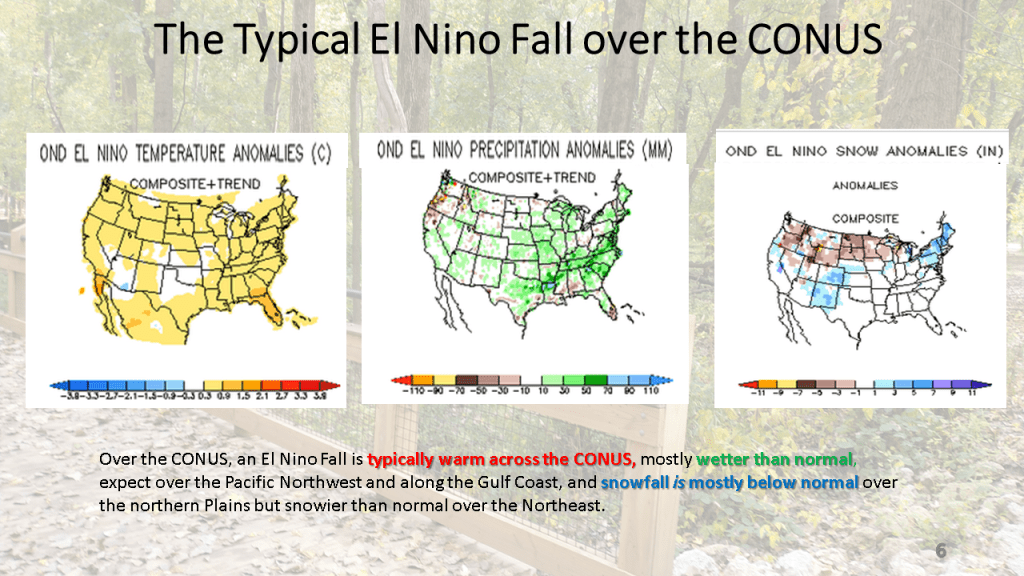
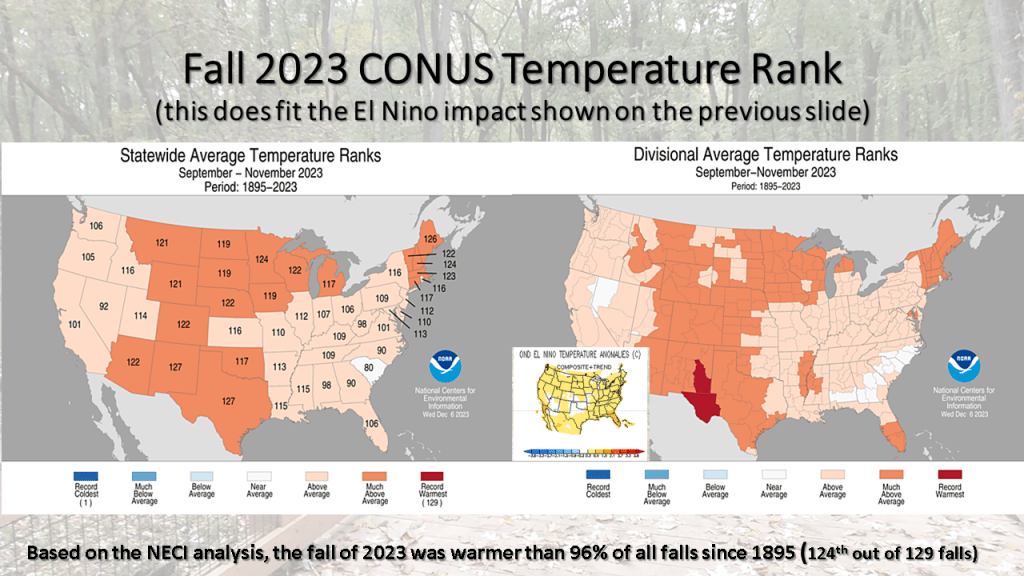
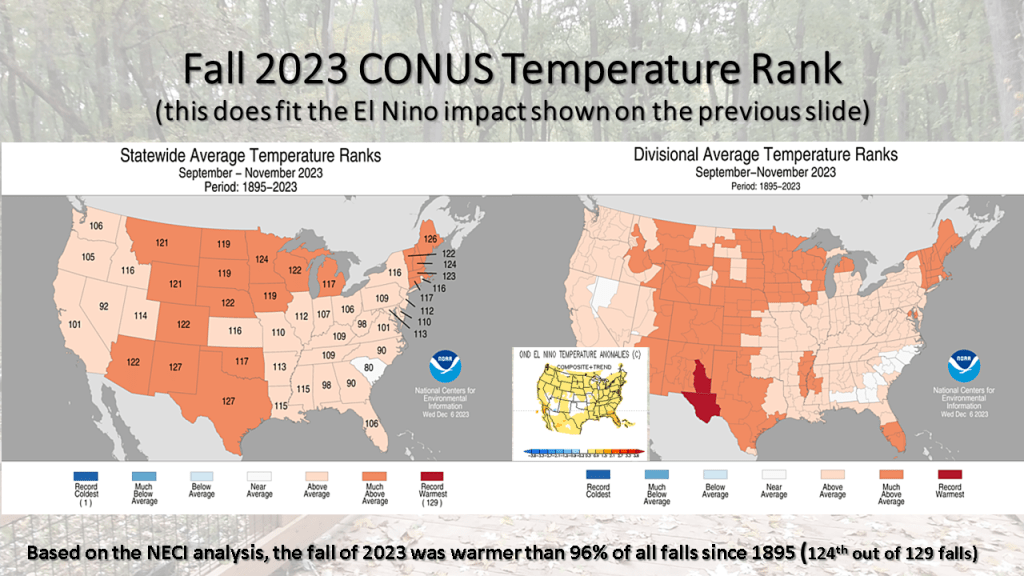
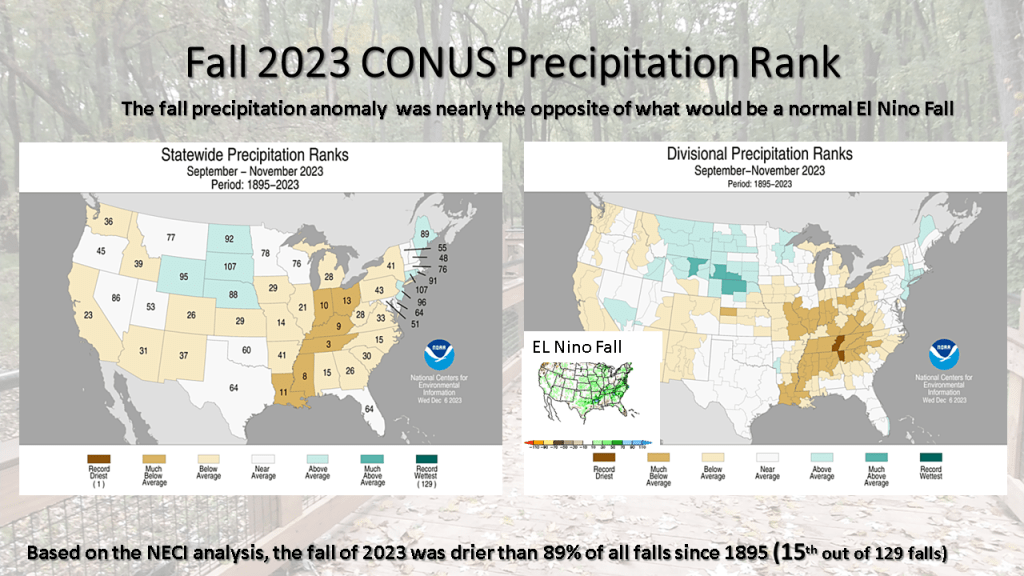
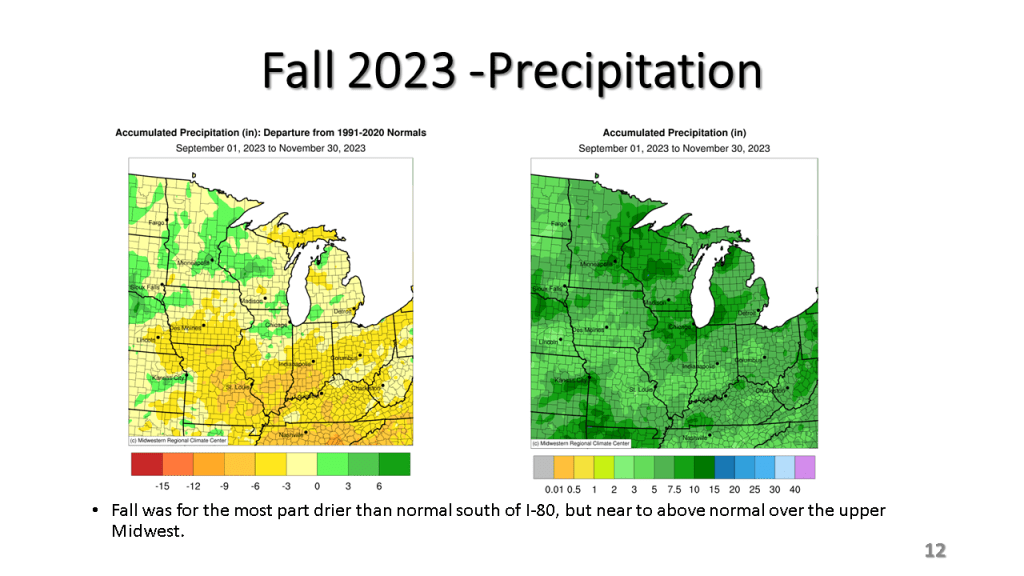
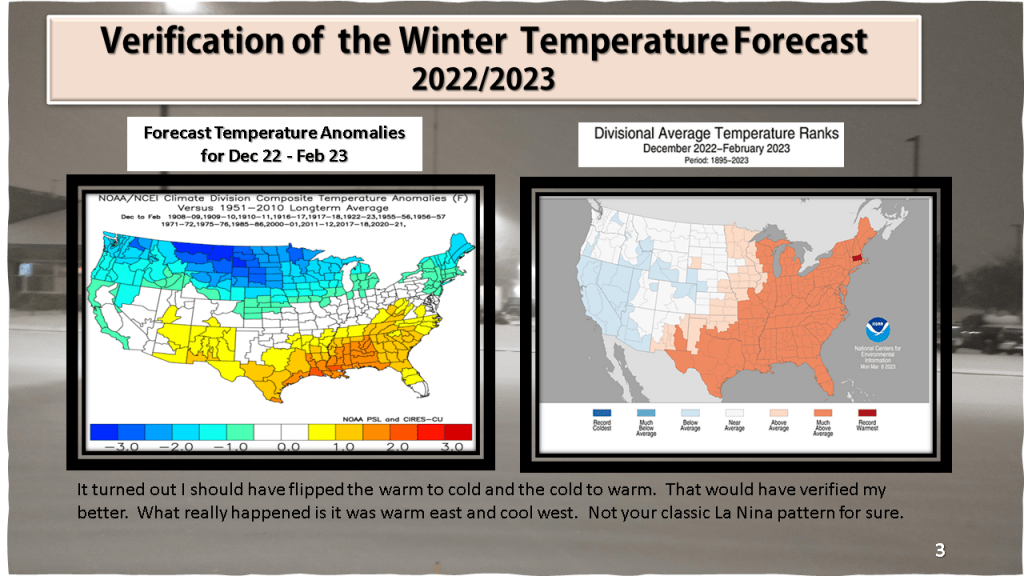
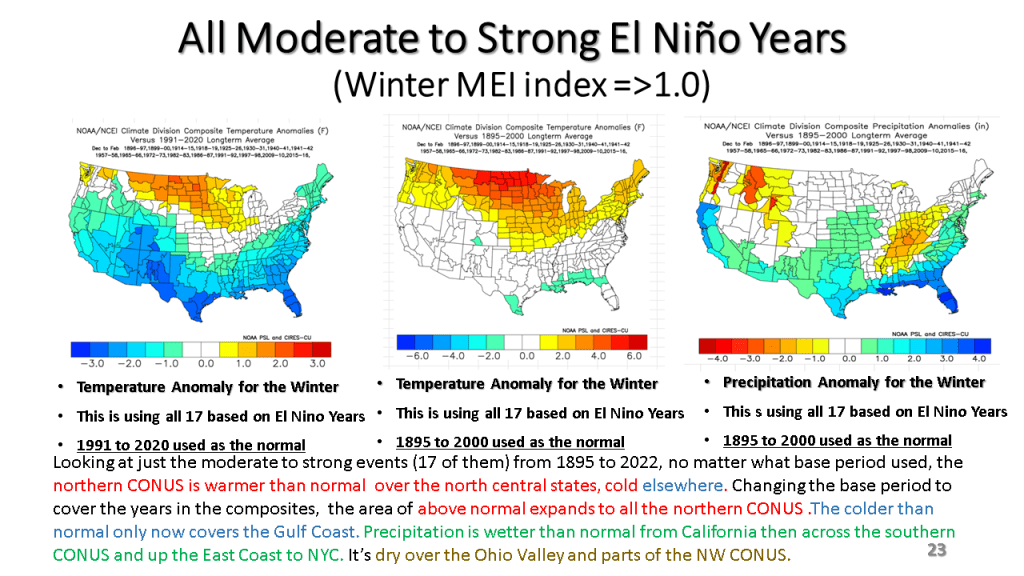
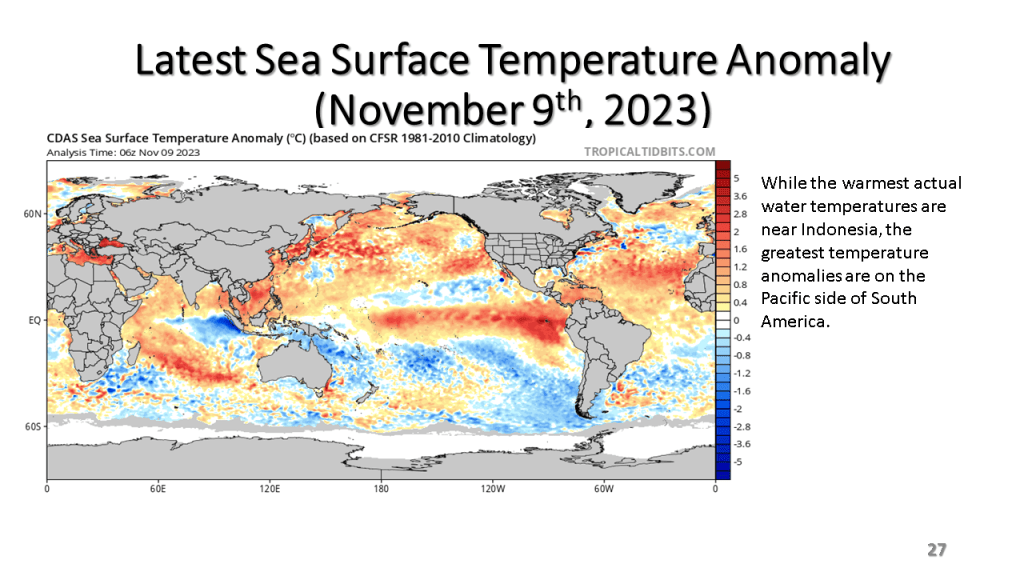
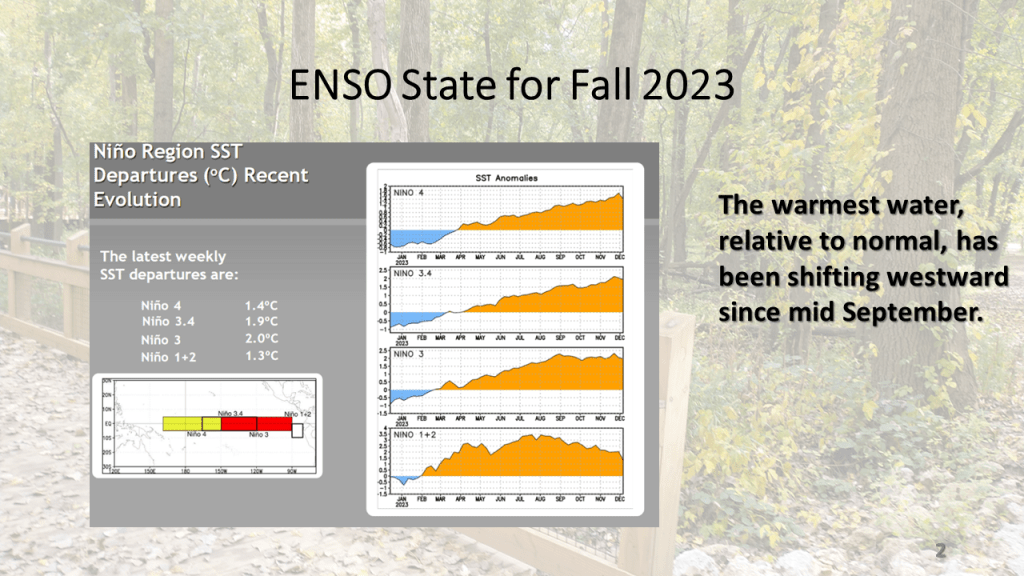
I thought it would be fun to look at our Fall of 2023 climate and now close what happened came to what would typically happen during an El Niño Fall.

In our string of nationally much warmer than normal seasons, the fall of 2023 was 124th out of 129 falls for warmer than normal. This puts this fall warmer than 96% of all falls since 1895! No area of the CONUS had a below normal temperatures (bottom 1/3 coldest) this fall.

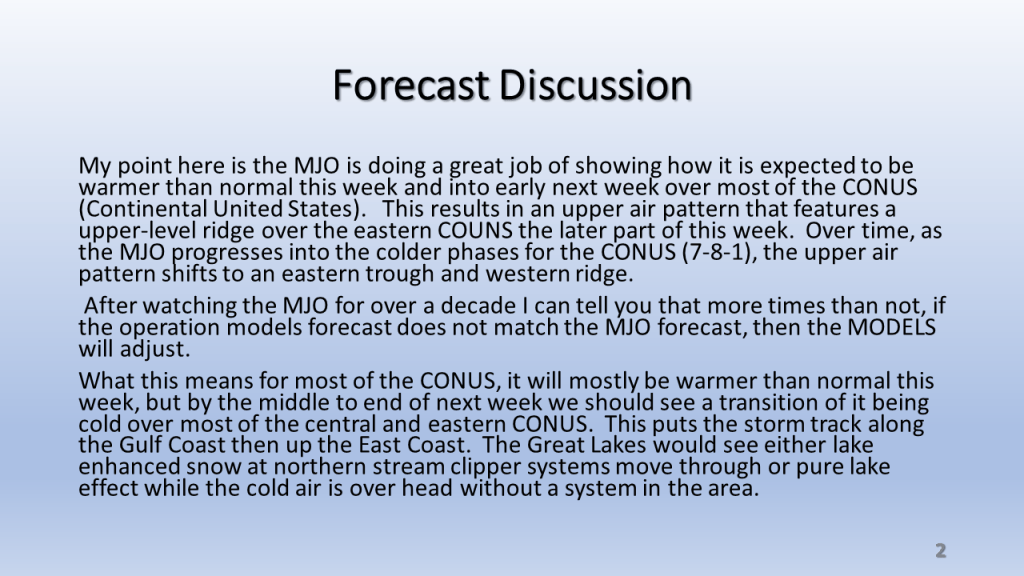
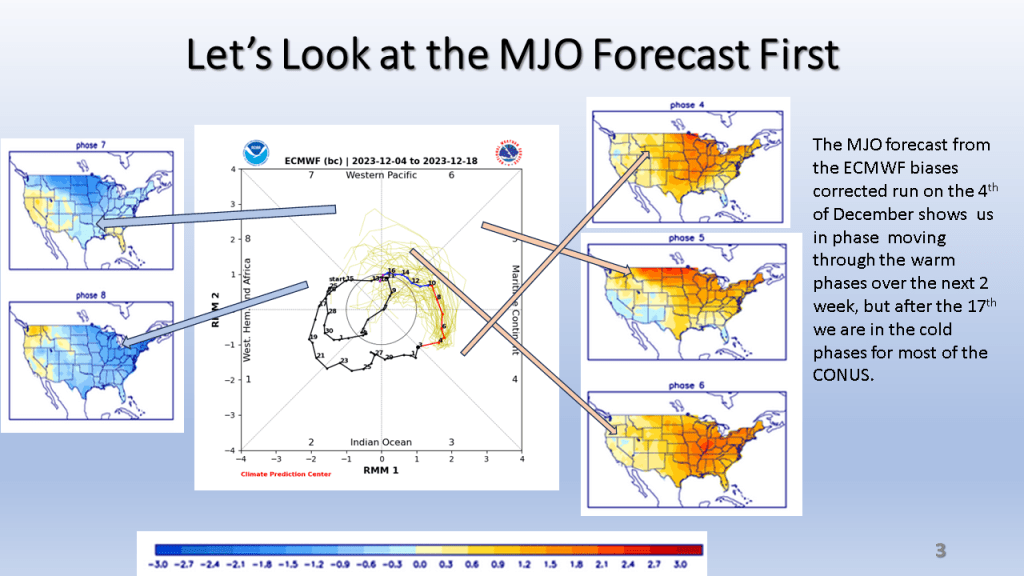
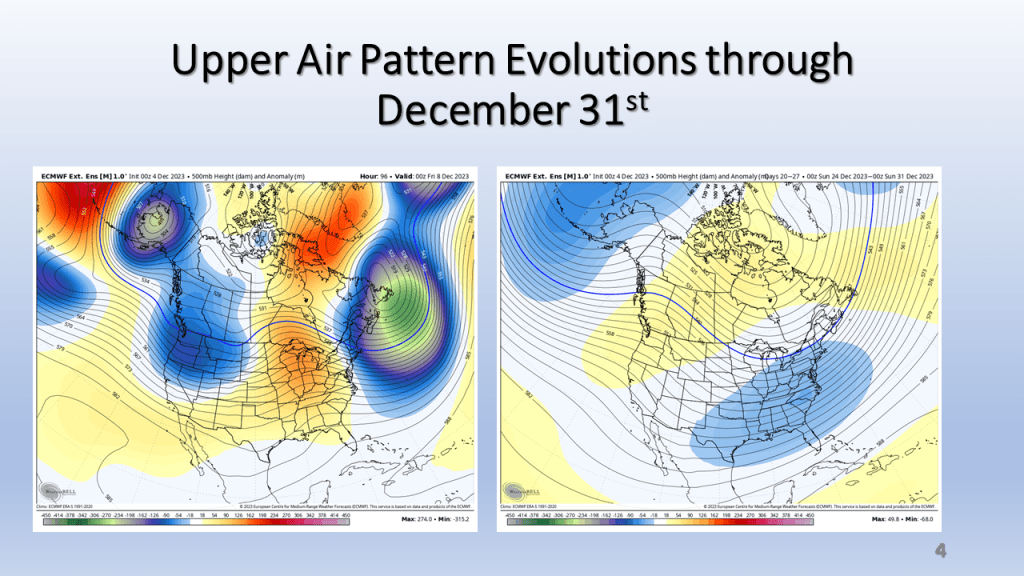
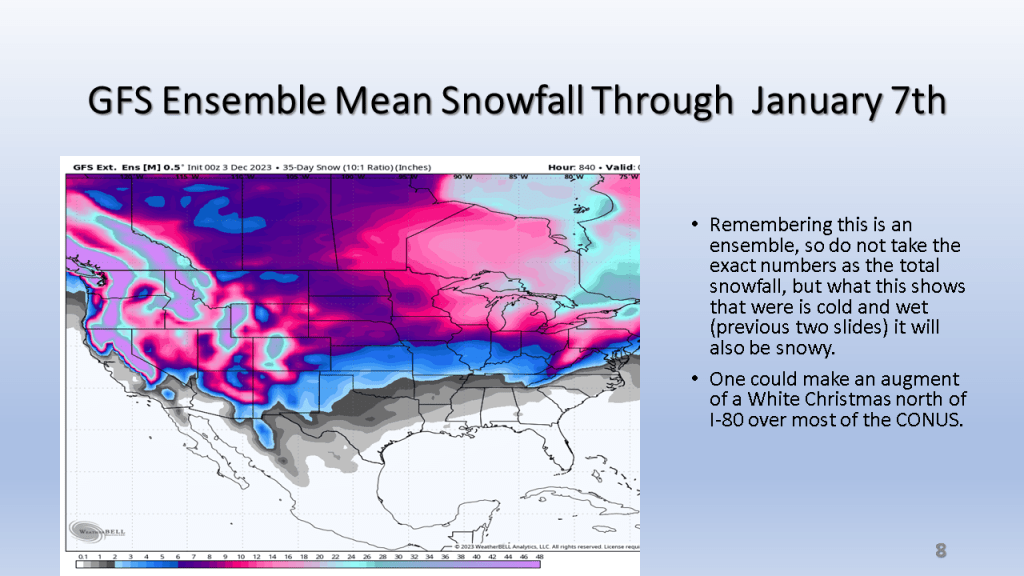
It looks like our warmer than normal temperatures will persist over the western CONUS but over the eastern half of the CONUS, largely based on the MJO, with some ensemble model support colder and snowier weather will follow the last 2 weeks of December. Over the Southeast it will just be cool and wet.

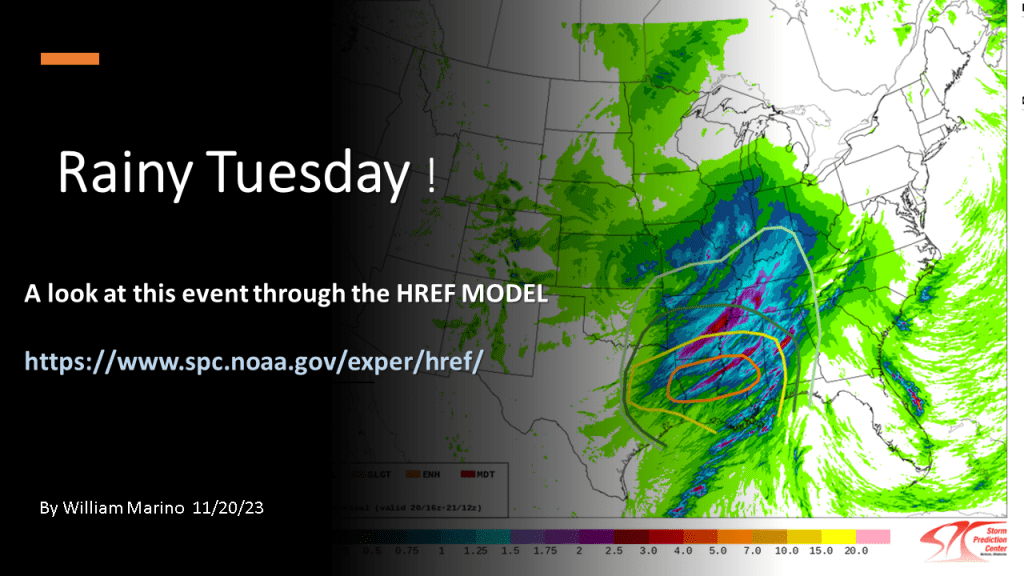
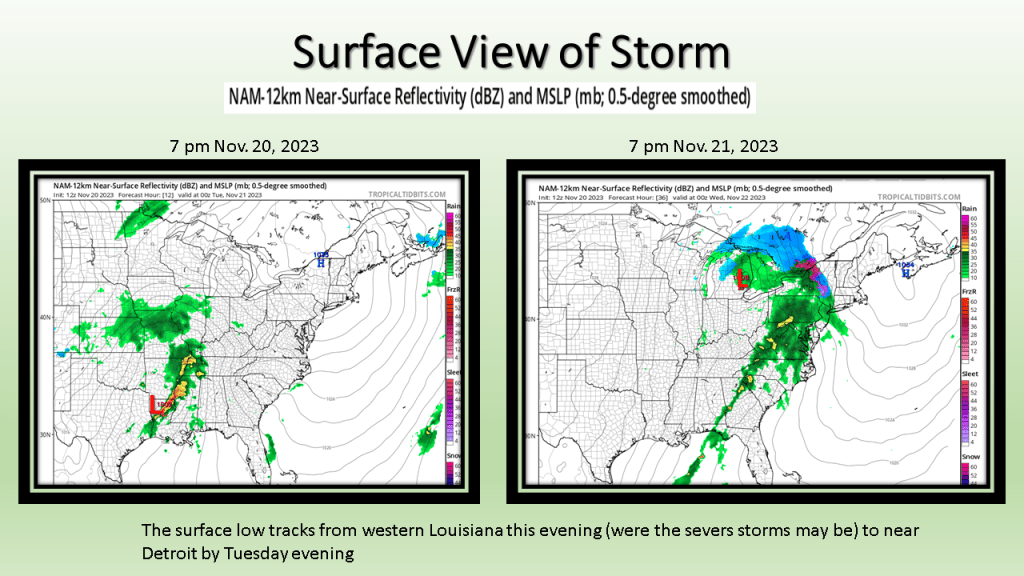
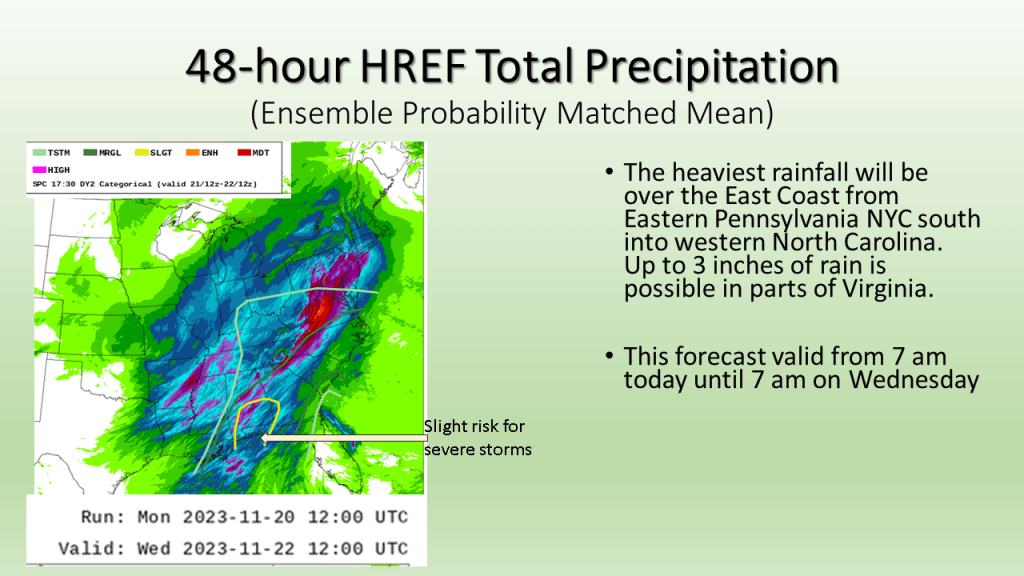
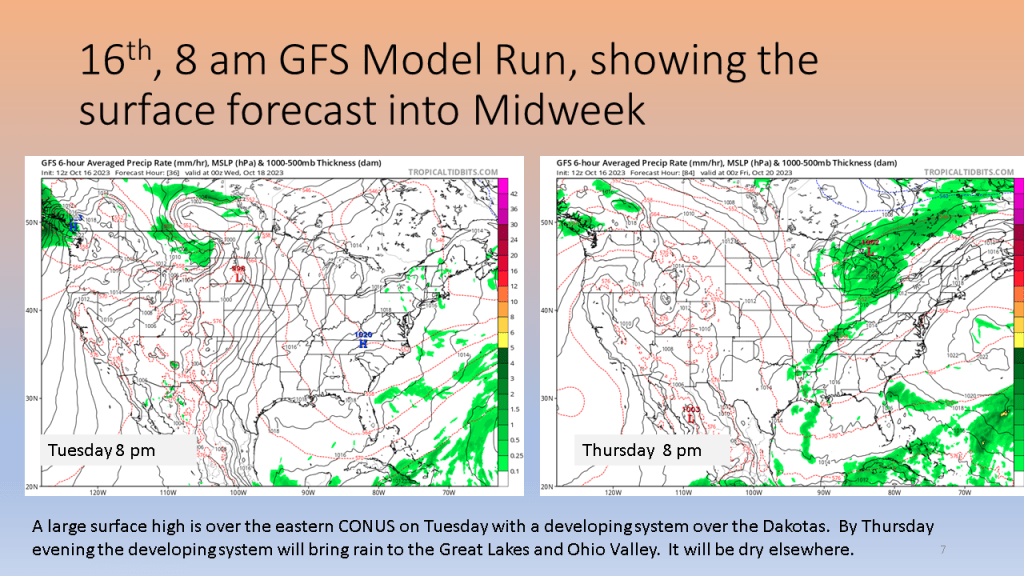
Looks like a rainy night tonight and during the day tomorrow over the eastern CONUS. There is an enhanced risk of severe storms over Louisiana this evening.

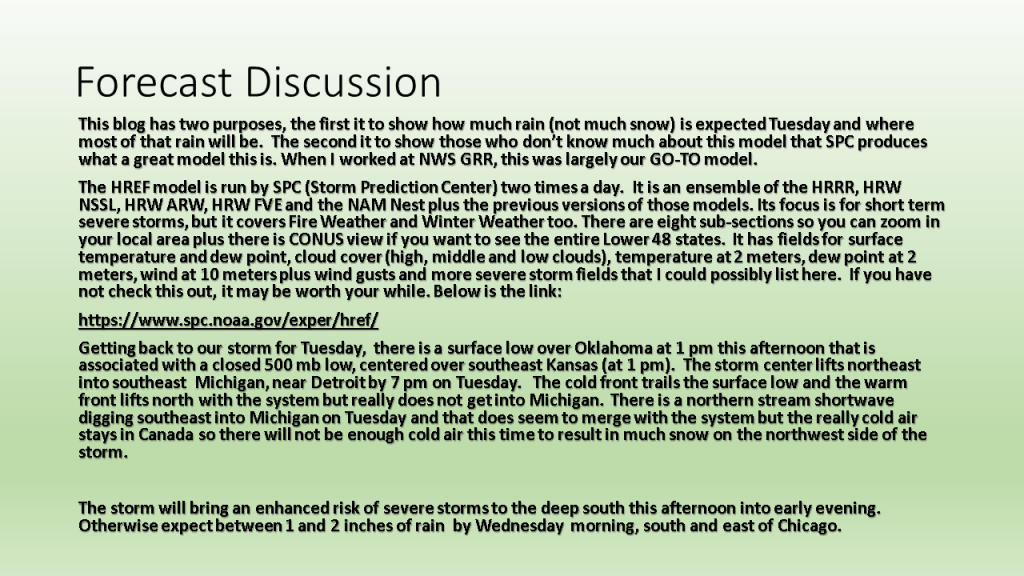
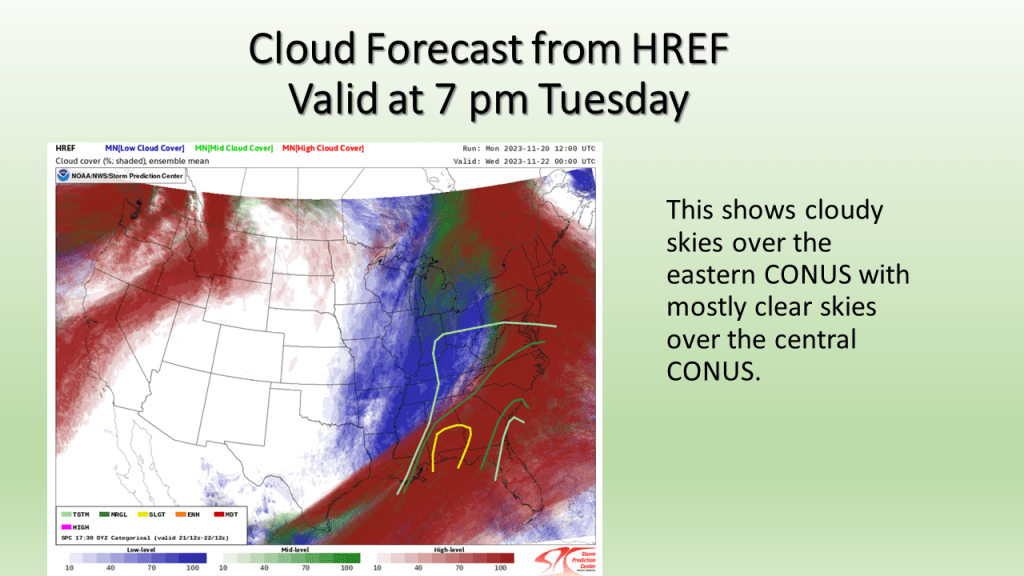
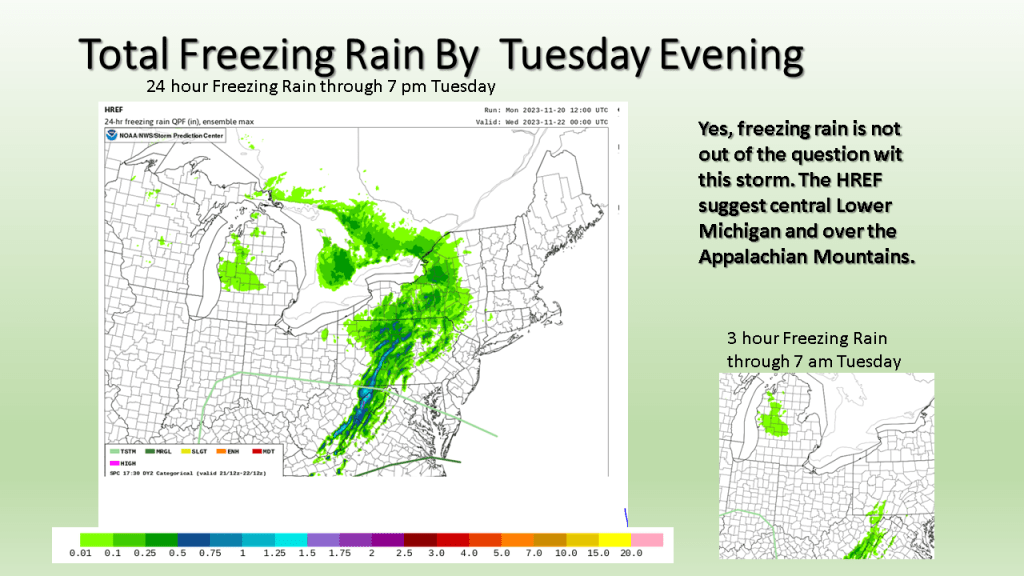
This blog is really more about showing those who do not know about the SPC HREF model. I have some of the key charts from today’s HREF that show where the severe storms are expected, the strongest winds, and heaviest rainfall.
Here is a link to the SPC HREF model.

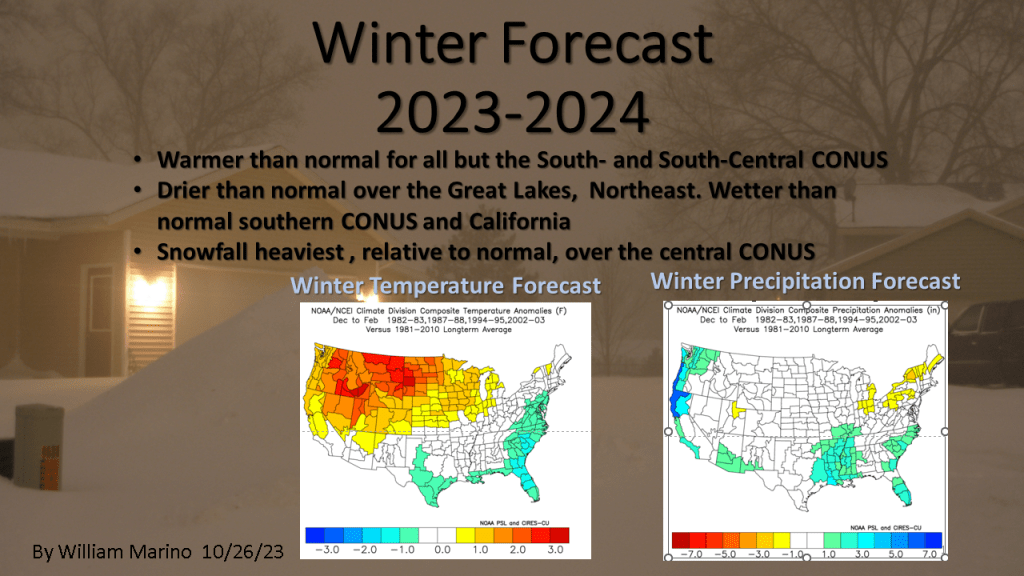
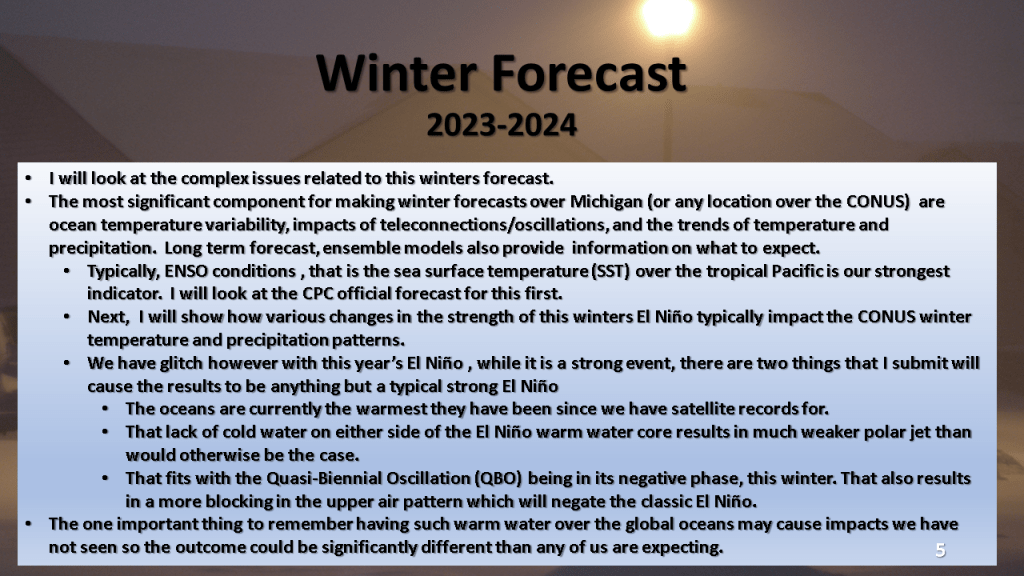
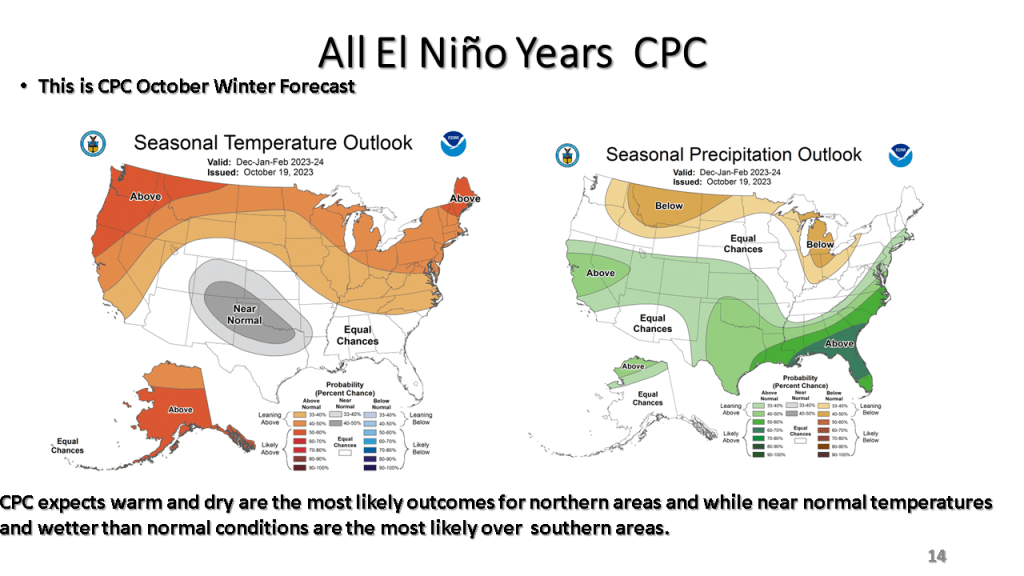
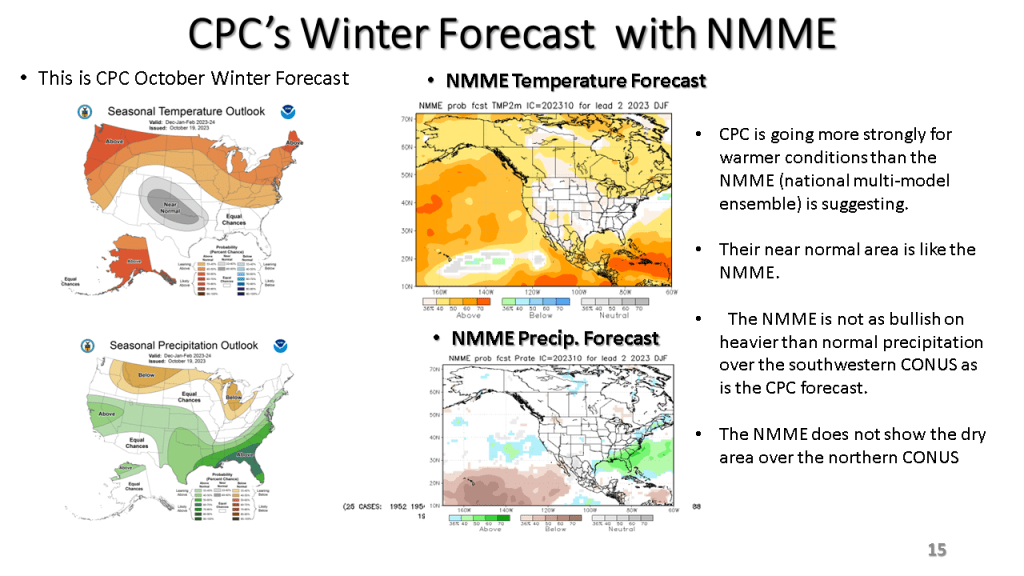
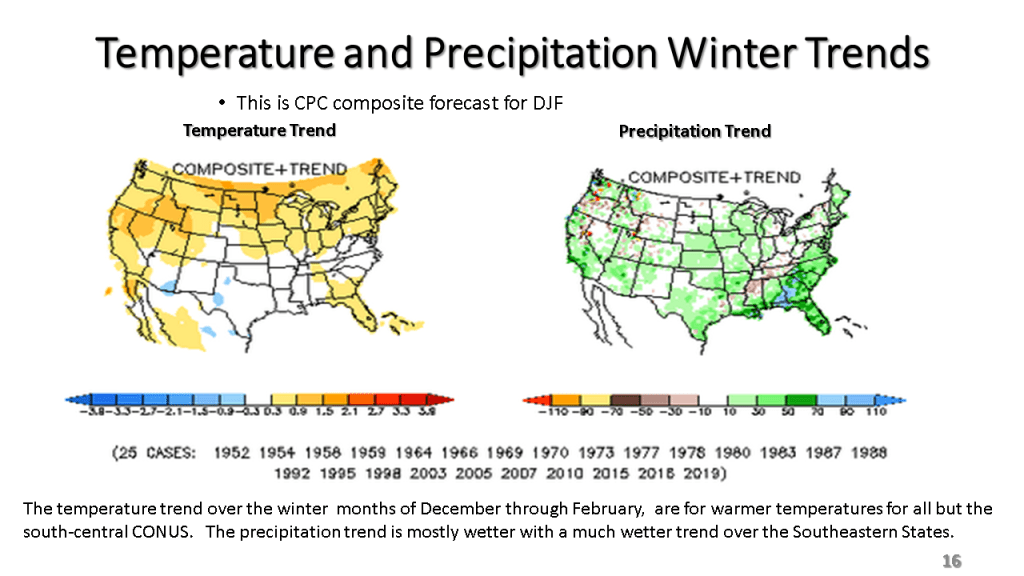
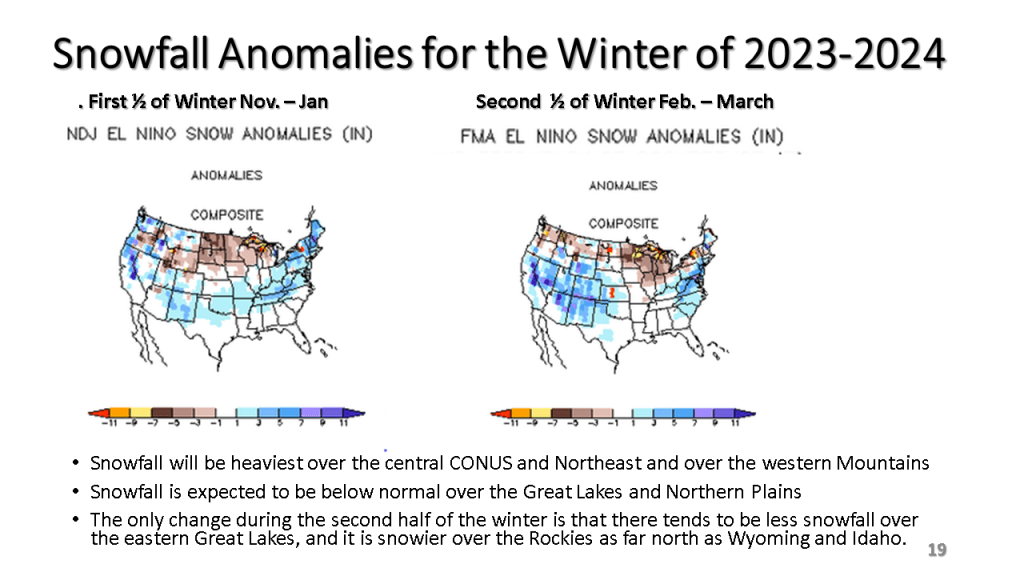
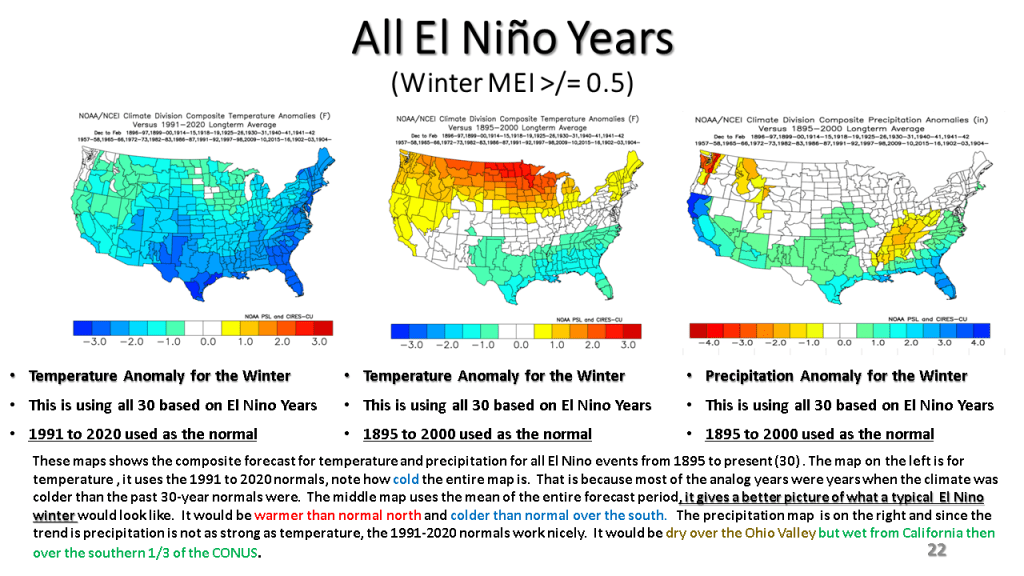
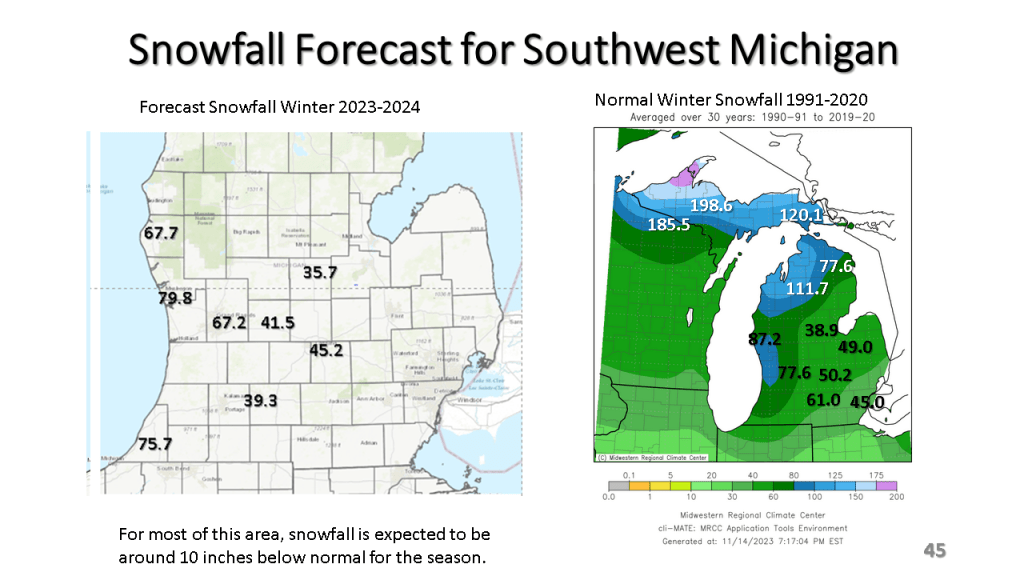
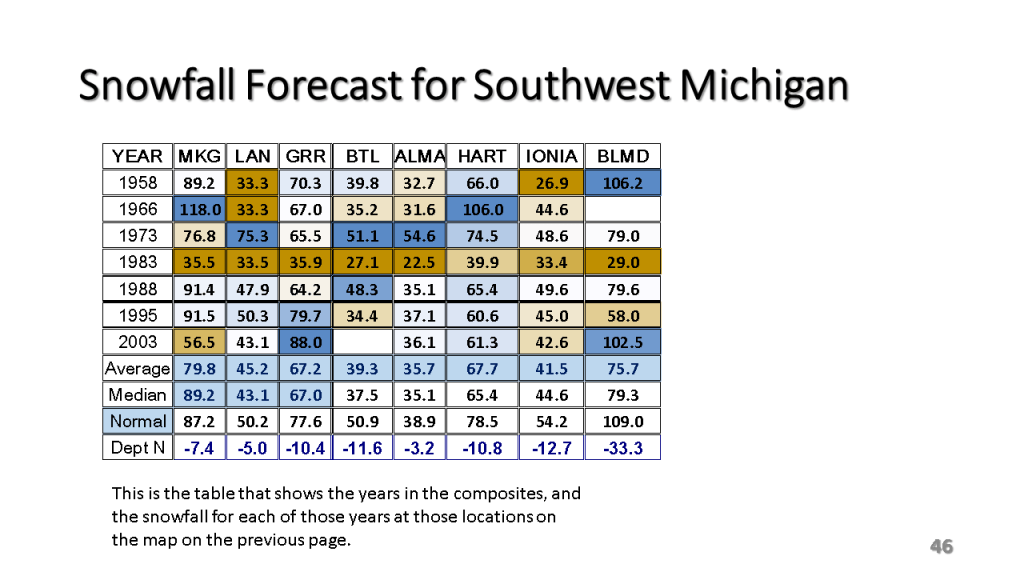
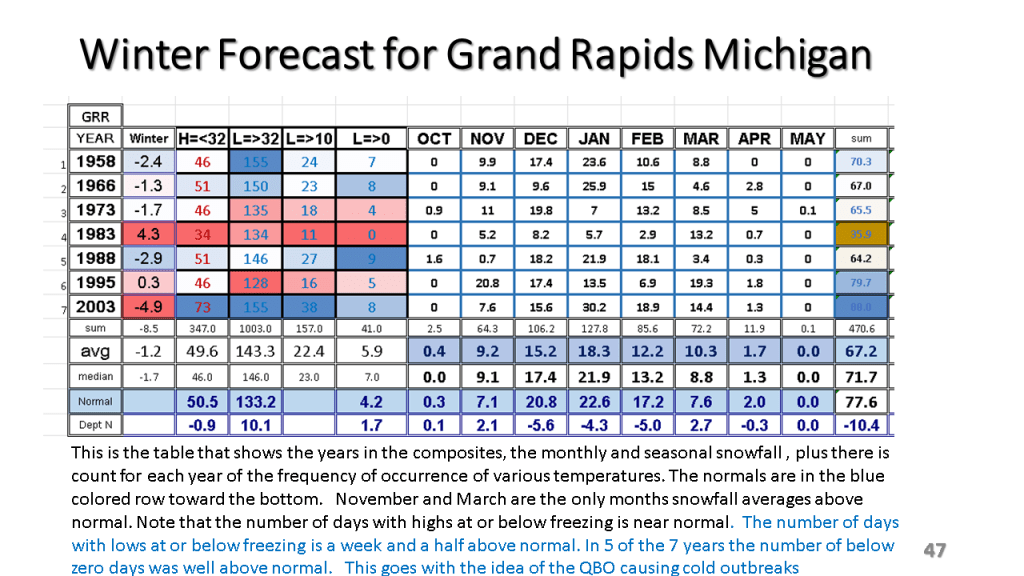
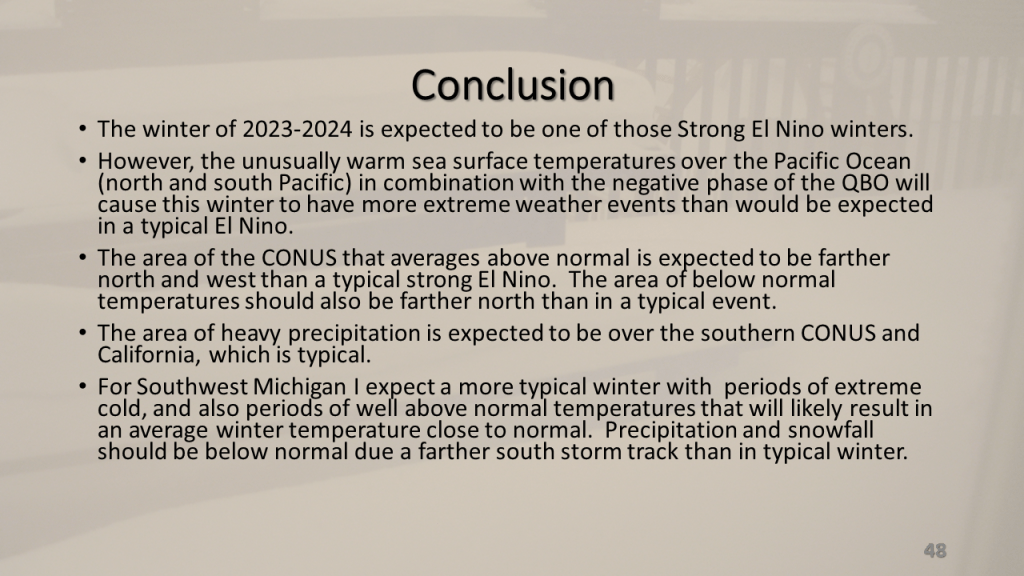
Here is my winter forecast for 2023-2024 for both the CONUS and for Southwest Michigan.
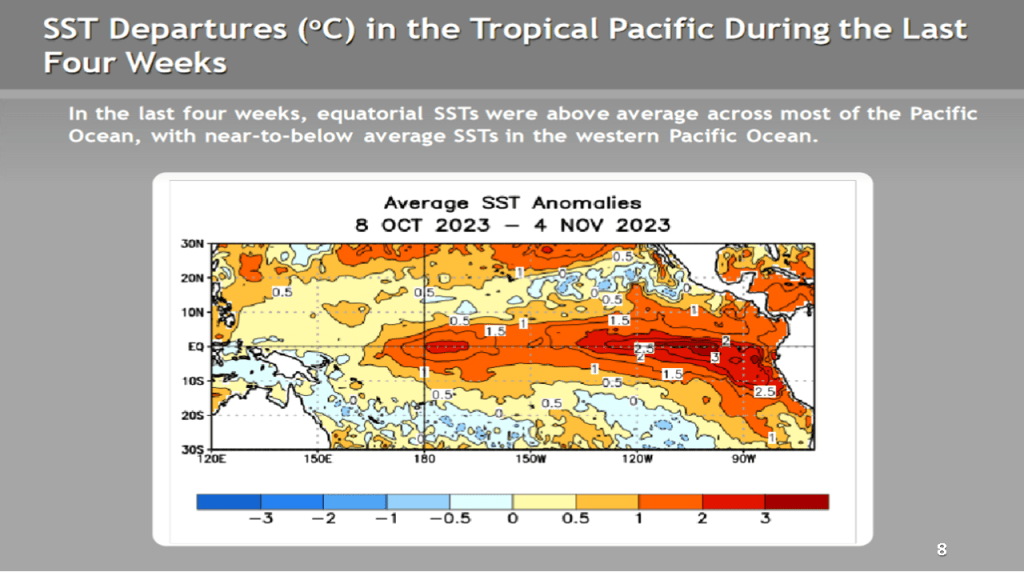
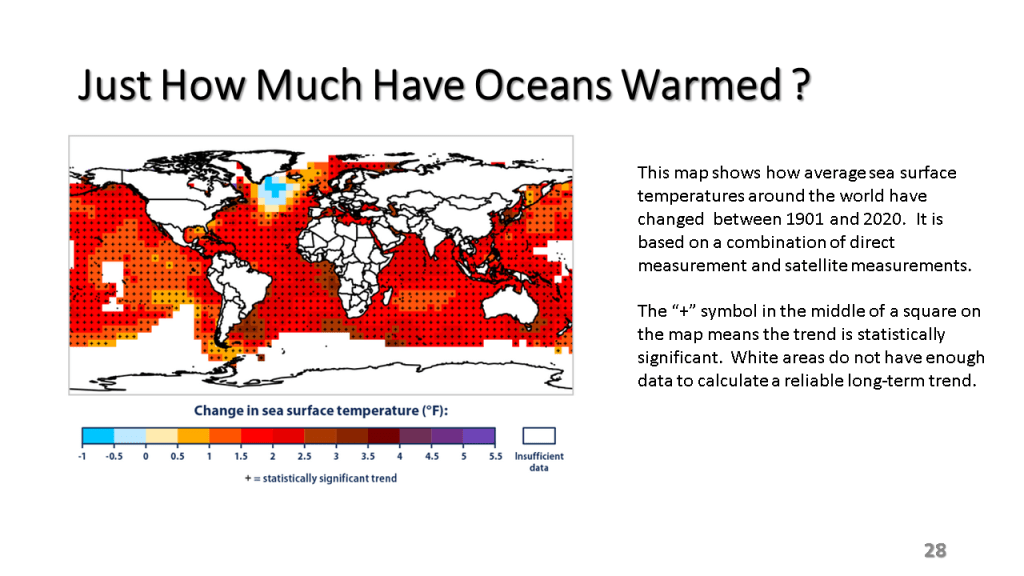
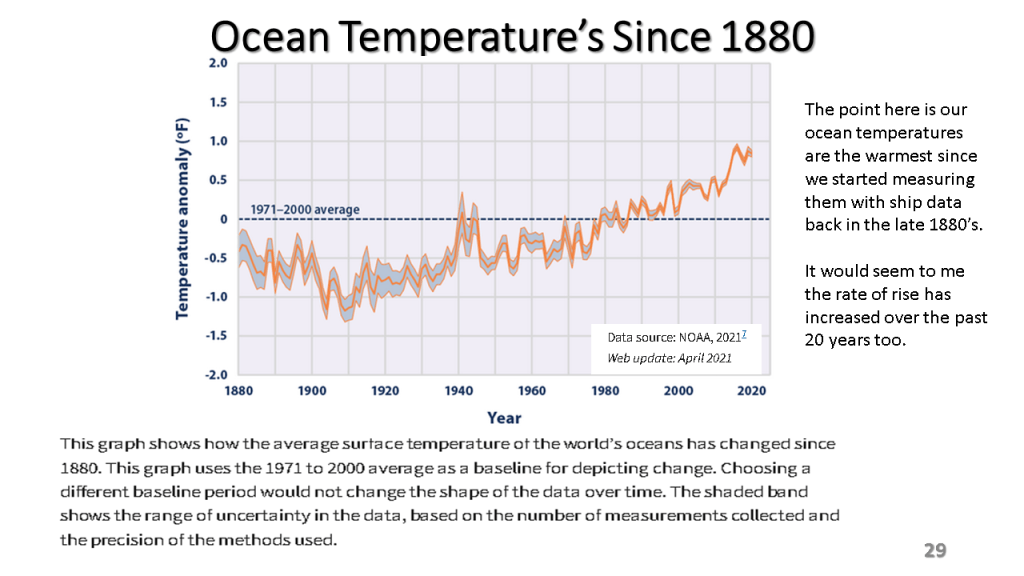
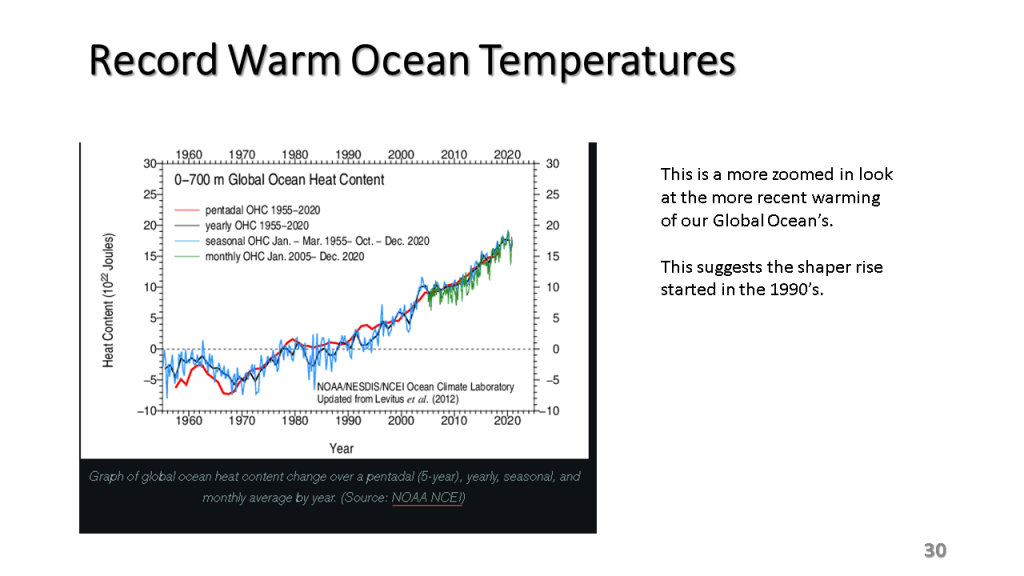
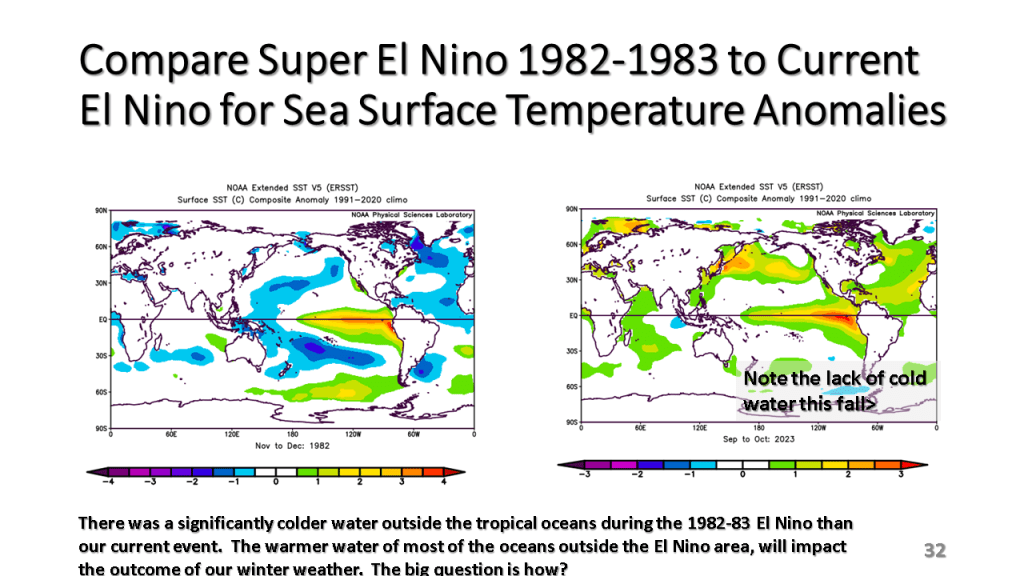
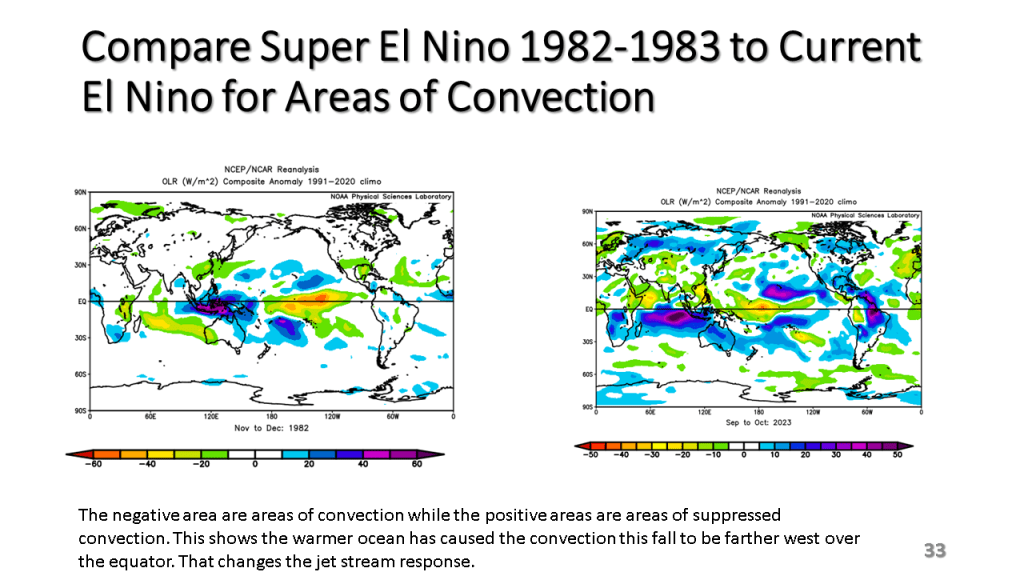
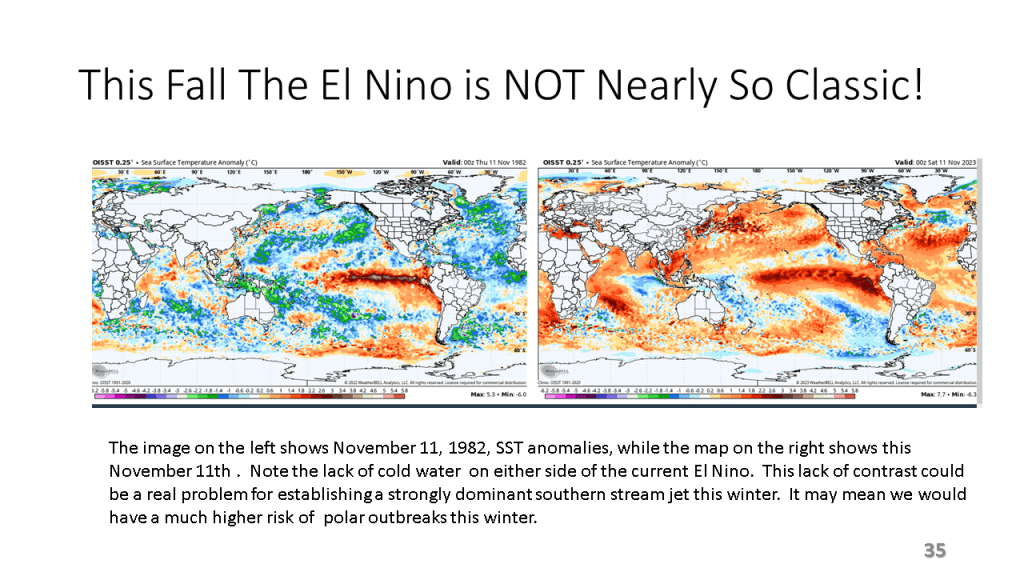
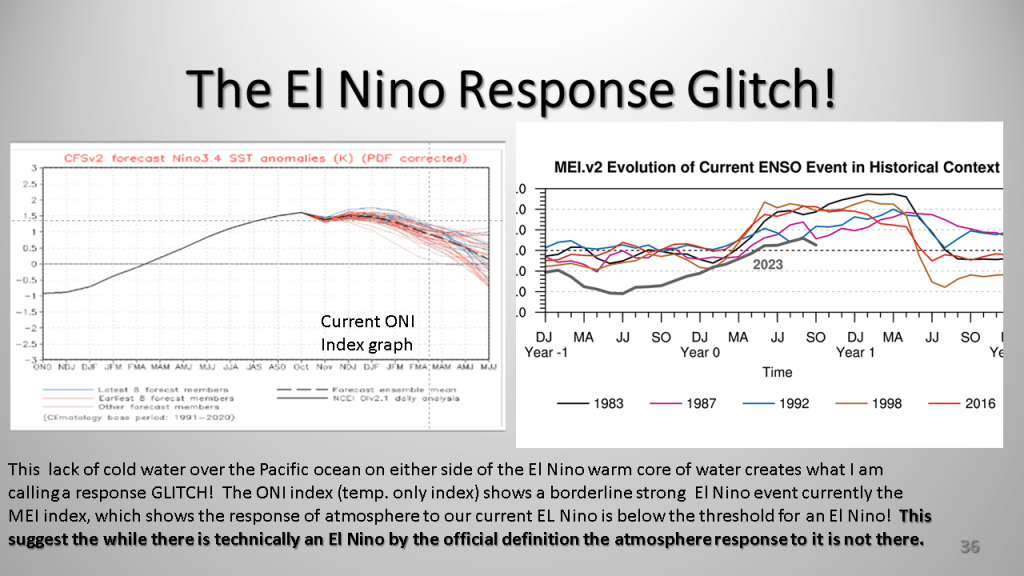
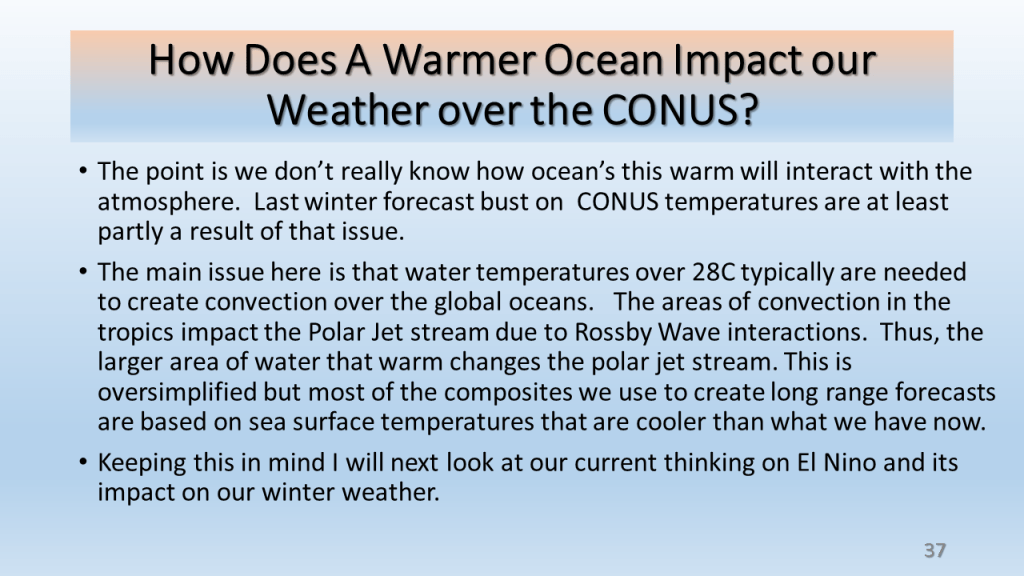
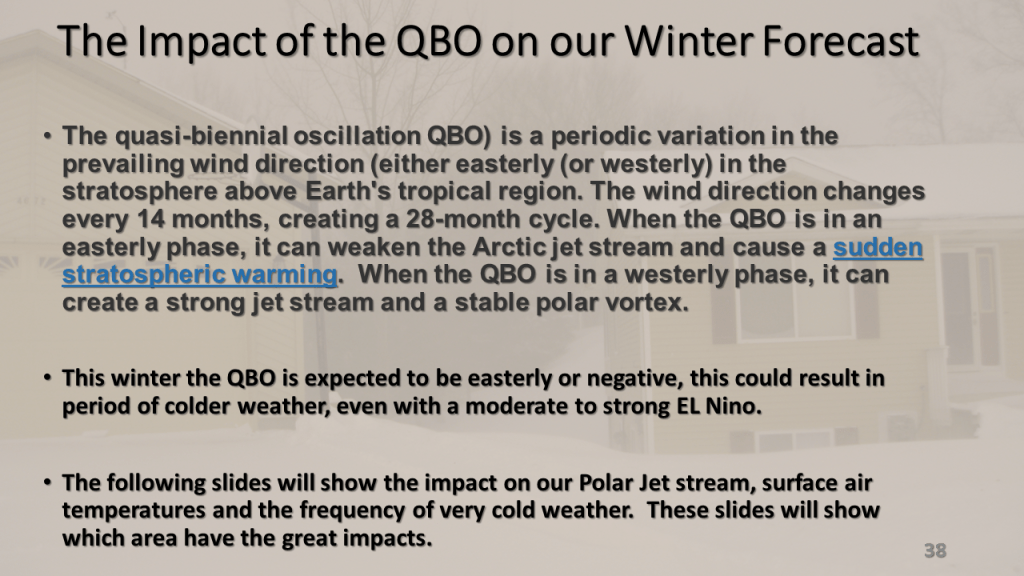
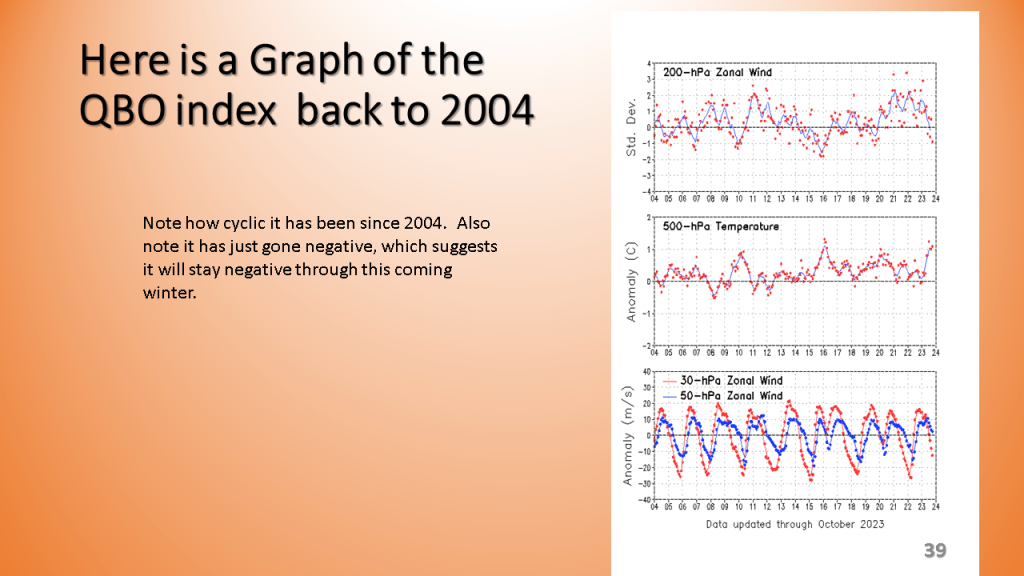
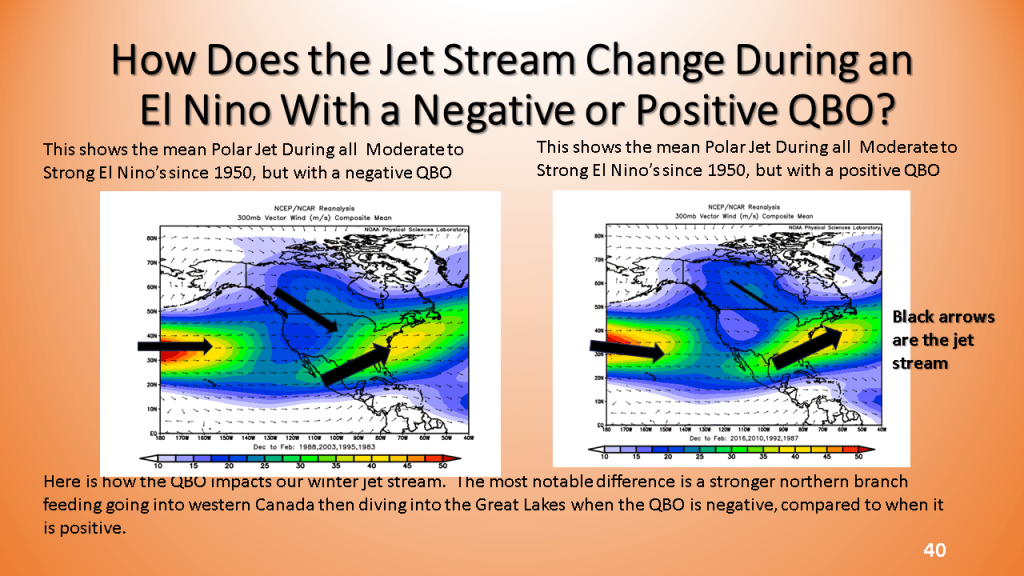
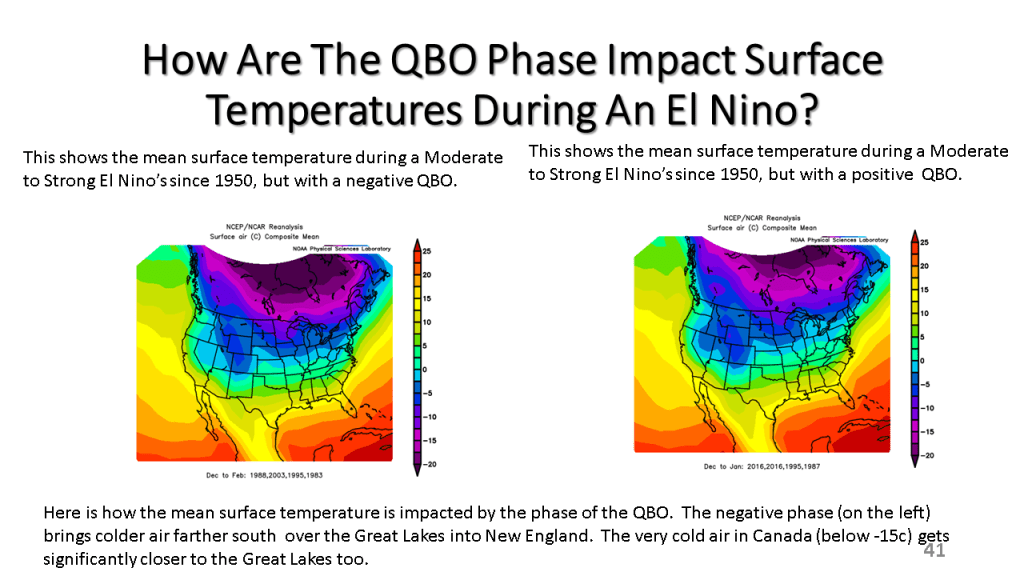
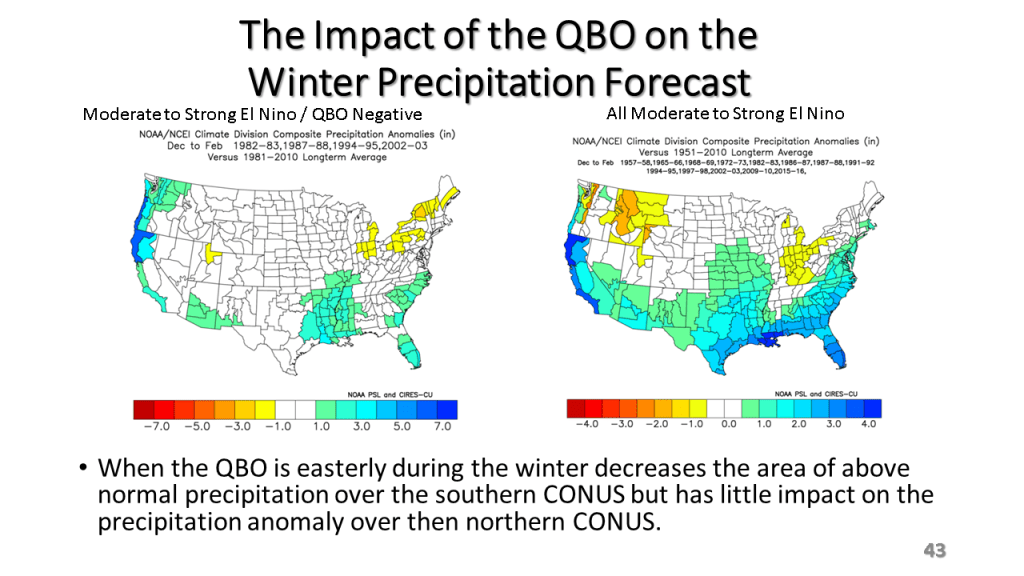
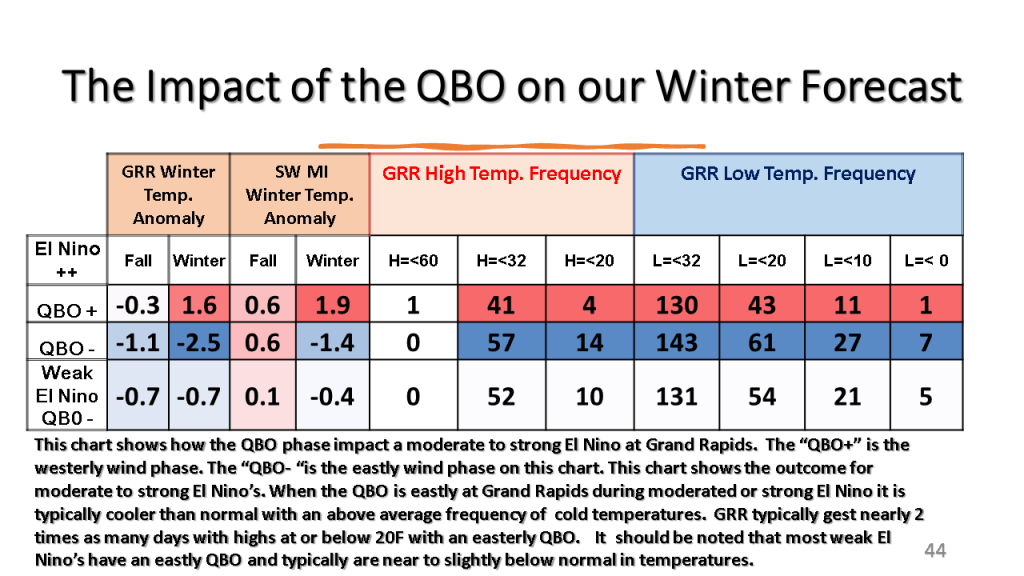
The short story is I am expecting a not so typical moderate to strong El Nino Winter this year. This is due to record warm sea surface temperatures in combination with an easterly wind over the tropical oceans, near 200 mb. This these two features acting together create an unusual amount of blocking in our Northern Hemisphere jet stream. This will mean periods of extremely cold weather and periods of unusually warm weather for a good part of the central and eastern United States lower 48 states. Even so, for Southwest Michigan and actually for all of Michigan I expect snowfall to be below normal but we will get a decent amount of snow nonetheless.

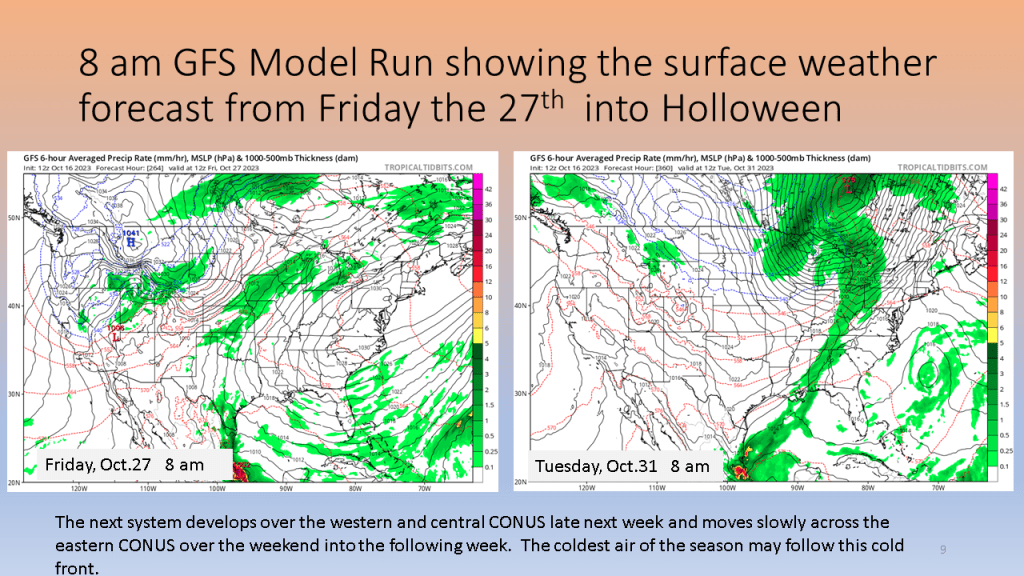
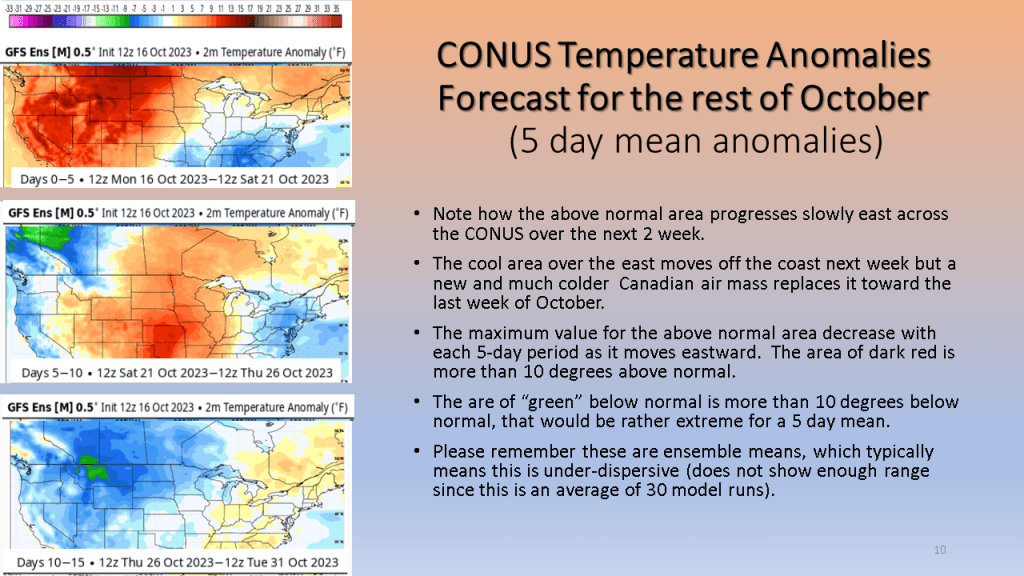
The weather over the next two weeks will feature some warm and dry weather as well as cold and wet weather. Mostly it will be warm dry over the western CONUS into next week. Over the eastern CONUS it will mostly be cooler and wet. A significant warm up may follow over the eastern CONUS by the middle of next week.

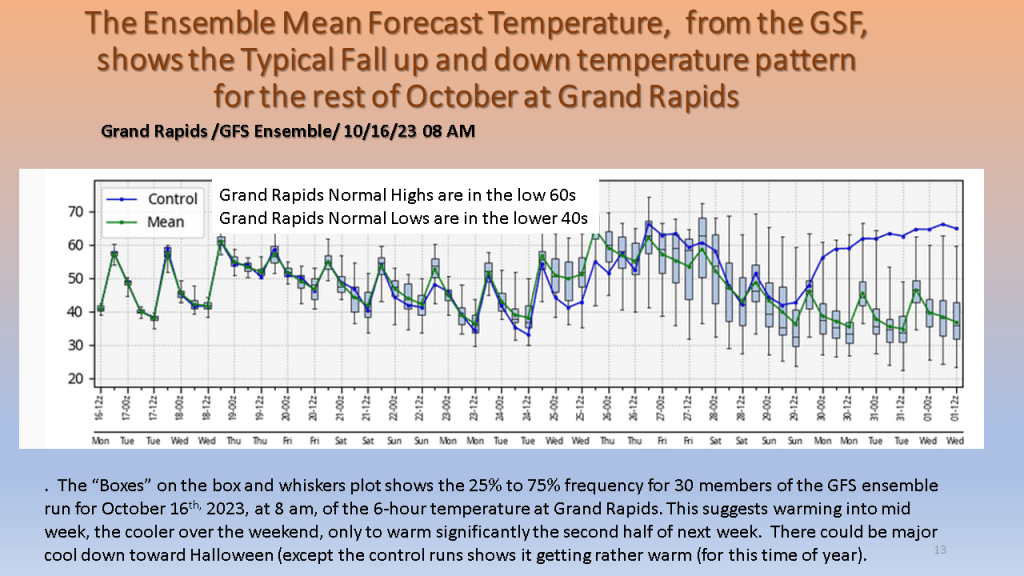
Typical of fall we will see a warm up, then it will rain and get cooler, only to warm up by early next week.  Then it will get wet and cooler once again.

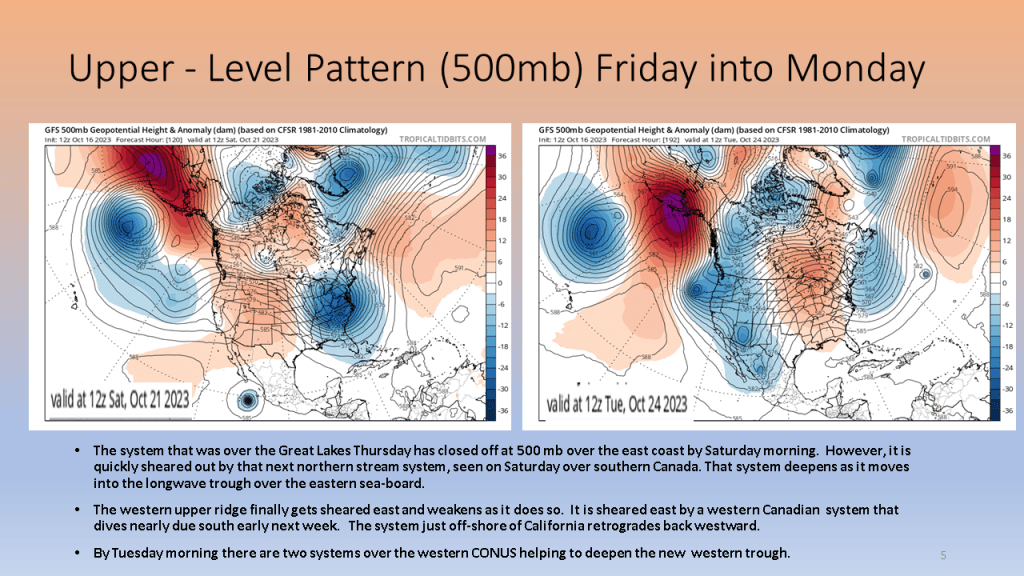
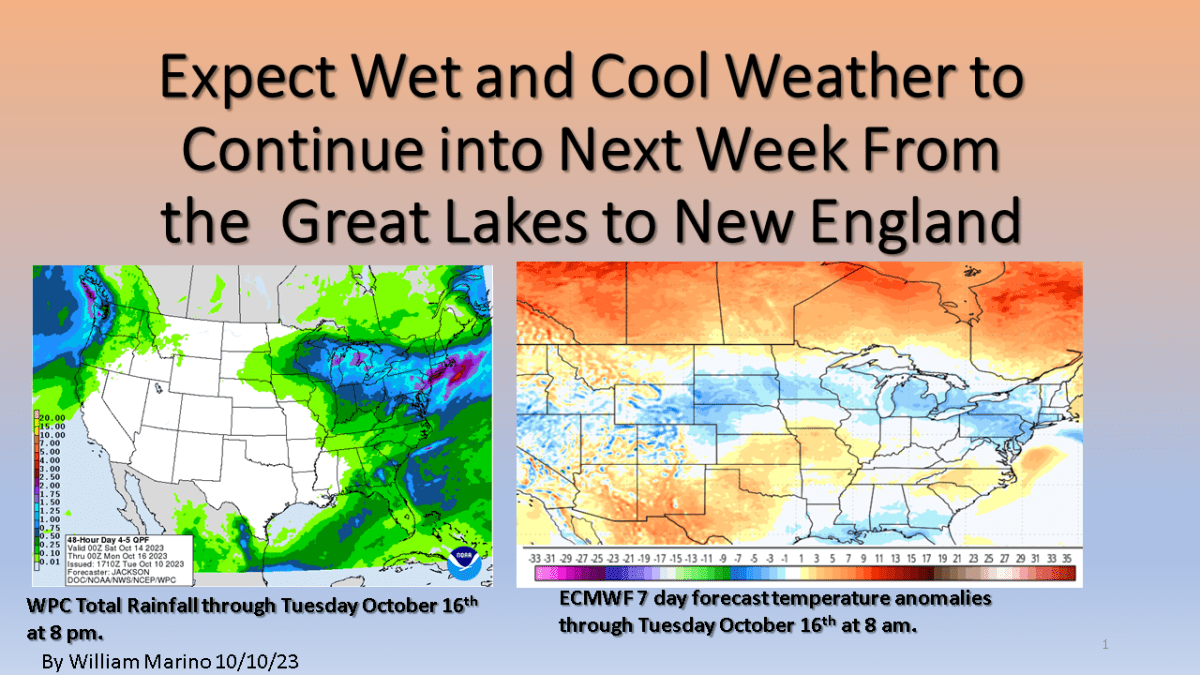
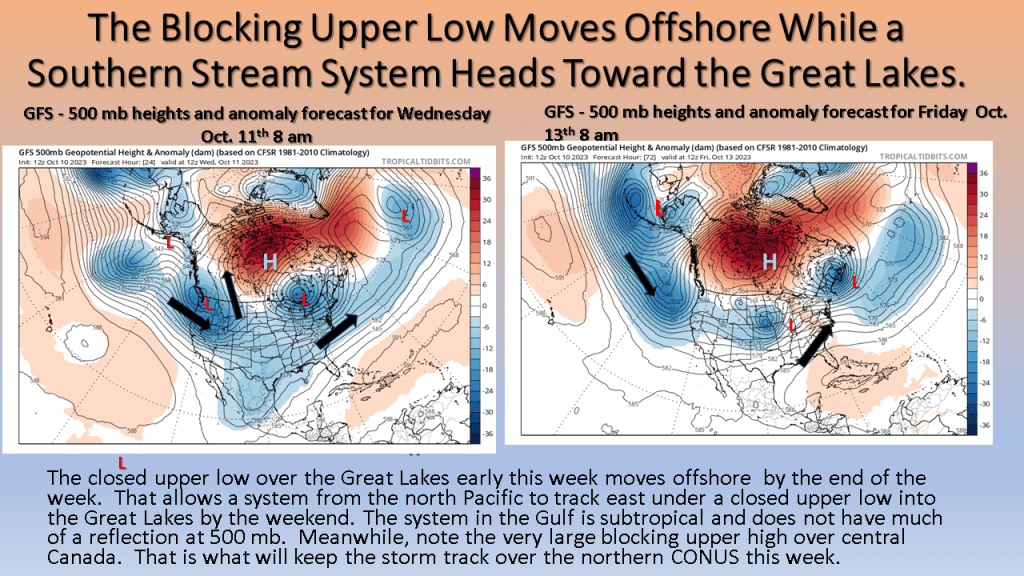
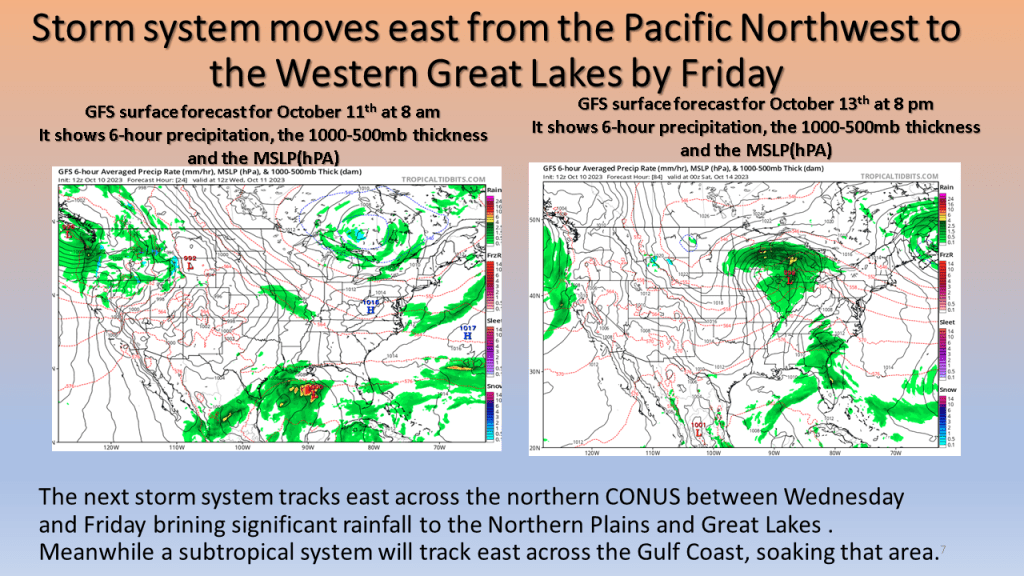
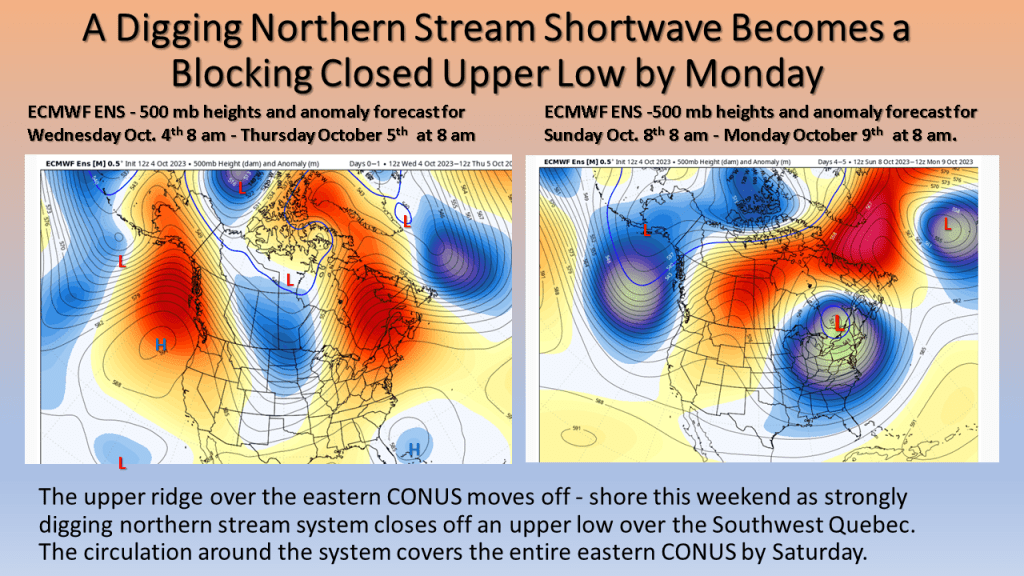
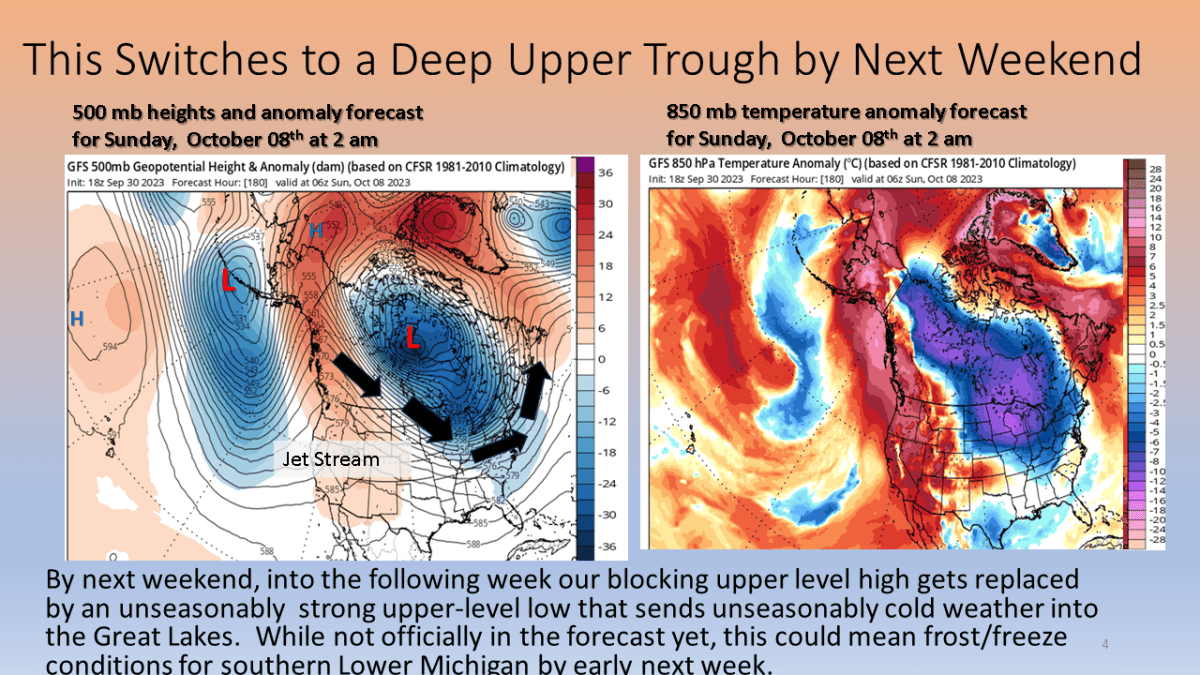
Expect the wet and cool weather over Northern Midwest into New England, including the Great Lakes, to persist into early next week. An impressively large blocking upper-level high, over central Canada will keep the storm track over the northern CONUS into early next week. It will also allow a subtropical system to track along the Gulf Coast over the next few days.

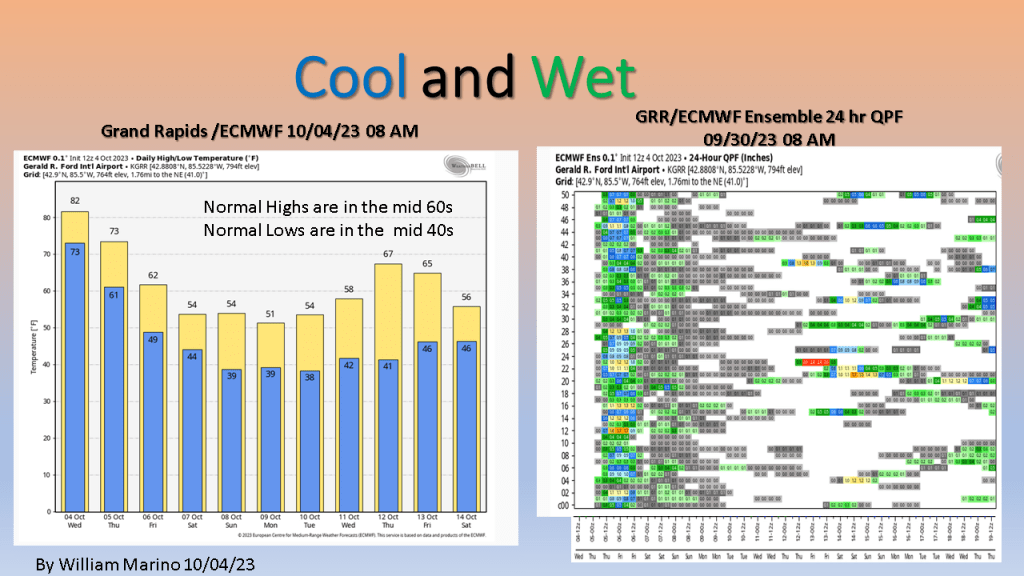
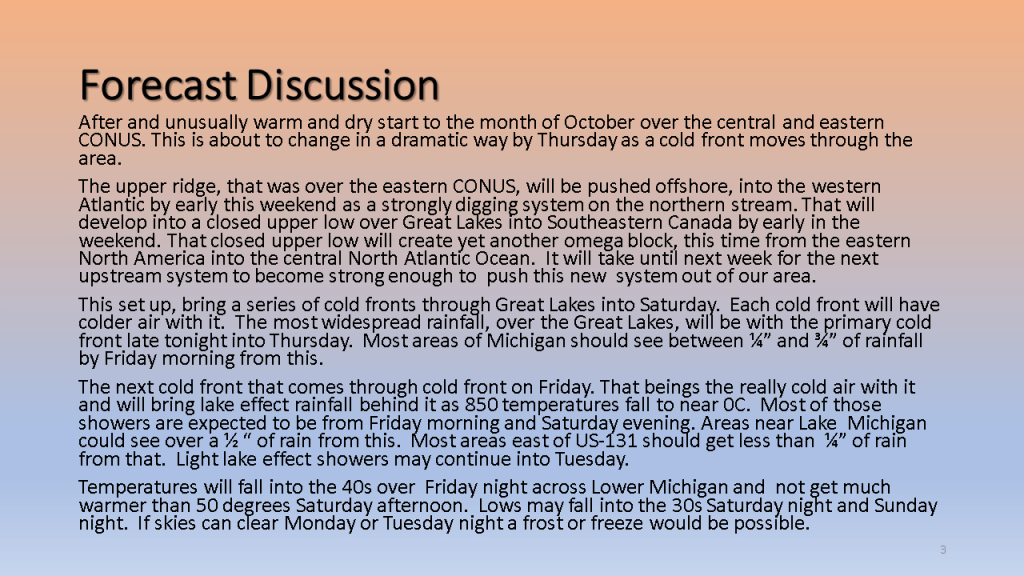
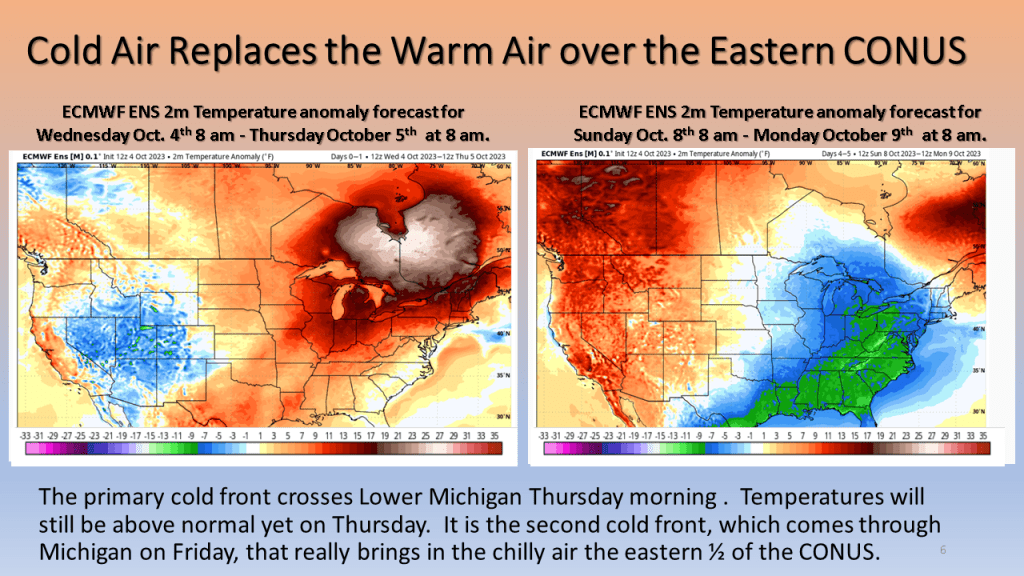
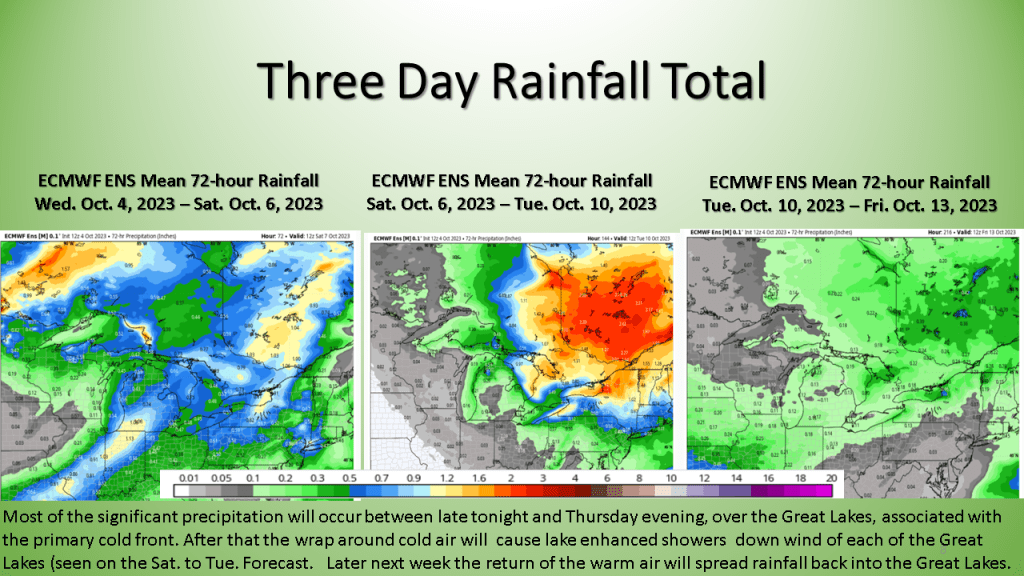
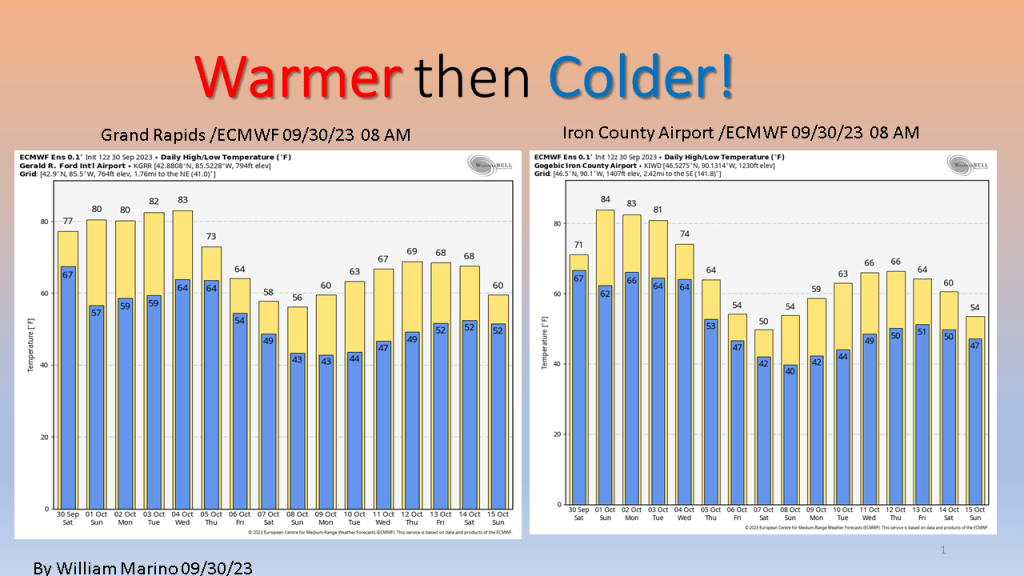
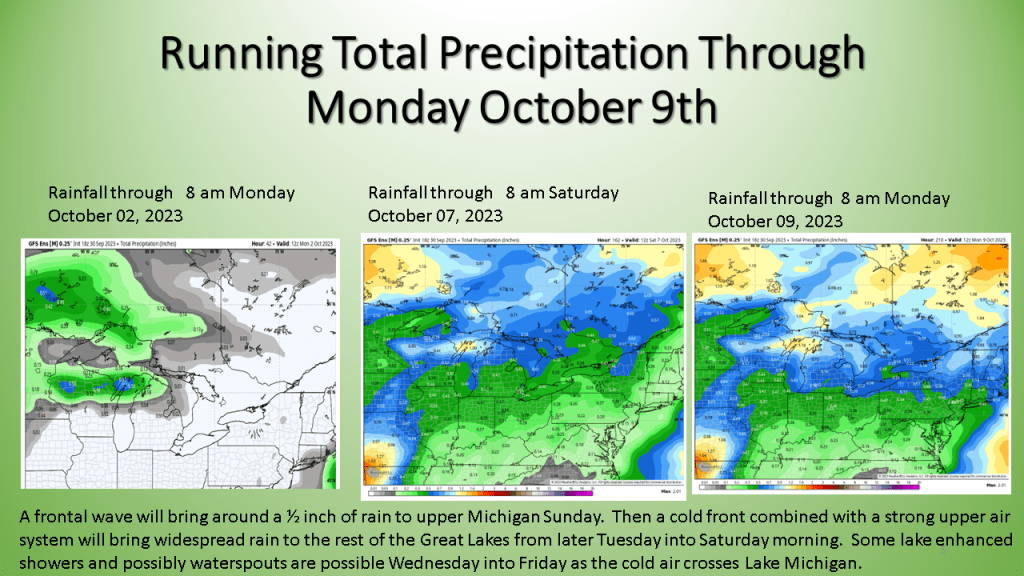
After having 4 days with highs in the 80s over Southwest Michigan, to start October, a series of cold fronts will lower our high temperatures by Saturday into the lower 50s. The cooler temperatures are expected to last into the middle of next week before another slow warm up begins. Widespread rainfall, mostly between a quarter and half an inch will occur Thursday as the front moves through. Lake effect rain showers are expected into early next week.

It will fell like fall by Friday morning and that chilly and showery weather my last into Tuesday morning before the system is far enough to east to allow for some clearing. It will remain chilly Tuesday into Wednesday before a warm up starts by Thursday of next week.

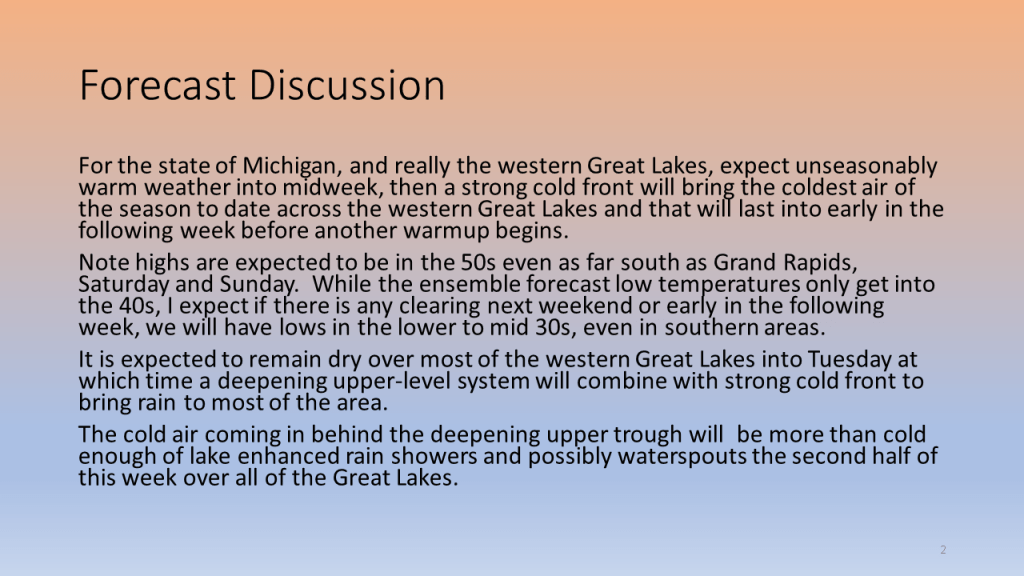
Some rather dramatic changes are likely in our weather over the western Great Lakes this week into early next week. Highs in the 80s are expected Sunday into Tuesday, then highs are expected to fall into lower to mid 50s by next weekend. Expect widespread rainfall during the midweek period too.

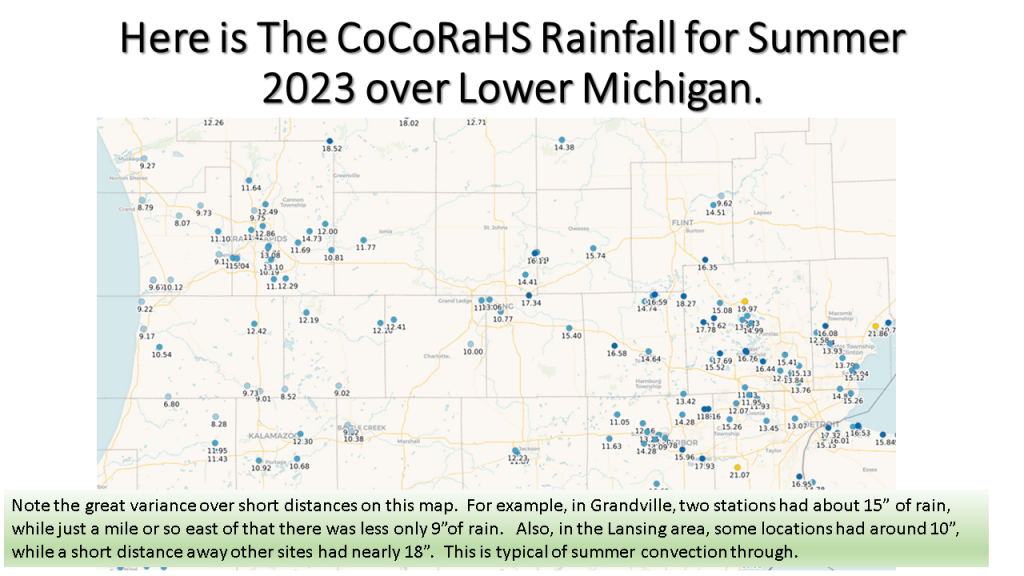
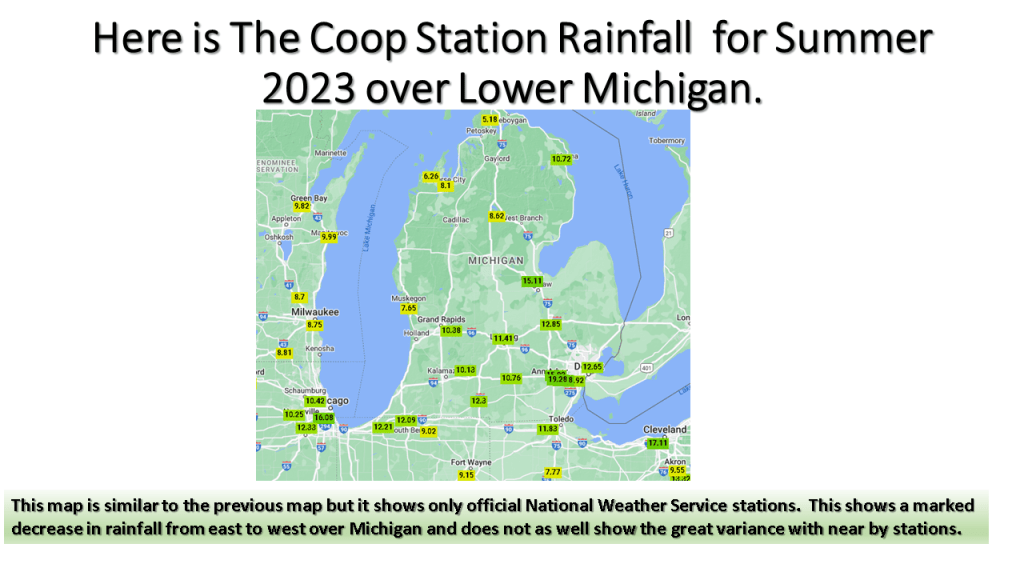
At the risk of going overboard on the Summer of 2023, I have another set of charts you may want to look at.

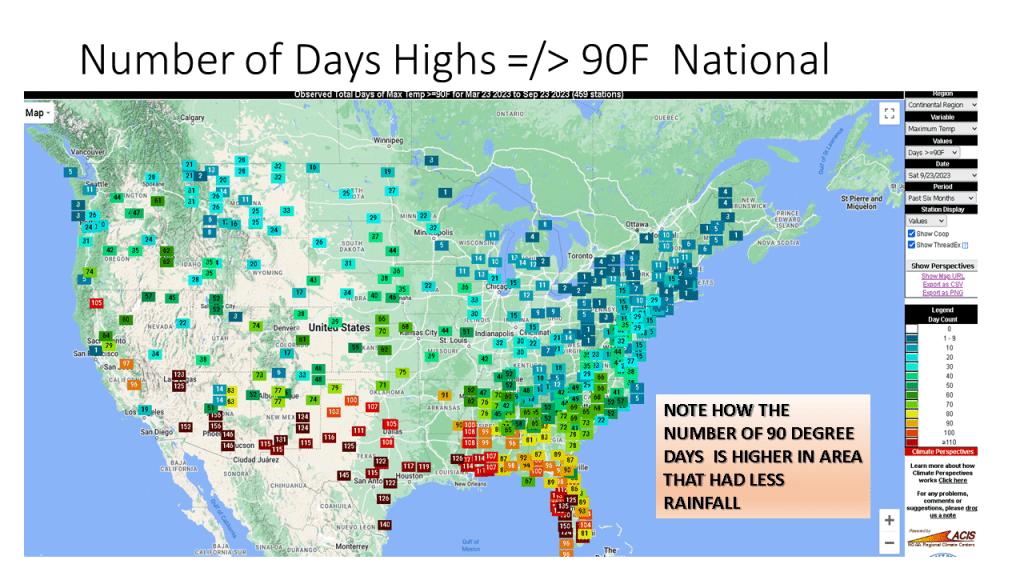
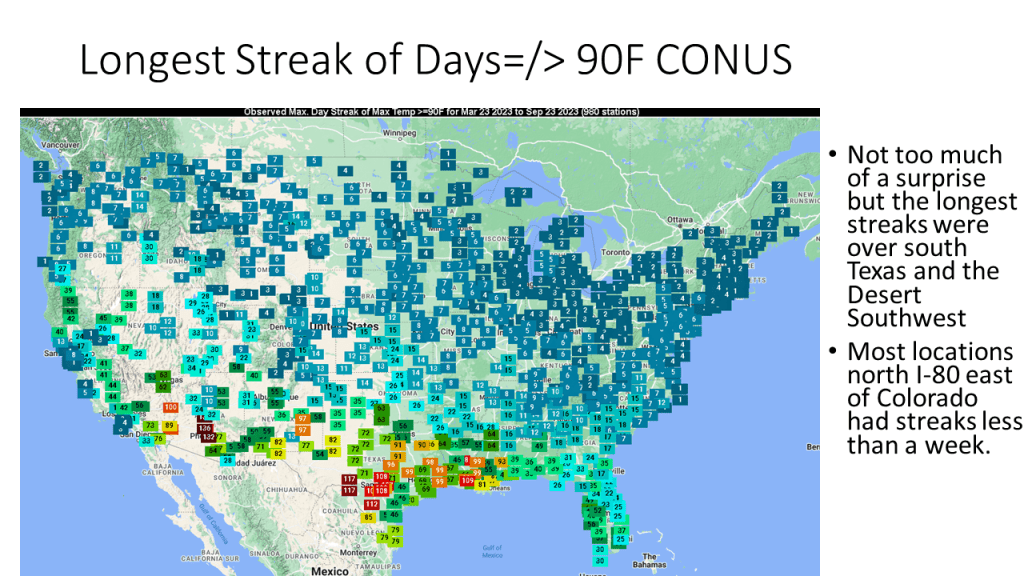
I through it would be fun and informative to see the frequency for hot days across our Nation.

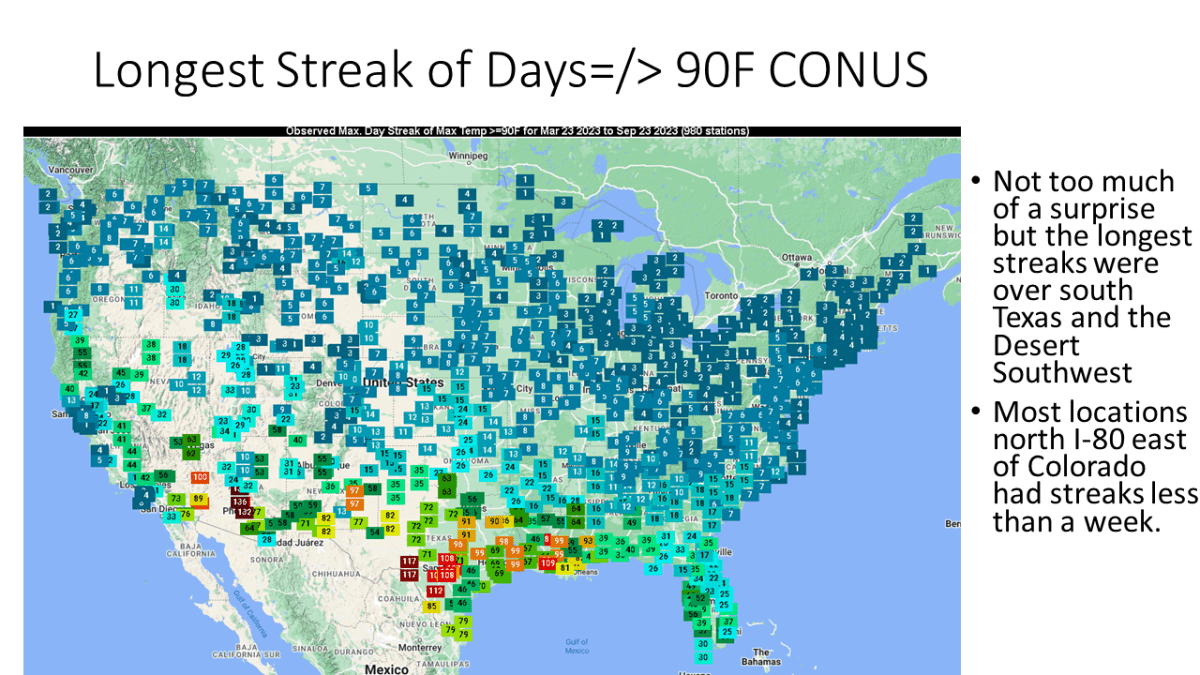
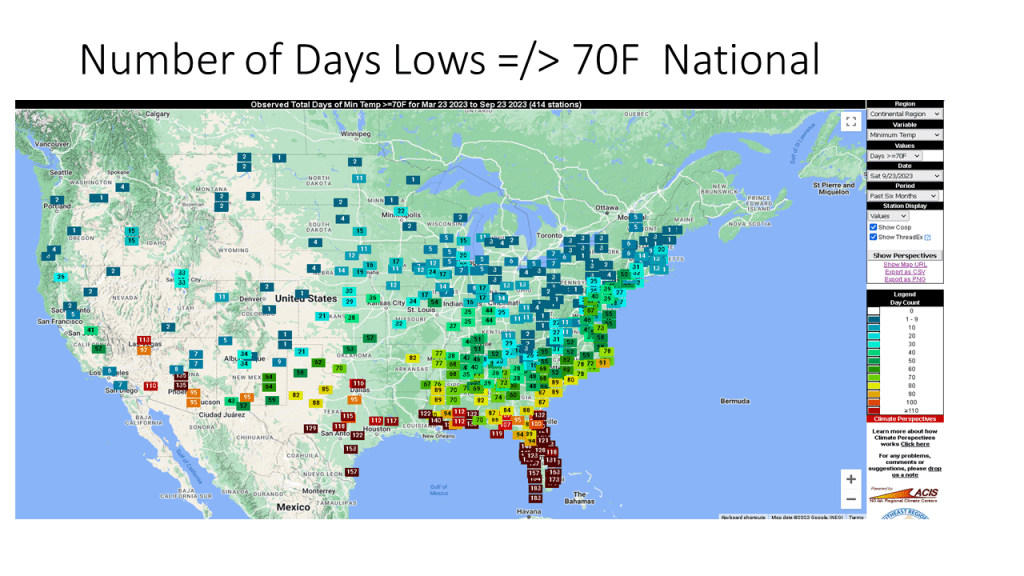
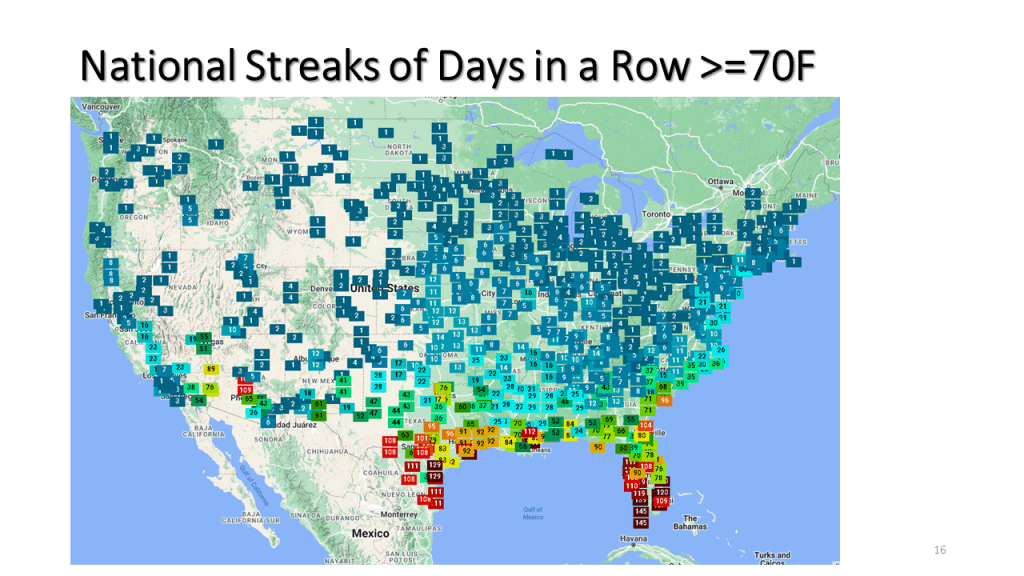
Here I have the frequency for highs in the 90s across the CONUS (Continental United States), the longest streak across the CONUS, the frequency of lows of 70 or more and I few more NCEI charts to show how hot of a summer this was both nationally and regionally. I also have a few precipitation maps so you can see that the great frequency for hot weather was were it rained less, relative to normal for that area.

I have added 2 slides to this presentation ( 8 and 9). These two slides show that what one uses for the “normal”, greatly impacts what the departure from normal looks like. I used 1991 to 2020, the official NWS normal period for the image on the top left, then 1895 to 2000 for the image on the top right, not the area of below normal is significantly less. That is because the period 1991 to 2020 was warmer than the 1895 to 2000 period. On the bottom left the mean is 1895 to 2020, that has no below normal areas. This seems questionable to me since the ranked normal’s on the next slide look a lot like the 1895 to 2000 on slide 8. I added this because I was getting some questions on this matter. I hope this helps.